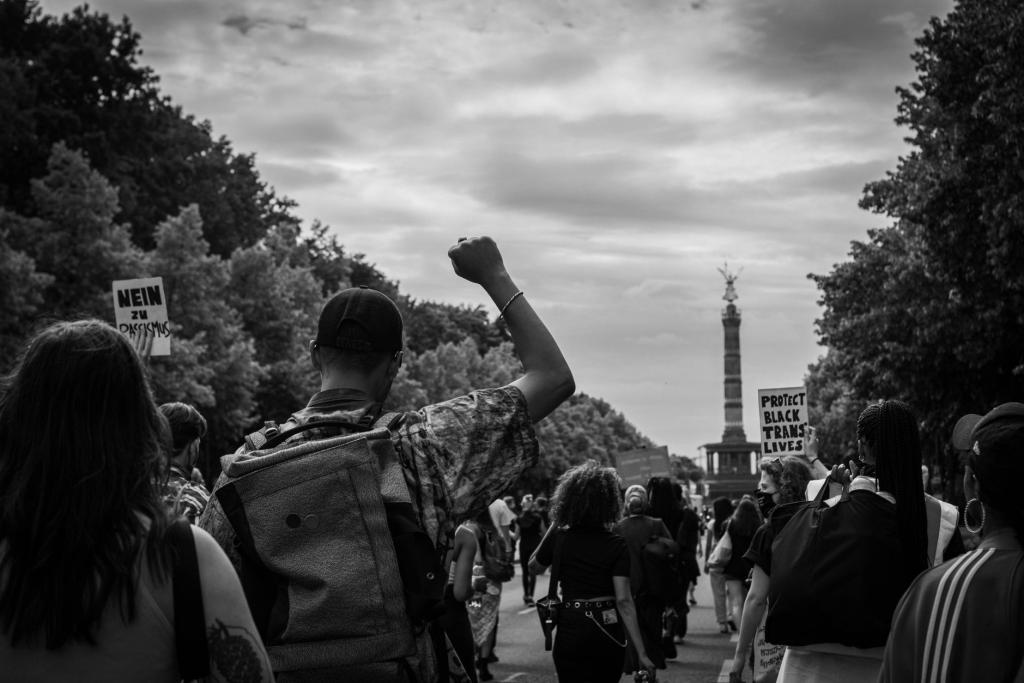
Forty-five thousand students walked out of their classrooms across some one hundred German cities on Friday, September 25, in the fourth nationwide German student conscription protest since late 2025. The organizers of the "School Strike Against Conscription" say the action was the largest of the four so far. Police did not release a nationwide count, but they reported about two thousand four hundred demonstrators in Berlin's Wedding district and around seven hundred in Munich, with hundreds more marching in Hamburg, Stuttgart, Nuremberg, and Frankfurt, according to local reporting.
The trigger for the German student conscription protest was a letter nobody expected. Golo Kirsch, an eighteen-year-old student from Kiel, told reporters he had been assured that mandatory medical exams would not start until next year. Then a summons from the Bundeswehr landed in his mailbox. Kirsch said he had been told the process was about volunteering and that the medical checks would not come until next year. Instead, he said, the summons arrived a year early, with the Bundeswehr insisting the duty already applied now. He added that students would not let themselves be forced into a medical check today and would not go into the barracks tomorrow, according to the Operative Information Center.
Kirsch is one of nearly a thousand eighteen-year-old men who have already undergone medical screenings since July, even though most had marked zero interest in military service on their questionnaires, according to local media reports. That early start is what turned a simmering youth anger into the biggest German student conscription protest yet.
What the new military service law actually says
Germany's Military Service Modernization Act, the law at the center of the German student conscription protest, took effect at the start of this year. Every eighteen-year-old man must fill out a questionnaire covering his fitness, skills, and willingness to serve; young women can answer it voluntarily. For now, joining the Bundeswehr stays voluntary. But the law leaves a door open: if too few volunteers come forward or the security situation deteriorates, the Bundestag can vote to restore compulsory service.
Mandatory medical examinations were planned to begin in July of next year for the two thousand eight birth cohort. The Defense Ministry, however, has been sending invitations since July of this year, and protest organizers say the Defense Ministry confirmed that selective mandatory screenings started early. The official line from Defense Minister Boris Pistorius is that the checks exist so the state knows who could serve if an attack ever comes. He has said Germany should stick with volunteers for as long as possible. The gap between that promise and the early summons is the engine of the German student conscription protest.
The background is real and easy to recite. Angela Merkel's government suspended compulsory service in 2011. It stayed in the Basic Law. Chancellor Friedrich Merz wants Germany to field what he calls the strongest conventional army in Europe, growing the Bundeswehr from roughly one hundred eighty thousand active troops to two hundred sixty thousand by the mid twenty-thirties, plus about two hundred thousand reservists. The students marching on Friday heard those numbers and drew their own conclusion.
The march against becoming cannon fodder
The slogans carried through the streets at the German student conscription protest were blunt. Banners carried the German phrase "Wir sind KEIN Kanonenfutter," rejecting being treated as cannon fodder. Other signs declared the war would be fought without the marchers, asked why young people rather than politicians should serve, and argued that the rich want war while the young want a future. Some protesters in Berlin fed their military invitation letters into a paper shredder as a symbolic rejection of the system. The marches were largely peaceful, with police escorting the demonstrations, according to Particle's roundup of local coverage.
Elias Bernhard, a sixteen-year-old protester in Hamburg, told the broadcaster Deutschlandfunk why he had walked out at the German student conscription protest, as reported by the outlet Around Prague. Bernhard said the questionnaire results showed that young people did not want to join the armed forces, and that was why he had taken to the streets. He added that the strikes would continue until compulsory military service was taken off the table.
Some schools pushed back. Student organizers said some schools scheduled exams on the strike day and that some locked students on school grounds, according to the student-movement outlet Savage Minds. Legal experts cited in German media note that pupils have no formal right to strike and that unexcused absences can carry penalties under state school laws. The protesters' stated demands go beyond the military question: they want an end to compulsory medical exams, the repeal of the new service law, a legal right to pupil strikes, and reversals of school budget cuts.
That last demand matters to how young people frame the German student conscription protest. Many of the signs tied military spending directly to school funding. When protesters tell interviewers they oppose rearmament while school buildings age and social services face cuts, their argument reaches beyond the war question: it is about who pays for rearmament and whose schools get left behind. The same generational logic ran through student climate walkouts in years past, from the young African climate activists who made direct action a tool rather than a slogan to the youth climate lawsuit that survived Ottawa's bid to kill it.
Whether forty-five thousand is the right number will be argued about, as it often is with protest counts. The organizer figure has not been independently verified, and police figures cover only a few cities. What is harder to argue is the direction of travel: four nationwide strikes since late 2025, each larger than the last, organized by the very age group the law targets first. The NYU divestment protest this month showed students in another country using walkouts to force institutions to move; the German students want the military service law taken off the table entirely. The next school strike is already being planned, and the summons letters are still going out.
Comments 0
No comments yet. Be the first to share your thoughts!
Leave a comment
Share your thoughts. Your email will not be published.