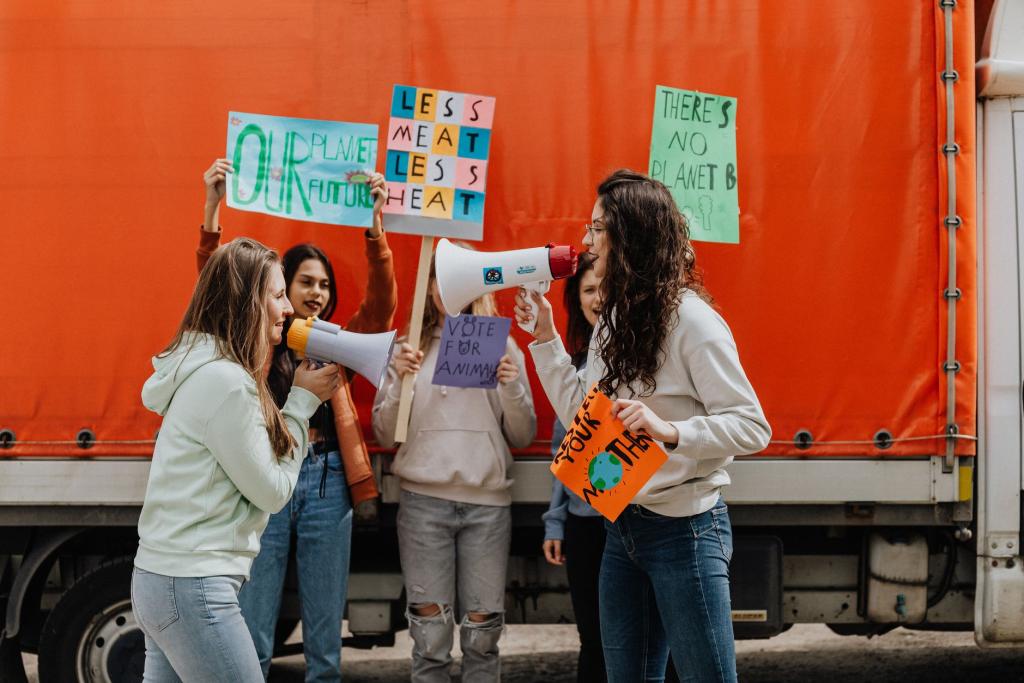
Across Africa, the climate crisis is not some far-off warning printed on a conference banner. In one community, drought is draining food and livelihoods; in another, floods are washing away homes and crops; somewhere else, seasons have stopped keeping their own schedule, and families no longer know when to plant, harvest, or rebuild. That is the reality millions of young African climate activists are living inside right now — and some of them are done being treated as passive victims of it.
From September 7 to 10, a group of young feminists from across the continent gathered in Addis Ababa, Ethiopia, for Cohort 4 of the African Feminist Climate Justice Academy, convened by FEMNET. The goal for these young African climate activists was not another round of polite panel talk. Over four days, participants interrogated the narratives and systems shaping climate negotiations, traced the journey of climate finance, and asked the uncomfortable questions: do resources actually reach the communities they are meant to serve, and whose knowledge is allowed to count in climate policy? According to the event report by FEMNET, one participant, Chido Nyaruwata, had heard about the Academy from a friend and thought, "I hope I get to attend one day" — and said it was everything she had hoped for.
From vulnerability narratives to real power
Here is the framing problem the Academy took apart: women and girls in climate policy are still framed mostly through vulnerability, as people who need saving. The activists in Addis Ababa flipped that script. They are farmers adapting to shifting weather patterns, community organizers protecting livelihoods, activists demanding accountability, and young leaders developing locally rooted solutions. Their lived experience is not a side note to climate policy — it is knowledge that climate policy cannot afford to overlook.
That distinction matters, because it is the difference between being invited to the table and actually getting to set the agenda. For four days, the Academy became a space for the questions that actually matter: how do systems shaping climate action hear — or ignore — the people already leading responses on the ground? As reported by FEMNET, participants dug into how climate finance moves, who controls it, and why communities closest to the crisis see the least of it. That is not abstract theory; it is the money question that decides which villages get flood defenses and which get nothing.
The timing is not accidental either. With climate summits and funding rounds stacking up through the end of the year, the cohort is less a retreat and more a strategy session. Young organizers are training each other to walk into negotiation rooms, funding applications, and policy consultations with the receipts — data, stories, and demands — instead of just the ask. They are not waiting to be given permission to lead.
Why this generation of organizers is different
Zoom out, and the Academy is part of a much bigger wave. Youth-led climate organizations are stacking up wins right now: on September 15, ten youth-led organizations in Bangladesh received the Youth-Led Climate Award 2026 to run grassroots climate projects with grant support, according to The Business Standard. Students Rebuild just launched its 2026–2027 Protect Our Planet project, committing $5 per young person's creative submission — up to $1 million — to environmental organizations, according to a PR Newswire announcement. And the Youth Innovation Challenge for ocean sustainability pulled a record-breaking 401 submissions from 69 countries this year, according to the North American Association for Environmental Education.
What connects these stories is a shift in how young activists operate. They are not just marching — whether it is California students staging a statewide walkout or a Gen Z ex-rapper poised to become Nepal's youngest prime minister, this generation is building institutions, tracking money, designing curricula, and demanding seats at the tables where decisions get made. The feminist lens of the Addis Ababa academy adds something extra: an insistence that climate justice without gender justice is just more of the same power structure wearing a green jacket.
The young feminists who left Addis Ababa are heading back to communities where the climate crisis is already at the door. The difference now is that they have a shared playbook, a cross-continental network, and a clearer map of where the money goes and how to redirect it. Watch for this cohort in the coming months — at climate finance negotiations, in community organizing, and in the stories they are starting to tell on their own terms.
As reported by FEMNET, these young organizers are not the future of climate action — they are already shaping it. That is not a slogan. It is a scheduling fact.
Comments 0
No comments yet. Be the first to share your thoughts!
Leave a comment
Share your thoughts. Your email will not be published.