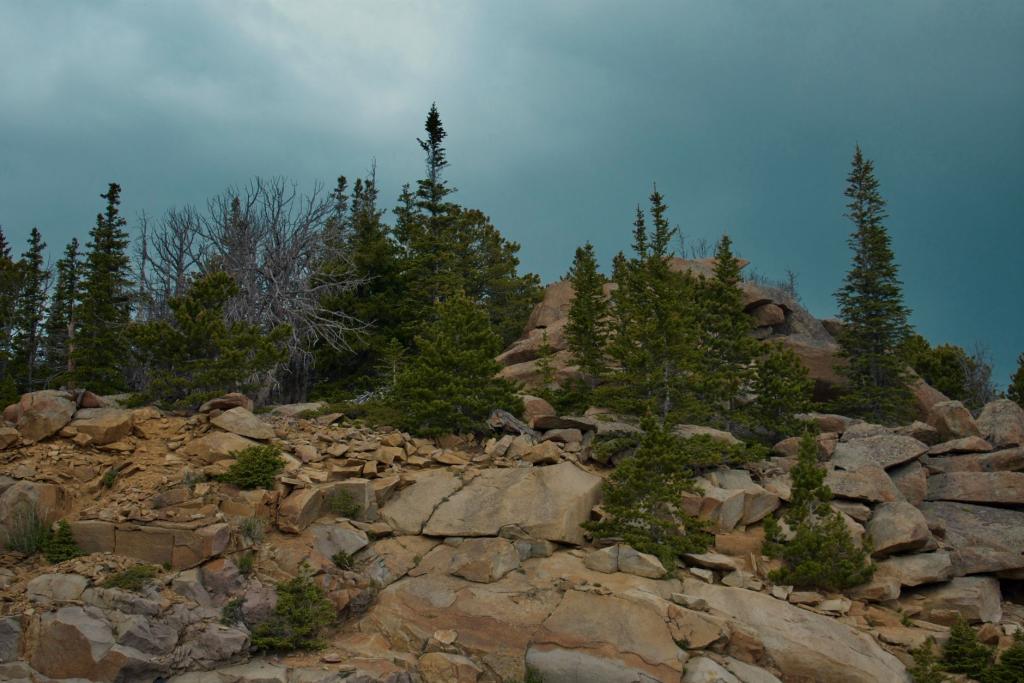
For more than six decades, the world's oldest tree has been a single bristlecone pine in eastern California. The tree, nicknamed Methuselah, grows in the Inyo National Forest, and its age was estimated at about 4,850 years from a core sample taken in 1957, according to the U.S. Forest Service. Bristlecones grow slowly at high elevation, on dry, windy ridges around 10,000 feet, and their dense, resinous wood resists insects and rot. In very old specimens, only a narrow strip of living tissue still connects the roots to a few live branches. To protect Methuselah from vandals, the Forest Service does not disclose its exact location.
In 2022, a challenger to that record appeared more than 5,000 miles south. A Patagonian cypress, or alerce, named Gran Abuelo (Spanish for "great grandfather") stands about 196 feet tall in Alerce Costero National Park near La Union, Chile. The climate scientist Jonathan Barichivich, who grew up in that park, estimated its age at 5,484 years, as reported by NOVA and later covered by The Guardian. That would make it nearly 600 years older than Methuselah. When researchers first met the tree, it was thought to be roughly 3,500 years old.
A tree too wide to date the usual way
Standard dendrochronology counts tree rings from a thin core drilled into a trunk, then matches those rings against patterns from trees nearby. Gran Abuelo's trunk was too wide for Barichivich's increment borer to reach the center. He was also unwilling to take root samples that might further damage a tree whose roots were already struggling underfoot. Instead, he built a statistical model from fully cored alerces nearby, factoring in how growth rates shift with climate. The model put the tree's age at 5,484 years and gave it a 4-in-5 chance of being over 5,000 years old, according to NOVA. The absolute upper bound it suggested was 6,000 years.
If the estimate holds, the world's oldest tree is not in the Sierra Nevada at all. It is a single individual in a wet Andean valley, and the record would move by more than half a millennium.
The dating dispute
Fellow dendrochronologists split over the claim. Harald Bugmann, a dendrochronologist at the Swiss Federal Institute of Technology, told Science he fully trusted the analysis and called it "a very smart approach." Others were unconvinced. Ed Cook, a founding director of Columbia University's Tree Ring Laboratory, told Science that the only way to truly determine a tree's age is by counting its rings, and that this "requires ALL rings being present or accounted for." Peter Brown, who maintains a database of the world's oldest trees and consults for Guinness World Records, said the project was interesting but that he wanted to see the details before drawing conclusions. He also pointed out to National Geographic that Gran Abuelo's estimated age is more than 1,500 years older than the next oldest alerce, an unusually large jump.
Barichivich stands by the estimate. He cites the growth-lifespan tradeoff: species that grow slowly tend to live longer, and alerces grow more slowly than either giant sequoias or bristlecone pines. He has said his goal was to protect the tree, not to set a record. He estimated that only about 28 percent of Gran Abuelo is still alive, and warned that a viewing platform around its base is crushing the surviving roots. The tree still had not been fully written up in a peer-reviewed journal when the news first broke, which is part of why the claim drew caution rather than celebration.
Why the record is contested at all
The dispute is less about two trees than about what counting time can mean. A ring count is direct evidence with a known error range. A model is an inference that depends on its assumptions and the data around it. Both can be useful, and they answer slightly different questions. The same tension runs through Methuselah's own grove. In 1959, a University of Arizona researcher collected cores from several of Methuselah's ancient neighbors, suspecting some might be older, but died before finishing the analysis. In 2010, another researcher restarted the work and found a core suggesting a still-living tree might be 5,062 years old. That researcher also died before completing the work, and the cores were then lost, according to NOVA.
For most readers, the practical question is smaller than a world record. Old trees are climate archives: their rings record droughts, volcanic eruptions and cold spells going back thousands of years, which is why scientists study them in the first place. That record is under pressure. Recent research has described how wind and drought are draining forests, and other work has tracked how young trees inherit advantages that shape a forest for generations. Both Gran Abuelo and Methuselah now sit in landscapes where tourism, wildfire and warming temperatures press on trees that survived millennia of everything else.
Whether the world's oldest tree turns out to be 4,000 years old or 5,484, the argument has already done one useful thing. It put a protective net and a moved walkway on the table for a tree that was quietly being trampled at its base, and it pushed dendrochronologists to test how far modeling can carry a claim that cannot be drilled out of the wood.
Comments 0
No comments yet. Be the first to share your thoughts!
Leave a comment
Share your thoughts. Your email will not be published.