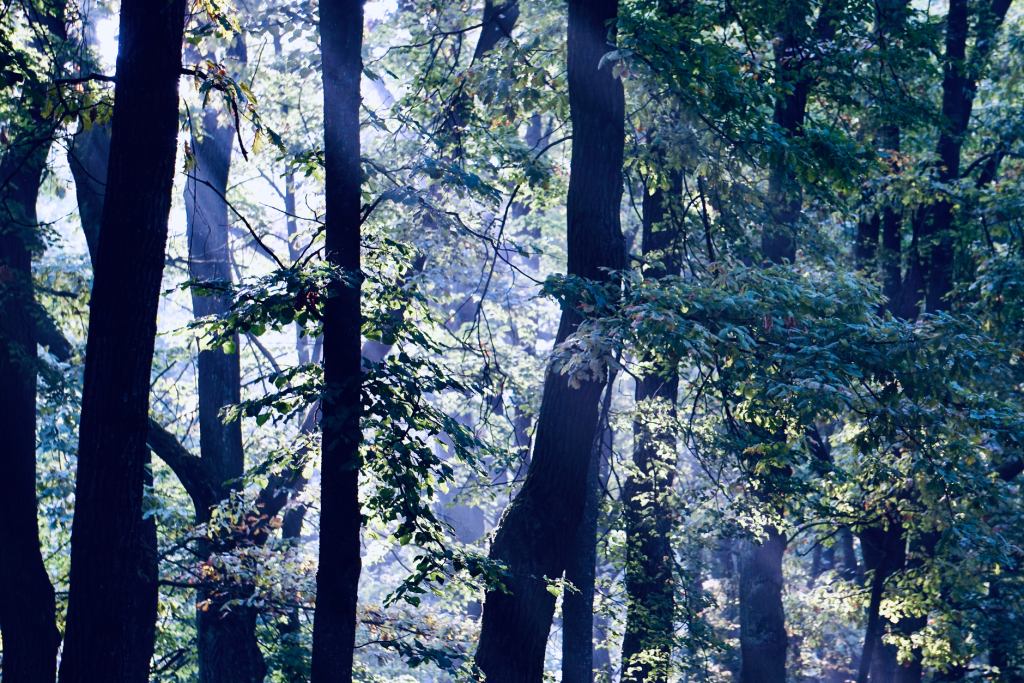
The race for the canopy in a European beech forest is decided almost before most observers even notice it has started. A new study from the University of Göttingen found that beech seedlings standing just slightly taller than their immediate neighbors at the end of their first year of life were far more likely to survive two decades later, a result that researchers describe as one of the most striking demonstrations yet of how early moments echo through a forest for generations.
The research, led by Professor Christian Ammer of the university's Faculty of Forest Sciences and Forest Ecology, followed naturally germinated beech seedlings at two sites in Southern Germany for more than a quarter century. Of the 2,214 seedlings the team tracked from the moment they emerged from the leaf litter, only 679 made it through the full observation period — less than a third of the original cohort. The survivors have now reached roughly 15 meters in height.
The quarter-century experiment
What killed the rest was not people, storms, or disease. According to a report on the study published by Bioengineer, the attrition was driven by competition among the seedlings themselves — members of the same species and roughly the same age, all drawing on the same limited pool of light, water, and soil nutrients. That competition intensifies in so-called mast years, when beech trees produce an unusually heavy crop of nuts and the forest floor can be carpeted with thousands of germinating seedlings per square meter. From that moment, every millimeter of height gained in the first growing season translates into a slightly better position in the struggle for sunlight filtering through the canopy above.
The decisive advantage was startlingly modest: differences of one or two centimeters in seedling height at the end of the first year — invisible to anyone casually walking through the woods — proved remarkably persistent. Seedlings that were slightly larger than their immediate neighbors in the year of germination typically held that relative edge year after year. It was very rare for a smaller seedling to catch up. Once a young tree fell behind, it tended to stay behind, gradually shaded out by marginally taller rivals until it died.
Why the first year decides so much
This pattern connects to one of the oldest principles in forest science: the self-thinning of even-aged stands. Foresters have known for decades that same-age, single-species stands thin themselves out over time without any human management, following mathematical laws — but which seedlings would win the lottery was unknown. The new results suggest the draw is largely settled at the starting line.
The study also found an even earlier source of advantage: the seeds themselves. In a parallel greenhouse experiment, seedlings grown from heavier beech nuts grew larger and carried more biomass than those from lighter seeds, meaning seed size feeds directly into the initial growth edge. A heavier nut packs more stored energy, letting the emerging seedling push taller in its first season, stake its claim to light, and build momentum that compounds for decades. In ecological terms, the resources a mother tree invests in each nut can shape the composition of the next forest generation far more than previously appreciated.
What it means for tomorrow's forests
The practical implications reach forest managers directly. Natural regeneration — letting forests reseed themselves — is increasingly relied upon as a low-cost, climate-adapted way to establish the next generation of European beech, one of the continent's dominant broadleaf species. Knowing that early size hierarchies are essentially locked in could help managers predict which regeneration cohorts will succeed, judge the likely outcomes of different stand structures, and decide when interventions such as thinning the overstory to release seedlings are worthwhile. It also underlines the value of protecting the seed trees that produce the best-provisioned nuts.
One caveat remains. The researchers note it is still unknown whether these early advantages will persist under the extreme weather expected in the coming decades — prolonged droughts, heat waves, and late frosts. The trees in the study have only now reached mid-height; their performance under a changing climate still needs to be researched. For now, though, the message is clear: on the forest floor, size matters from the very start, and the smallest of early advantages can grow, season by season, into the difference between a canopy tree and a stem that never leaves the shade.
Comments 0
No comments yet. Be the first to share your thoughts!
Leave a comment
Share your thoughts. Your email will not be published.