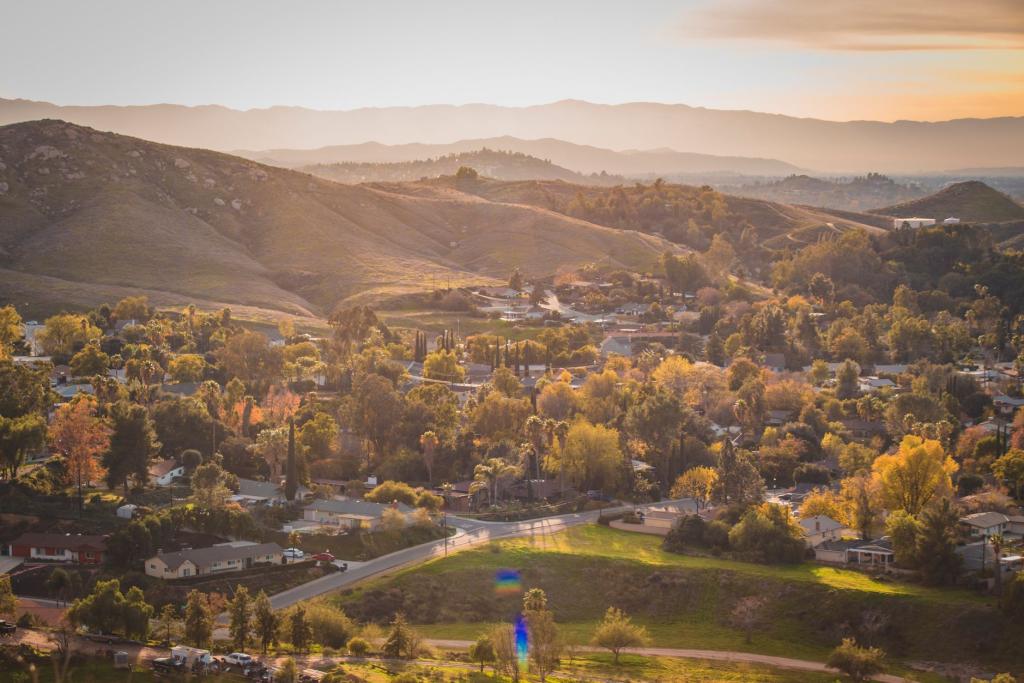
The Sandra Bullock avocado farm is having another moment. This month, fresh coverage of the actor's ninety-one-acre organic ranch in Valley Center, California pushed the story onto Google's trending searches in Brazil, where readers are rediscovering how Bullock converted a working ranch into a fully organic operation and later sold it for roughly twice what she paid. The attention makes sense. It is one of the few celebrity side projects that worked exactly the way it was supposed to, through soil and trees rather than branding.
Bullock began acquiring the Valley Center property in two thousand seven, buying through a trust for about two point seven million dollars, according to records cited by Zoom TV. The ranch sits roughly forty miles northeast of San Diego, spread across three legal parcels with a single-storey adobe main house, a separate three-bedroom guesthouse, and groves that were already planted with avocado and citrus trees. Instead of clearing the land or building a conventional luxury compound, Bullock kept the groves and pushed them further. She converted the existing orchards into certified organic operations and expanded the planting until the estate held about one thousand two hundred organic avocado trees, alongside citrus, imported olive trees, and eucalyptus.
The project was not a photo opportunity. In a two thousand nine interview with Harper's Bazaar, Bullock explained that her commitment to the land came from wanting to understand where food comes from, saying, "If you're going to serve it, you've got to know how to grow it." The grounds grew to include a pond used for water management, rose gardens, and walking trails, while the house itself ran on solar power with electric vehicle charging on site. The estate ended up certified for its organic Hass avocado grove plus grapefruit, lemon, and persimmon, according to reporting from Fancy Pants Homes, which noted the land could also support a vineyard.
The restoration habit behind the ranch
Bullock's interest in the ranch fits a longer pattern. The actor has described property restoration as a genuine passion, and during a two thousand twenty-one appearance on the SmartLess podcast she said that if she had not become an actor she would probably have worked as a restorer, drawn to the satisfaction of bringing old spaces back to life. The Sandra Bullock avocado farm was that instinct applied at scale: fifteen years of maintaining adobe buildings, upgrading facilities, and keeping one thousand two hundred fruit trees healthy while her film career continued elsewhere.
That long ownership is part of why the sale numbers land the way they do. The Sandra Bullock avocado farm was listed in September of two thousand twenty-two at six million dollars, and it went under contract within three weeks. The sale closed in early November for five point six million dollars. Against the original purchase price of about two point seven million, the gross return came to roughly double, before accounting for fifteen years of maintenance, taxes, and the cost of the organic conversion itself. For a celebrity real estate story, the interesting part is not the luxury spec sheet. It is that the value came from the land being farmed well.
Why the farm is trending again
The renewed attention says something about what readers are searching for. Brazilian search trends this week paired the story with a simple hook: at sixty-two, an actress turned a ninety-one-acre property into an organic orchard with one thousand two hundred avocado trees. Avocados remain one of the most culturally loaded foods for younger eaters, the subject of endless brunch jokes and genuine sustainability debates, and a story about growing them organically at scale reads very differently from a story about selling them. The Sandra Bullock avocado farm also fits a broader Gen Z curiosity about how land itself can be an asset. Celebrity side hustles usually mean a tequila label or a skincare line. This one meant learning irrigation.
There is a practical edge to the story too. Certified organic avocado groves in Southern California are working agricultural assets, not landscaping. The ranch's three parcels, water infrastructure, and zoning that allows for vineyards or greenhouses meant the property could keep producing income for its next owner, which is part of what made the quick sale possible. Fancy Pants Homes reported that the grove was already certified and producing, so the buyer was purchasing a functioning farm with a residence attached rather than the other way around.
The Sandra Bullock avocado farm will not change how anyone eats breakfast. But as a case study in patience, it is hard to beat. Fifteen years, one thousand two hundred trees, and a sale price that roughly doubled the buy-in: the ranch worked because Bullock treated the land like it mattered. Readers can follow more food and farming stories on the GenZ NewZ protein and food culture beat, or read how younger workers are rethinking the side hustle economy. The full property history is documented in Zoom TV's report on the ranch and Latination's account of the sale.
Comments 0
No comments yet. Be the first to share your thoughts!
Leave a comment
Share your thoughts. Your email will not be published.