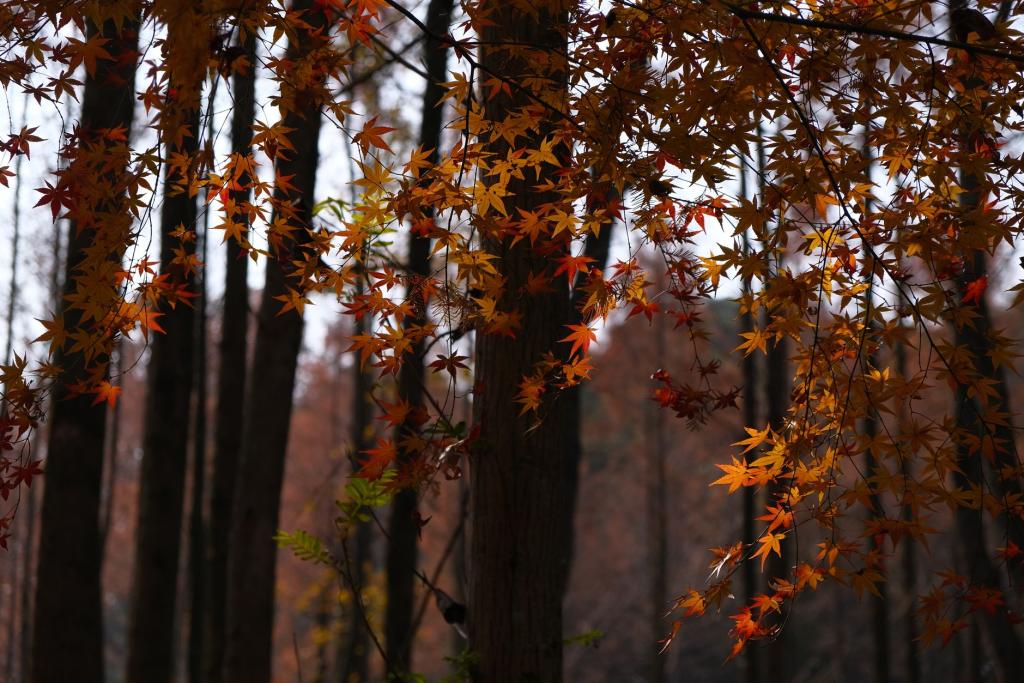
Autumn leaf color can look like a forest-wide costume change, but leaves do not all turn red—and the colors do not all come from the same process. As days shorten and growing conditions shift, many deciduous trees wind down photosynthesis and reclaim useful materials from their leaves. Green chlorophyll fades; yellow and orange pigments become easier to see, while some species manufacture red pigments in autumn. The exact display depends on a mix of leaf chemistry, tree identity, recent weather and location.
Green fades, revealing pigments that were already there
During the growing season, chlorophyll captures light for photosynthesis and is continually replenished, so its green usually dominates the leaf’s visible appearance. As autumn approaches, shorter day length and other seasonal cues prompt trees to prepare for winter. Chlorophyll production slows, and existing chlorophyll breaks down as the leaf’s photosynthetic machinery winds down. The green signal recedes rather than turning directly into red, exposing other pigments that had been present all along.
Those revealed pigments are mainly carotenoids, a group that includes yellow xanthophylls and orange carotenes. They help leaves handle light during the growing season, but green chlorophyll masks their color. When chlorophyll declines, the same leaf can appear yellow or gold, or orange where different pigment amounts mix. According to the Forest Service, carotenoids produce yellow, orange and brown hues, while chlorophyll supplies green; the agency’s fall-color science explainer describes how their colors emerge as chlorophyll production slows and the green pigment is lost.
Not all autumn color is a reveal. In some plants, anthocyanins—the pigments behind red, crimson and purple shades in familiar fruits—are made in the leaf in late summer or fall. Their production can draw on sugars that remain in the leaf as its connection to the tree changes. How much anthocyanin forms, and how it combines with carotenoids, helps determine whether a leaf looks red, purple, orange-red or mostly yellow. Browns can also involve tannins and the breakdown of leaf tissues, especially in species whose foliage does not make a vivid display.
Why some years produce brighter reds
Red is therefore conditional, not the inevitable final stage of every leaf. Sunlight and sugars help support anthocyanin production, and cool autumn nights can help sugars remain in leaves; sunny days followed by cool, but not severely freezing, nights can favor vivid reds in species capable of making the pigment. Warm nights, cloud cover and persistent rain may make red tones less intense in some places and years. These are influences rather than a guaranteed recipe: the response varies among species and local conditions.
According to the National Park Service, warm, sunny early-fall days can maximize photosynthesis while cool nights limit sugar use, supporting anthocyanin formation. In its account of foliage timing and weather, NPS also notes that cloudy, rainy autumns often bring less red, while hard frost can injure cells and make leaves fall before color fully develops. Water matters across the season too. Prolonged summer drought or other stress can leave foliage brown, dull or dropping early; excessive rain, wind or disease can shorten the show. A mild frost is not the same as a damaging freeze, and weather effects differ by species and region.
There is useful variation even on one tree. Sun-exposed and shaded leaves may develop different mixes of pigments, so a red maple can show redder foliage on brighter parts of its crown while shaded leaves look yellower. Genetics and the plant’s health also matter. Iowa State University Extension says some maples, ash, serviceberry, viburnum and ginkgo tend to produce striking fall colors, while other kinds commonly fade to muted yellow-brown or shrivel brown. Its science guide to fall color is a practical reminder that a lack of crimson is not a sign that autumn has failed.
Species, weather and geography set the calendar
Tree species do not all respond on the same schedule or display the same pigments. Maples can show a broad range of yellows, oranges and reds; aspens often turn gold; some oaks hold russet or brown leaves. Even within a group, species and individual trees vary. The University of Georgia’s extension field report on water, weather and species notes that sourwood may change early while oaks often change later, and that maple color depends on the type. A mixed forest can therefore change in waves rather than all at once. For a forecast-focused look at local peak timing, see GenZNewz’s fall foliage outlook; this article focuses on the pigments and biology behind those colors.
Geography adds another layer. Autumn arrives at different times across latitudes and elevations, shaped by seasonal daylight patterns, temperature and local weather. In many temperate regions, higher elevations and more northerly locations cool earlier, so their color periods may begin ahead of lower or more southerly areas. But a map is only a guide: a warm spell, drought, cold snap or local exposure can move the timing, and the mix of tree species determines what color is visible. The season’s peak can travel across a region and still vary sharply between nearby slopes or valleys.
A helpful field clue is to compare the tree, not just the date. If neighboring species change at different times, that can be normal; if one tree’s leaves turn unusually early, especially with wilting, scorch or scattered dieback, stress from roots, moisture, pests or disease may be worth considering. Early color alone is not a diagnosis, since natural species timing and local conditions can also explain it. Iowa State Extension specifically flags premature color as a possible stress signal and recommends judging it alongside other symptoms.
The short version: autumn leaf color is the visible outcome of several processes, not a single pigment switching on. Green chlorophyll declines, carotenoids that were already there show through, and anthocyanins add reds only in some leaves under suitable conditions. Species, weather and geography decide how those ingredients combine—and whether the result is a bright red canopy, a gold hillside, muted brown foliage or a quick leaf drop. That variety is part of the science, not an exception to it.
Comments 0
No comments yet. Be the first to share your thoughts!
Leave a comment
Share your thoughts. Your email will not be published.