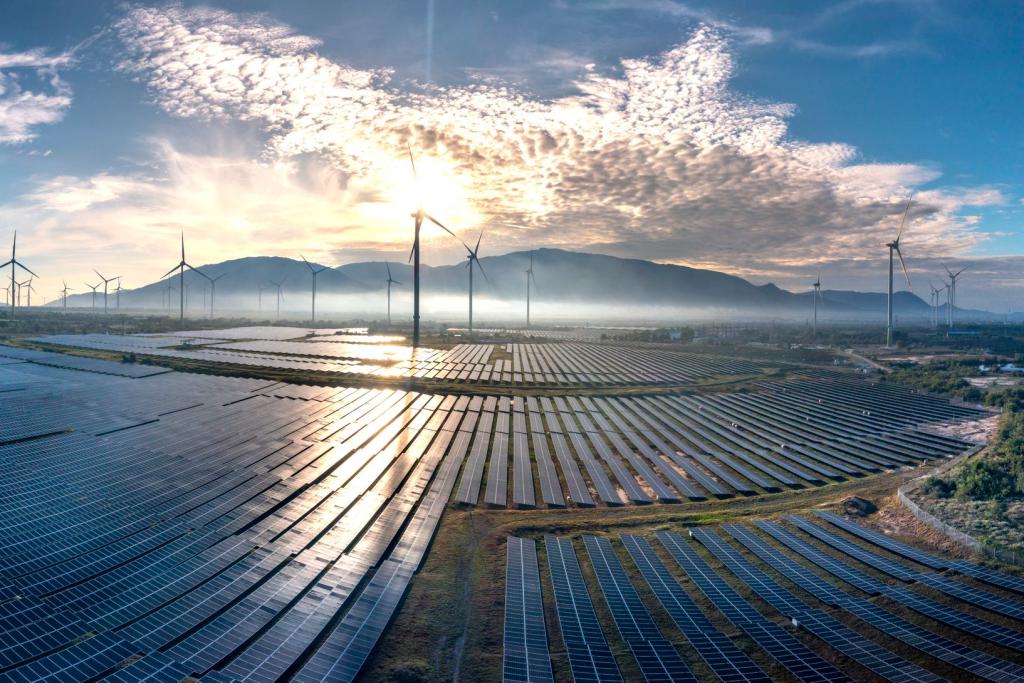
New Zealand just switched on a new landmark in its clean-energy push. Prime Minister Christopher Luxon officially opened Kōwhai Park on October 15, 2026, the South Island Solar Farm built on land beside Christchurch Airport, and the country's biggest solar array south of the Cook Strait. Nearly 300,000 panels now stretch across a 230-hectare site, with enough expected output to match the annual electricity use of around 36,000 homes.
The project, a joint venture between generator Contact Energy and developer Lightsource bp, adds 150 megawatts of alternating-current capacity to the national grid, with panel capacity rated at 168 megawatts direct current. The developers say the farm will generate 275 gigawatt-hours of renewable electricity a year. The NZ$273 million build is the first completed solar farm for both partners, according to the developer's announcement.
What Comes Next for New Zealand Solar
For the South Island Solar Farm, the next chapter is operational: delivering its contracted power year after year and proving the economics of airport-hosted solar. Behind it, two more consented sites in Taranaki and Northland could extend the model to the North Island. The broader question is whether consenting and grid investment keep pace with the country's electrification goals. If they do, the template proven at Christchurch, flat public land plus an industrial anchor customer, could repeat across the country. If not, the farm will stand as a showcase rather than a starting gun.
How the South Island Solar Farm Came Together
The opening caps a five-year journey. Christchurch Airport first unveiled the renewable-energy precinct concept in December 2021, committing hundreds of hectares of airport land to generation. The airport named its development partners in February 2023. Green financing worth NZ$267 million was secured in August 2024, construction began days later, and the first row of panels went up in August 2025. Commissioning started in August 2026, ahead of this month's official opening.
The construction effort was sizable for the region. At its peak, the build employed 235 people and involved 66 Canterbury businesses, according to PV Tech's coverage of the opening. The airport's chief executive, Justin Watson, said the project shows what becomes possible when airport land is reimagined, describing an ambition to turn the site into a full renewable energy precinct.
Why Airports Are Becoming Power Stations
The most interesting part of the story is not the panels but the business model. Airports sit on enormous flat tracts of land that cannot be built on for safety reasons, making them natural hosts for solar. The Christchurch project is only the first phase of a wider development planned across roughly 400 hectares beside the runways, and the airport has framed it as the start of a renewable precinct rather than a one-off array.
The electricity already has buyers. Christchurch Airport itself will take power under a long-term agreement, and dairy processor Synlait has contracted a quarter of the farm's output to run its Dunsandel and Dairyworks sites. That detail matters: it is heavy industry, not just households, going electric. Contact Energy's chief executive, Mike Fuge, said building generation at scale gives businesses the confidence to electrify and strengthens security of supply. The farm is the company's first finished solar project, with two more consented sites in Taranaki and Northland in the pipeline.
What the South Island Solar Farm Means for the Grid
New Zealand's electricity system runs mostly on hydro, geothermal, and wind, so solar is the newcomer. That context cuts both ways. On one hand, solar diversifies a grid that has historically leaned on rainfall for its dams, a vulnerability in dry years. On the other, the country's electricity demand peaks in winter, when the sun is weakest, which is why developers pair projects like this with long-term industrial contracts rather than relying on spot prices.
The comparison that puts the project in perspective is the trajectory of the country's solar ambitions. What was once pitched as an array dozens of times larger than anything in the country has now been built, commissioned, and switched on, and two more consented sites are waiting behind it. For readers tracking the energy transition, the pattern is familiar from solar booms elsewhere: airports and farmland as hosts, industry as the anchor customer, scale doing the rest. A related story on this beat explored how sheep grazing under solar panels can give bees a boost, showing how creative these sites are getting.
There is a counterpoint worth keeping in mind. One solar farm, however large, does not transform a grid; New Zealand will need far more generation, storage, and transmission to electrify transport and industry fully. Critics of the pace argue the consenting system still moves too slowly for the country's targets. But the opening answers the simpler question of whether big solar can actually get built there. The panels are up, the contracts are signed, and the power is flowing. The climate stakes behind that build-out are the same ones driving the record-breaking extremes tracked in this year's planetary vital-signs report.
Comments 0
No comments yet. Be the first to share your thoughts!
Leave a comment
Share your thoughts. Your email will not be published.