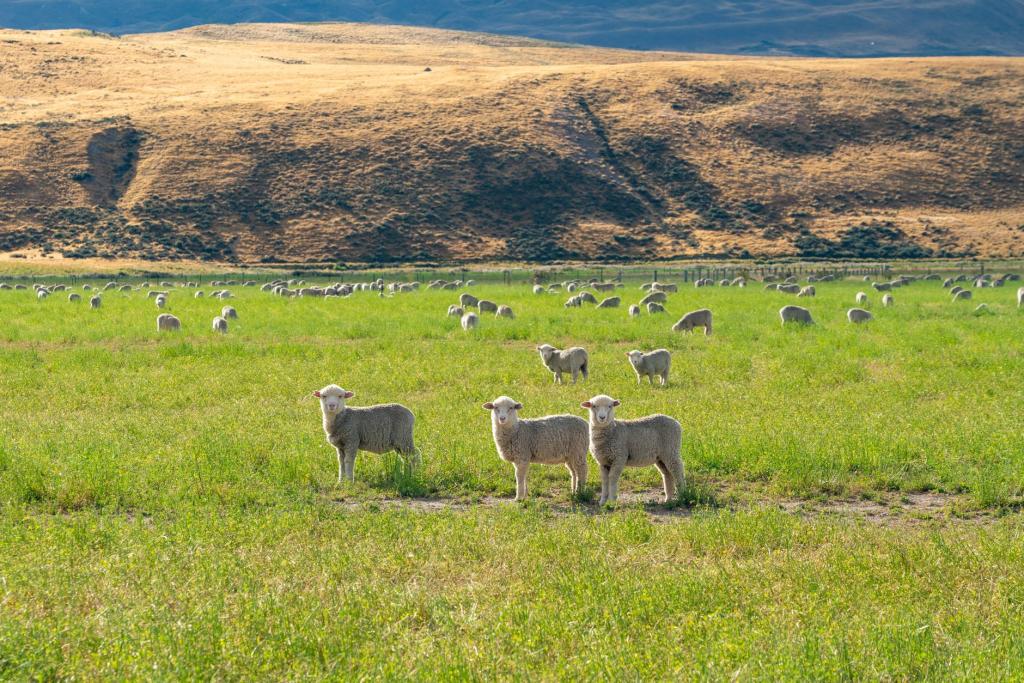
The next time you drive past a field of solar panels, look closer: sheep under solar panels may be grazing beneath them — and, according to two new studies from Cornell University, that is good news for the bees. Researchers found that a small flock grazing around solar arrays can raise the abundance of beneficial insects far more than mowing the same ground, as long as the number of animals stays low.
The team tested the practice over three years at Cornell's own solar site, the Cascadilla Community Solar Farm in Dryden, New York. When two sheep per hectare grazed among the panels, the combined abundance of wild bees, honey bees and lady beetles climbed 38% compared with a control plot that was simply mowed, according to the Cornell Chronicle. Honey bees drove most of that increase, with their numbers jumping 83%. The findings appeared in "Low solar-grazing densities support beneficial insects in agrivoltaic systems," published October 7 in the journal Environmental Research Letters, and the university's own reporting on the work is available at the Cornell Chronicle.
"What's been missing is research that treats them as parts of the same system," said Leana Zoller, the paper's first author and a postdoctoral associate at Cornell's College of Agriculture and Life Sciences, referring to sheep grazing and insect habitat. Her team brought together entomologists, ecologists and plant and animal scientists to run the trial, precisely because the trade-offs involved span so many specialties.
The density makes all the difference
More sheep did not mean more insects. At four sheep per hectare, beneficial insect numbers looked about the same as on the mowed control site, though the flock kept the vegetation down more effectively than at the lower rate. At eight sheep per hectare, the animals handled the grass almost entirely on their own and stayed healthy — but honey bee abundance fell by 45%. In other words, the sweet spot for biodiversity is light grazing: enough mouths to keep the grass short, few enough that flowers and the insects feeding on them still thrive.
"With solar grazing, people, energy, agricultural animals, plants and insects are all part of this ecosystem," said Steve Grodsky, the study's senior author and an assistant professor of natural resources at Cornell. His team framed the work around a practical question: what is the stocking rate a farmer can actually use? The low-density setup they identified gives developers, towns and growers a concrete number to write into grazing contracts.
A business tool for the shepherds
The second Cornell paper takes the idea from the field to the ledger. A team from Cornell's business and engineering schools built a spreadsheet model that helps sheep farmers decide how many animals to buy, when to sell, and what to charge solar companies for vegetation management, based on costs, expected revenue and the amount of grass a given site will grow. The paper, "Flock Management for Solar Grazing," appeared September 28 in Manufacturing and Service Operations Management, and the farmer network United Agrivoltaics has already folded the tool into how it brings new shepherds aboard.
The economics are what make solar grazing spread so quickly. As sheep farmer and co-author Nikola Kochendoerfer, who grazes 700 ewes on solar sites in New York and Vermont, put it: "You get paid to graze as opposed to having to pay to graze." That income lets growers expand flocks, build barns and hire help, while solar operators get vegetation control without running mowers. Roughly half of the lamb and mutton eaten in the United States is imported, so a bigger domestic flock could rebuild rural supply chains too, according to the Cornell researchers.
From pilot plots to thousands of acres
The Cornell trial is small, but the movement it studied is already scaling fast. Enel North America has contracted the Texas Solar Sheep Company to deploy more than 6,000 sheep across eight of its solar sites in Texas, covering about 10,100 acres — the largest solar grazing agreement in the country, as reported by Renewable Energy World (full story here). The American Solar Grazing Association estimates the practice already covered 100,000 acres of U.S. solar land as of last year, a footprint that barely existed half a decade ago.
Other projects mix grazing with pollinators directly. Urban Grid's Crystal Hill Solar site in Halifax County, Virginia, runs 65 megawatts across 620 acres alongside lamb grazing and a ten-hive apiary holding some 500,000 bees, expected to produce more than 400 pounds of honey a year for local food banks and schools, the company said in a GlobeNewswire statement. In Poland, nearly 100 Greater Poland sheep now graze among more than 31,000 panels at Volkswagen Poznan's 27-hectare factory solar farm, where researchers from the Poznan University of Life Sciences are studying how the animals fare under the arrays.
Why it matters for the land your generation inherits
Solar development has a land problem: the cheapest places to build arrays are often the farmland communities don't want to lose. Putting sheep under solar panels is the most visible version of agrivoltaics — farming and power generation on the same acreage — and the Cornell results sharpen the pitch. Light grazing doesn't just preserve agricultural use of the land; it measurably helps the pollinators that surrounding crops depend on.
There is also a climate angle hidden in plain sight. Mowing around panels burns diesel and, if the job is skipped, long grass becomes a fire risk. Sheep replace that chore with animals that shade themselves under the panels on hot days, fertilize the soil as they work, and leave a grassland buzzing with the insects it needs. As the density results show, the trick is restraint — a few sheep per hectare turns a power plant into habitat, while a crowded field turns it back into a lawn. Get the number right, and the energy transition and the pollinators both win. For more on the solutions reshaping the energy landscape, see our climate emergency coverage.
Comments 0
No comments yet. Be the first to share your thoughts!
Leave a comment
Share your thoughts. Your email will not be published.