The Earth's climate system is no longer merely at risk of destabilising. It is actively doing so. That is the central conclusion of the seventh edition of the annual State of the Climate report, published on Wednesday in the journal BioScience by an international coalition of researchers led by scientists at Oregon State University.
The report's co-lead author, William Ripple, a distinguished professor emeritus in the university's College of Forestry, put the finding in plain terms: "Rapid destabilization is now a diagnosis rather than a warning for the future." The annual exercise exists to track the planet's vital signs the way a physician tracks a patient's, and to press governments and policymakers to abandon the business-as-usual approach that has persisted despite decades of evidence linking human activity to dangerous climate change.
Records across the vital signs
The 2026 climate report monitors sixteen planetary vital signs, spanning greenhouse gas concentrations, surface and ocean temperatures, ice, energy balance, and wildfire. This year, seven of those sixteen indicators sit at record extremes, and several others show signs of accelerating or abruptly shifting in the wrong direction.
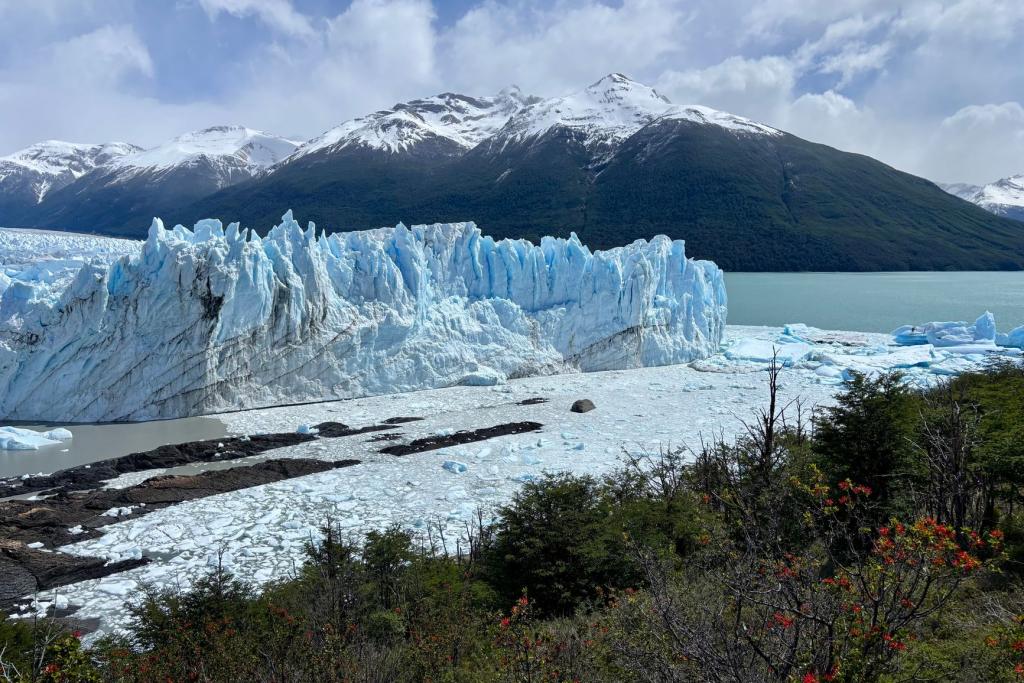
The records at issue are stark. Global sea level has reached a new high. Global ocean heat content is at a record extreme and still climbing at an accelerating rate. Worldwide glacier thickness has fallen to a record low, with glaciers such as Argentina's Upsala thinning and retreating at a rapid pace, as reported by Eos. The Greenland ice sheet, which has now shed roughly six thousand gigatonnes of mass, is at a record low of its own. And the atmospheric concentrations of the three most common greenhouse gases, carbon dioxide, methane, and nitrous oxide, all reached record levels again this year.
Carbon dioxide remains the headline number. In May of this year, atmospheric CO2 breached 428 parts per million, according to the report, a level about 50 percent higher than before the industrial era and greater than anything seen in the past two million years. The pace of warming has also quickened. The rate of global warming has roughly doubled, from about 0.19°C per decade between 1970 and 2010 to about 0.36°C per decade from 2010 to the present day.
The recent extremes go beyond long-term trends. July of this year was the hottest month on record in the contiguous United States, and global ocean temperatures reached a record high the same month. The report adds that a very strong El Niño event is expected to begin in early autumn, adding substantial extra warming and putting the year on track to be one of the hottest ever recorded. The area burned by wildfire in the United States each year has also shifted abruptly upward in recent decades.
Tipping points come into view
The authors warn that the sheer number of simultaneous records, combined with the risk of interacting feedback loops, raises the prospect of crossing critical Earth system tipping points, marks at which the affected processes cannot return to their pre-climate-change state. Among the tipping points scientists have identified are the slowing of the Atlantic Meridional Overturning Circulation (AMOC), the runaway drying and deforestation of the Amazon rainforest, and the abruptly accelerated melting of the Greenland and West Antarctic ice sheets.
Ripple wrote to Eos that the accelerating trends in the report were especially concerning in light of these thresholds. "Continued warming could trigger additional feedbacks and tipping points that would make climate change increasingly difficult to control," he said. Nico Wunderling, a climate scientist at the Potsdam Institute for Climate Impact Research who was not involved in the BioScience report, told Eos that the worrying negative trends need to be watched closely, in part because there is evidence that the rate of climate change, rather than the absolute temperature, could trigger the slowing of the AMOC.
Renewables boom, but fossil fuels still rise
Not every trend in the report points downward. The fastest-growing bright spot is the rapid expansion of renewable energy capacity and advances in battery storage. In 2025, renewable energy surpassed coal in global electricity generation, a turning point Ripple described as important. "These developments show that we have some of the technologies needed to move away from fossil fuels. The challenge now is getting them deployed fast enough to actually reduce fossil fuel consumption," he wrote.
The catch is that fossil fuels remain the dominant energy source for the world's population, by far the main driver of human-caused climate change. The report notes that worldwide consumption of oil, coal, and gas increased by 0.9 percent in the same year renewables overtook coal. Cutting emissions is necessary to slow climate change, the authors write, but it will not be enough on its own. The conclusion supports a recent United Nations assessment indicating that carbon removal will be necessary to avoid the worst impacts.
Ripple is blunt about what stabilization requires. "The accelerating expansion of renewable energy and advances in battery storage are encouraging, but they are only part of the transformation needed to stabilize the climate system," he said. "A more resilient and sustainable future depends heavily on big cuts in greenhouse gas emissions, effective adaptation and ecosystem protection."
Why this year reads differently
This year's framing has shifted. Earlier editions warned that destabilisation was coming. This year's authors treat it as a present-tense diagnosis, and they back that framing with the record book: new extremes for sea level, ocean heat, glacier thickness, ice-sheet mass, and greenhouse gases, plus a doubling of the warming rate over the past fifteen years.
What happens next is, in a real sense, a measurement problem. The coalition will publish the eighth edition next autumn, and the indicators will show whether the accelerating trends continue. Ripple has said scientists have a responsibility not only to conduct research but to communicate what they are finding. "We need to make our science understandable to the public and policymakers," he wrote.
Sources: Oregon State University news release, Eos, and the full report in BioScience.
Comments 0
No comments yet. Be the first to share your thoughts!
Leave a comment
Share your thoughts. Your email will not be published.