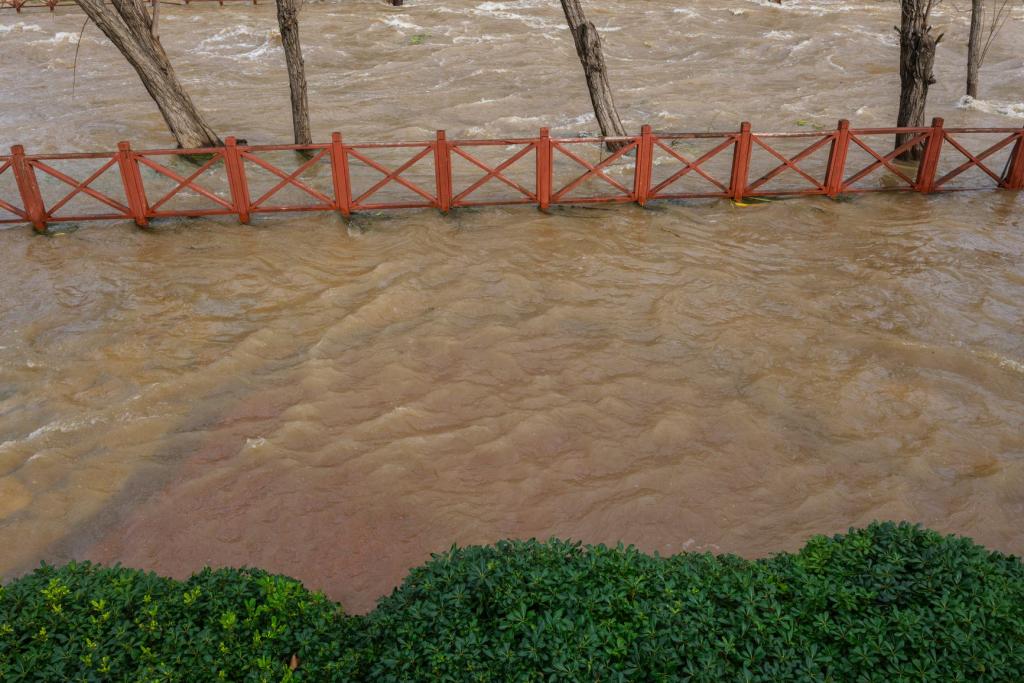
The Istanbul floods have turned Turkey's biggest city into a river system, and officials say it is the heaviest rainfall the city has seen since records began in nineteen forty-two. Cars were swept down streets, subway stations leaked, and thousands of people had to be pulled to safety as the storm hit this week.
According to AFP, via Dawn, the toll stood at three dead and five missing on Thursday. "We are talking here about the highest level of precipitation in Istanbul since records began in 1942," Istanbul governor Davut Gul said. That is a huge statement for a megacity of roughly sixteen million people.
What Happened in Istanbul
The rain began lashing the city in earnest on Wednesday morning and kept intensifying through the day. Streets, underpasses and basements filled quickly. Footage collected by the DHA news agency showed a line of parked cars in the northern Sariyer district being shoved into a torrent of muddy water and carried away.
Al Jazeera reported that roads collapsed in the Eyupsultan and Gaziosmanpasa districts, floodwater reached two hospitals, and water poured through the ceiling of the Haciosman metro station. In Sultangazi, a primary school's retaining wall collapsed while students were inside their classrooms, though no injuries were reported among the kids.
Turkey's disaster agency AFAD set up a crisis desk. By nightfall on Wednesday it had logged one thousand two hundred seventy-seven flooding incidents, fifteen landslides, and forty-seven people stranded, according to AFP. Forty-three flights bound for Istanbul Airport had to be diverted, and Sabiha Gokcen airport temporarily suspended takeoffs because of strong winds.
The Human Toll
One of the victims was a fourteen-year-old boy who was electrocuted after stepping into a puddle in the Balat area of Fatih district. Al Jazeera says it verified surveillance footage showing the moment he collapsed, and the governor's office said an investigation has been opened. Authorities later found a man's body near a park in the Kagithane area, which raised the toll to three.
Five more people remain missing, officials said. Turkish media also reported that a worker died after falling into a well while trying to drain water at a school construction site in Beykoz, but AFP noted there was no immediate official confirmation. In neighbouring Kocaeli province, a man was carried away by floodwaters, and a driver swept off in Gebze was rescued with ropes.
Rescues and Shutdowns
The rescue effort was enormous. Xinhua reported that Governor Gul said three thousand and fifty people had been rescued from the floodwaters, adding, "There is no one left waiting to be rescued." About eight thousand personnel and two thousand vehicles and construction machines were deployed across the city, according to Daily Sabah as cited by Al Jazeera.
Daily life basically stopped. Schools were ordered shut across Istanbul until Monday, motorcycles were banned from the roads, and the governor urged people to stay home unless absolutely necessary. Residents of basement flats were told to spend the night on higher floors. Power and water cuts hit areas such as Sariyer, where shopkeepers were seen trying to salvage goods from the mud.
How Extreme Was This Rain?
The numbers are wild. Turkey's interior minister, Mustafa Ciftci, said rainfall reached up to two hundred seventy-two kilograms per square meter in some parts of the city, which is the same as two hundred seventy-two millimeters, according to Xinhua. The BBC's Turkish service reported the interior minister said some areas saw about one seventh of the annual average in a single storm.
Al Jazeera cited Daily Sabah in saying the heaviest rain fell in the Omerli area of Beykoz, where nearly one hundred ninety-four millimeters was recorded, and that parts of the city received nearly one hundred millimeters in twelve hours. Different agencies report different peak readings, so expect those figures to be updated as the weather service finishes its tally.
Why This Matters for Everyone
Extreme downpours like this are becoming a global pattern, and cities built for older weather struggle to drain them. Dense concrete, packed underpasses and aging stormwater systems turn a storm into a flash flood within minutes. You can find more of our reporting on the climate emergency as these events pile up.
For now, the Istanbul floods are not over. AFP says the heavy rain is expected to continue over the weekend, so more disruption is likely. Read the original coverage from Dawn and Al Jazeera for the latest, and keep an eye out for official updates on the missing.
Comments 0
No comments yet. Be the first to share your thoughts!
Leave a comment
Share your thoughts. Your email will not be published.