Online child safety just got its grimmest audit yet. A landmark UNICEF report published in early September 2026 estimates that roughly 20 million children aged 12 to 17 — nearly one in five internet-using kids across 21 countries — experienced some form of technology-facilitated sexual exploitation or abuse in a single year, according to the UN children's agency. The findings, drawn from one of the largest studies of its kind, landed just as world leaders were being told that today's young people are "the first generation to grow up with artificial intelligence — but often the last to be asked about it."
The study was conducted with ECPAT International and INTERPOL as part of the Disrupting Harm project. Researchers surveyed roughly 21,000 children across the countries studied and interviewed 100 young people who had experienced abuse in childhood. About 15 million kids were exposed to unwanted sexual content, while around nine million were pressured into sexual conversations or sharing sexual images against their will. Another four million had sexual images of themselves shared without their consent, and more than five million were offered money or gifts in exchange for sexual content or contact, according to UNICEF's September press release.
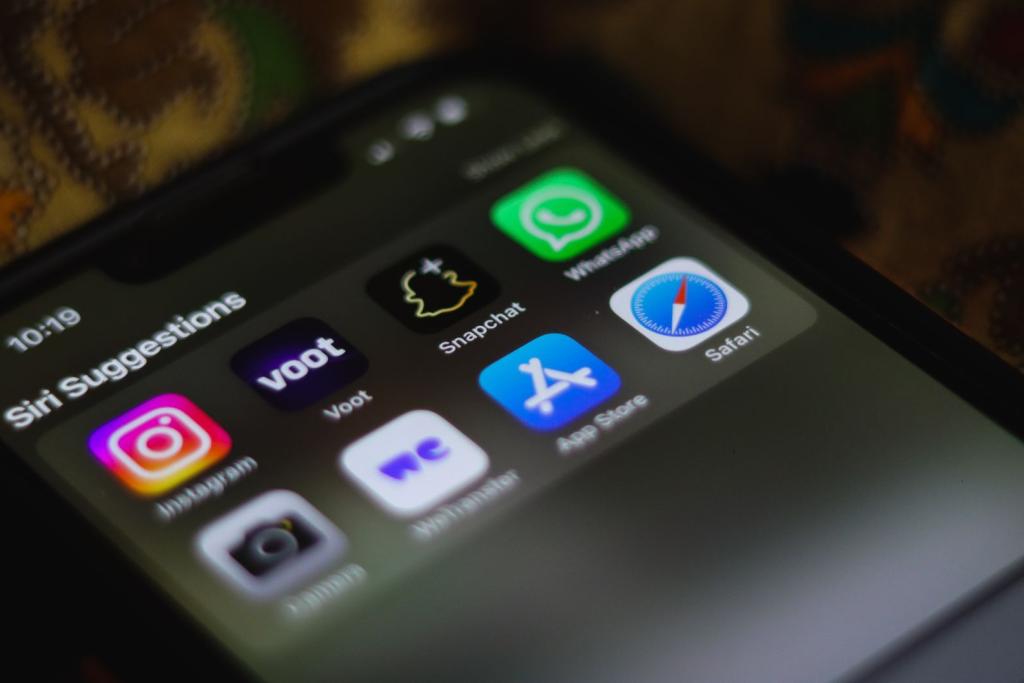
The report also challenges the stranger-danger script. In 57% of cases, the perpetrator was someone the child already knew — a peer, a romantic partner, a friend or a family member — while in 38% of cases the child first met the abuser online. Nearly 60% of the abuse took place on social media, spanning platforms including Facebook, Instagram, Snapchat, TikTok and WhatsApp, with another 14% happening inside online games. UNICEF says design features such as unsolicited messages, private chats, fake profiles and one-click resharing are routinely used to exploit children's trust.
The fallout is severe. Children who endured technology-facilitated exploitation were four times more likely to report suicidal thoughts, self-harm behaviors or serious anxiety than their peers, the analysis found. One survivor in the Dominican Republic, whose private images were circulated without her consent at age 14, told researchers: "I didn't know how to react... I felt a little in shock." Yet silence dominates the picture: more than 40% of cases were never shared with anyone, and fewer than 1% reached police, social workers or helplines. Most kids simply said they did not know where to turn.
Why online child safety means redesigning the apps
UNICEF's core demand is a shift in who carries the burden. The agency calls for safety by design: privacy by default for children, limits on unsolicited contact from adults, recommender systems that don't steer kids toward sexualized content or potential abusers, and laws that specifically cover grooming, sexual extortion and AI-generated abuse material. "Many children suffer in silence, unsure where to turn for help," UNICEF chief Catherine Russell said. "We cannot look away."
The push gained momentum at the UN General Assembly in New York, where human rights chief Volker Türk told a high-level meeting co-chaired by the presidents of France and Kenya and the prime ministers of Spain and Australia that children's rights apply to AI exactly as they apply everywhere else. His office had surveyed more than a thousand children across 49 countries, UN News reported, who flagged AI deepfakes of real people, the harvesting of their personal data, and fears that AI could replace real relationships with family, friends and teachers. "The duty to respect children's rights — and all our rights — lies with those building AI," Türk said, adding that voluntary corporate commitments are "simply not enough."
Russell added a staggering detail at the same meeting: at least 1.2 million children in 11 countries had their likenesses transformed into AI-generated sexual images over the past year. For the online child safety movement, that number collapses the distance between abstract AI governance debates and real harm.
Tech companies have their own version of the story. Meta told Reuters that UNICEF's surveys stretch back to 2020, before it rolled out protections the report itself recommends — private-by-default accounts for teens and limits on adults messaging teens they aren't connected to. Snapchat and TikTok pointed to their detection systems, account removals and reporting tools. But UNICEF argues that features alone haven't closed the gap, and that only design-level rules enforced by regulators will.
The policy wave — and why the online child safety debate is contested
Governments are moving, unevenly. The European Union unveiled its KIDS Act in mid-September 2026, proposing no social media accounts for under-13s, guardian-controlled accounts for early teens, and bans on infinite scroll and reward mechanics for minors. In the United States, the House passed a sweeping child-safety bill in June 2026, but it faces long odds in the Senate and no federal law has been enacted. Australia went furthest, banning social media for children outright in 2025.
Privacy advocates warn the cure has side effects. Age verification can collide with privacy, and some critics argue the American bill could make it harder to sue platforms while preempting tougher state laws. France's top constitutional court even struck down a national age-assurance measure over insufficient privacy safeguards. That fight is now the center of the online child safety debate: who bears the burden of proof, and how much surveillance is too much in the name of protection?
What you can actually do
UNICEF's most human finding for online child safety may also be the simplest: the biggest barrier to reporting abuse is not knowing where to go. If something happens to you or a friend, telling a trusted adult — a parent, teacher or counsellor — is the step that matters most, and every major platform has in-app reporting tools, even if few young people use them. Saving evidence before blocking an account helps too.
On the prevention side, the basics genuinely work: keep accounts private, turn off messages from people you don't know, and review who can follow you. And if a friend confides in you, believe them without blame — survivors in the study described crushing shame, with one calling herself "the dirtiest, the worst person." Ending that stigma is part of ending the silence.
For more on the broader youth-safety fight, read Gen Z Is Quitting Social Media: The Great Log-Off and explore the Human Rights beat.
Comments 0
No comments yet. Be the first to share your thoughts!
Leave a comment
Share your thoughts. Your email will not be published.