In a move it says it has never made in its 65-year history, Amnesty International is calling on the United States to abolish ICE. The demand lands in a 168-page report released September 24, documenting alleged human rights violations across four major federal immigration enforcement operations — and it arrives just as Congress weighs major new funding for the agency.
The report, "We Had Whistles, They Had Guns," is built on fieldwork the rights group conducted from March through June 2026 in Chicago, Minneapolis–St. Paul, New Orleans, and Washington, D.C. Researchers interviewed 154 people, reviewed dozens of videos, and examined court records and government statements. What they found, the organization says, is a pattern of racially discriminatory enforcement, arbitrary detention, and treatment of detainees that in some cases may amount to torture.
"ICE is fundamentally broken and cannot be fixed," said Nadia Daar, executive director of Amnesty International USA, in a statement accompanying the release. "For the U.S. government to have an immigration enforcement system that complies with international human rights law and standards, ICE needs to be abolished and we need to start over."
What investigators say they found
According to the report, masked and armed agents carried out large-scale operations without visible identification, detaining people based on racial profiling rather than individual suspicion. One account stands out: Minnesota State Representative Liish Kozlowski, who is Ojibwe-Latine, described her pregnant cousin having her car window smashed at gunpoint. When her husband showed a Tribal ID, an agent replied that it did not matter — "this is our land now," USA Today reported.
Detention conditions drew some of the report's harshest language. The rights group says up to a hundred immigrants were held for as long as two weeks in cells designed for a dozen people, that detainees were blocked from seeing attorneys while being pressured to sign so-called voluntary deportation forms, and that the prolonged use of shackles was punitive. Some of the deaths documented in the report, including the fatal shootings of Alex Pretti and Silverio Villegas-Gonzalez, should be investigated as extrajudicial executions, the organization argues.
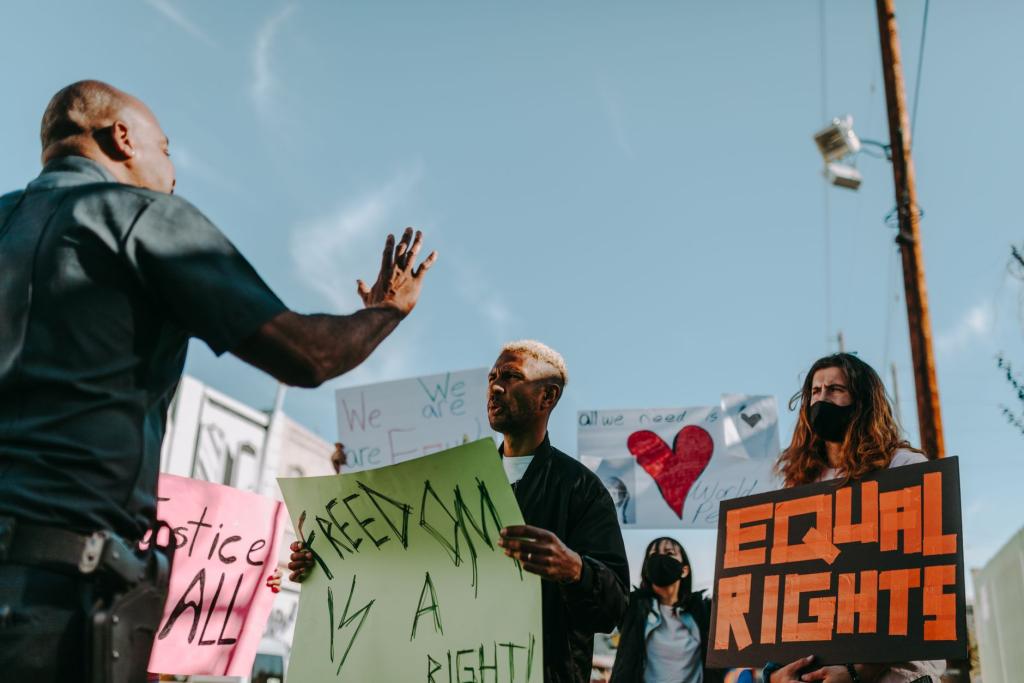
Surveillance is another thread. The report says facial-recognition tools were used to identify immigrants and protesters, that demonstrators were tracked to their homes, and that drones followed protesters and families. Repression of protest itself is documented too: tear gas, pepper spray, and pepper-ball pellets were used against demonstrators, including Rev. David Black, who was shot in the face, arms, and torso outside the Broadview facility in Chicago while wearing clerical dress.
The picture is reinforced by outside data. Researchers at Syracuse University reported in July that more than seven in ten people in ICE detention had no criminal conviction, with roughly 65,700 people detained. "There are simply no reforms that would bring this agency into alignment with the United States's human rights obligations," Amy Fischer, the organization's director for refugee and migrant rights in the U.S., said at a press conference, according to USA Today.
A timeline of escalation
2003: ICE is created in the wake of the September 11 attacks, consolidating immigration and customs enforcement. The rights group says it has documented violations and weak oversight since the agency's founding.
January 2025: A new administration takes office with a mass detention and deportation agenda, backed by billions in new funding. The rights group says the scale of abuses reached new levels from this point on.
December 2025–February 2026: Military-style operations roll out under names like Operation Metro Surge in Minneapolis–St. Paul and Operation Catahoula Crunch in New Orleans, alongside National Guard deployments in Los Angeles and Washington, D.C., and a Black-Hawk-helicopter raid on a Chicago apartment building.
March–June 2026: Researchers conduct fieldwork across the four cities — 154 interviews and more than 30 videos reviewed.
September 24, 2026: The report is published, and the abolition call is issued — a first for the organization in more than six decades.
Why the call to abolish ICE matters now
Timing is everything. WBZ NewsRadio reports the release coincides with Congress considering a reconciliation package that includes major ICE and Customs and Border Protection funding, reportedly around $70 billion. The rights group is also campaigning against a planned family detention center in Alexandria, Louisiana. In other words, the abolition demand lands precisely while lawmakers decide whether to expand the agency's budget — forcing the debate into reform-versus-abolition terms.
For young people, the stakes are closer than they look. The report documents harm not only to migrants and asylum seekers but to U.S. citizens profiled by race — including Indigenous people — and to students and peaceful protesters caught in enforcement crackdowns. It describes a "pervasive climate of fear" settling over entire communities, not just the detained. In response, neighborhoods have built their own infrastructure: mutual-aid networks, rapid-response observer trainings, and school walk groups that shield kids from enforcement activity.
The White House rejects the findings outright. In a statement to USA Today, spokesperson Lauren Bis called the report "smears by the far-Left to vilify ICE law enforcement officers who put their lives on the line every single day," adding that abolition advocates "want to abolish ICE and release criminal illegal aliens from jails into American communities." The administration's position is that the agency's enforcement work targets violent criminals and terrorists — and that dissolving it would make Americans less safe. That is the direct counterpoint to the report's central claim: that no reform can fix the agency.
What happens next is a political question. The call to abolish ICE gives opponents of the agency their biggest institutional endorsement ever, and the funding fight in Congress is the immediate arena. Whether lawmakers treat the report as a blueprint or dismiss it, the argument it makes — that the structure itself, not just its current leadership, is the problem — is now part of the record. Read the primary source directly in the Amnesty USA press release, see the full reporting from USA Today, and explore more coverage on our Human Rights and Social Justice pages.
Comments 0
No comments yet. Be the first to share your thoughts!
Leave a comment
Share your thoughts. Your email will not be published.