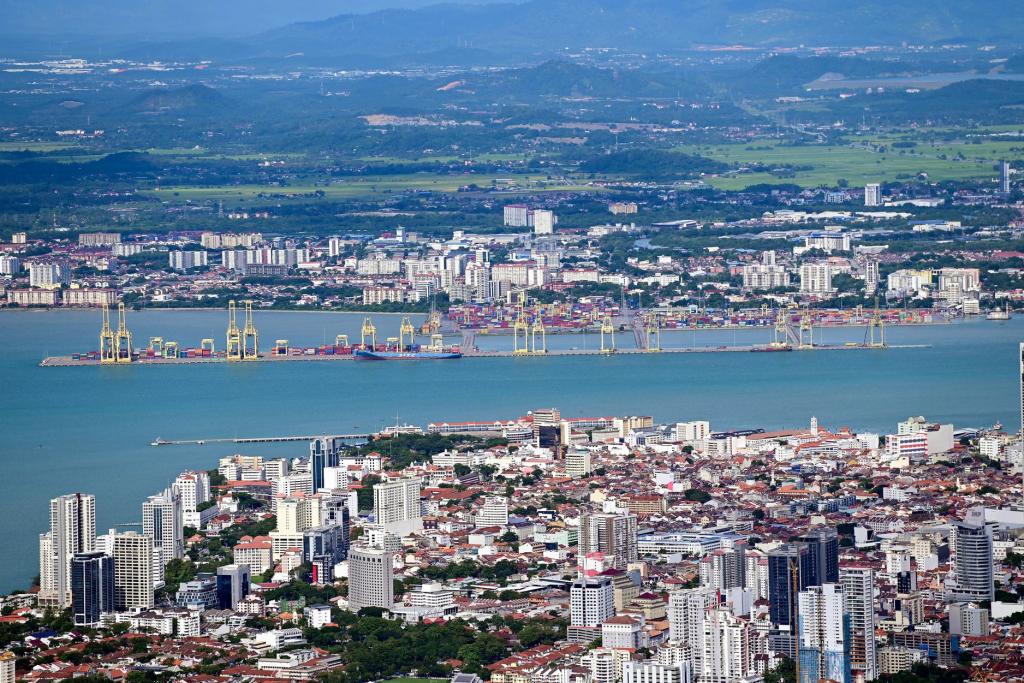
Malaysia started loading buses with Myanmar refugees today
Malaysia began deporting Myanmar refugees on Tuesday, September 29, 2026, sending the first of roughly 1,500 people back to a country still consumed by civil war. According to Reuters, dozens of buses with security escorts rolled into a stadium near the Lumut naval base in Perak state, where two Myanmar naval vessels and a hospital ship waited at the port to carry them home.
The deportations are the first phase of a repatriation programme agreed between Kuala Lumpur and Myanmar's military government, which could eventually return as many as 5,000 people. Malaysia's Home Ministry said the first group consists of 1,476 Myanmar nationals identified by the Myanmar government, and insists the programme is strictly voluntary. But the UN refugee agency and dozens of rights groups say the returns are happening despite grave safety concerns — and they say some of the people on those buses may be registered asylum-seekers who never agreed to go back.
"No one should be sent to a country where their rights or freedoms may be at risk," the UNHCR said in an emailed statement to Reuters. "Any refugee return must be voluntary, based on an informed decision, and take place in conditions of safety and dignity." The agency added that current conditions in Myanmar do not support safe and sustainable refugee returns — and confirmed it played no role in identifying who got put on the buses.
That last point matters. If the UN refugee agency wasn't involved in deciding who was on those buses, the question of whether these returns are truly voluntary becomes much harder to answer. Malaysia hosts around 193,800 registered Myanmar refugees as of February 2026, roughly two-thirds of them Rohingya, according to UNHCR data — and activists say the real number of Myanmar refugees is far higher once unregistered people are counted. The planned total is only a small slice of that population, but for the families involved, today was the day the abstract policy became real.
What "voluntary return" looks like at a naval base
Myanmar has been in turmoil since the military seized power in a February 2021 coup, triggering a civil war that now burns across multiple frontlines. The country is ruled by Min Aung Hlaing, the military chief who led the coup and is now president. Prime Minister Anwar Ibrahim said in July that Myanmar had agreed to take back several thousand Rohingya, and said this month he would invite Min Aung Hlaing for an official visit to Malaysia in return for accepting them — a political arrangement that critics say turns Myanmar refugees' lives into diplomatic currency.
Myanmar's state media has claimed the return is being facilitated in a safe and dignified manner, echoing Malaysia's line that the programme is voluntary and coordinated with Myanmar's foreign ministry. But James Bawi Thang Bik, who represents the Chin refugee community in Malaysia, told Reuters that several asylum-seekers were among the first deportees — including at least one UNHCR card holder. "We fear that they may be forced to fight on the frontlines of the conflict," he said. "For many it is akin to sending them to a death sentence in their own home."
That fear of forced conscription is one of the darkest threads in this story. Myanmar's military junta has relied on forced recruitment as its forces suffer heavy losses in the civil war, and young men returned to the country could be swept straight into the army they fled. For draft-age Gen Z readers, that's the detail that makes this story land: the people boarding those buses are mostly the same age as you, and they may be heading toward the front lines of a war they escaped.
The deportations also come after what Reuters described as a wave of online hate speech and misinformation targeting the Rohingya community in Malaysia this year, which led to greater harassment and widespread school closures for Rohingya children. It's a dynamic young readers will recognize instantly: anti-refugee narratives that start on social media, amplified by algorithms, and end with real-world consequences for the people targeted.
Why this matters beyond one day's buses
Under customary international law — which the UNHCR notes is a binding obligation on all states — people must not be sent back to countries where their rights or freedoms are at risk. Malaysia is not a signatory to the 1951 Refugee Convention, which puts it in a legal gray zone, but the principle of non-refoulement — the ban on returning people to danger — is widely considered part of customary international law that applies regardless.
The scale of the crisis behind this story is enormous. Nearly 194,000 registered Myanmar refugees live in Malaysia alone, and millions more remain displaced inside Myanmar or scattered across Southeast Asia. The UNHCR's own funding is stretched thin, limiting the protection it can offer even in countries that do cooperate. Today's deportations are a test case: if the first group can be sent back to a war zone under the banner of a "voluntary" programme that the UN says it had no part in designing, there is little to stop the remaining 3,500-plus planned returns from following the same template.
There is also the uncomfortable political subtext. The invitation for Min Aung Hlaing to visit Malaysia — extended, as Reuters reported, "in return" for accepting the deportees — suggests the programme is as much about diplomatic normalization as it is about refugee welfare. Malaysia took the chair of the Association of Southeast Asian Nations this year, and engagement with Myanmar's junta has been one of the region's most divisive questions. The buses at Lumut are the sharp end of that debate.
For the young people on those buses, none of this geopolitics matters. They left Myanmar to escape a coup, a crackdown, or a war — and today, loaded onto naval vessels at a Malaysian port, they are going back. The UN says it isn't safe. Malaysia says it's voluntary. The people being sent home didn't get to referee that argument. If you want to follow how this unfolds, start with the Reuters report from today and their earlier coverage of the UNHCR's warning, and keep an eye on our human rights coverage for updates.
Comments 0
No comments yet. Be the first to share your thoughts!
Leave a comment
Share your thoughts. Your email will not be published.