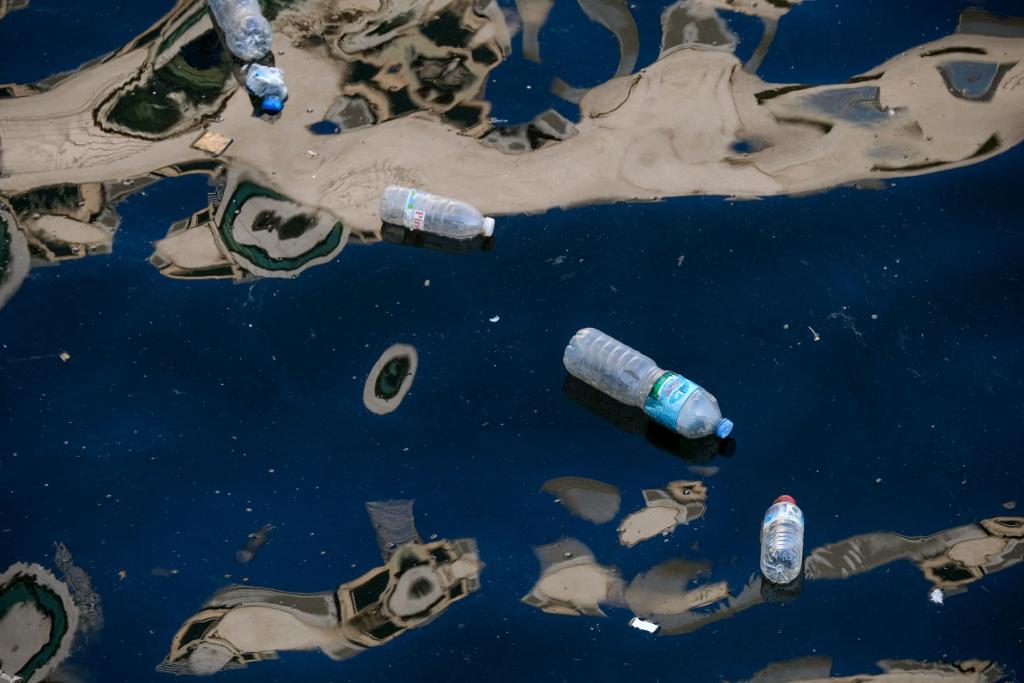
New research says microplastics in water may be doing more damage than anyone assumed, because the plastic itself is not as inert as we were told. A team led by Columbia University chemist Wei Min published the finding in Nature this week, and it could help explain why tiny plastic bits keep getting linked to inflammation and disease.
What the Nature study found
According to the Chicago Tribune, chemical reactions between water and six types of fossil fuel-based plastic created particles that damaged red blood cells and proteins in laboratory tests. The team included colleagues from the University of California, Berkeley and Rutgers University.
The key culprit is a molecule called a hydroxyl radical, an unstable form of reactive oxygen that is linked to aging and disease. Water acts as a kind of catalyst at the plastic surface and spontaneously produces these radicals. Polyethylene and polypropylene, the plastics used in food containers, milk jugs and bottle caps, produced the most.
The paper, titled "Intrinsic physicochemical activity at microplastic-water interfaces" and published in Nature, reports that the effect grows as the plastic surface gets more water-repelling. The researchers also saw that mouse red blood cells broke into helmet-like fragments after meeting polystyrene particles.
Why tiny plastic is the bigger worry
Size matters here. As plastic breaks into smaller and smaller pieces, its surface area rises enormously, which gives water more places to react. Min told the Tribune that as plastic fragments shrink, the potential danger increases.
That lines up with what scientists already know about the human body. Microplastics have been found in the brain, the heart, and reproductive organs, and they travel in blood and pass from mother to child. Human blood is about half water, and cells are up to eighty per cent water, Min noted, so the reaction could keep going inside us.
Min described the particles as a kind of permanent little factory for reactive oxygen, according to Smithsonian Magazine. The radicals still formed when the team mixed plastic with mouse blood, although the effect was smaller than in plain water.
The big caveats
This is not proof that your water bottle is making you sick. The experiments used plastic powders and mouse blood cells in a lab, so the effect has not been measured in people. Min himself said he cannot say whether this explains five per cent or ninety per cent of the health effects, though he would be surprised if it plays no role.
The plastics industry pushed back. Craig Davis of the American Chemistry Council said the study offers a novel look at microplastics outside the body but does not show the same effects happen inside it, or at real-world exposure levels. Those gaps are fair, and follow-up research will need to fill them.
Outside experts see it as a shift in thinking. Chemist Sherri Mason of Gannon University said the result challenges the reigning idea that plastic is inert. She argued it strengthens the case for truly biodegradable plastic instead of the products industry increasingly puts on shelves.
What it means for you
For now, nobody can stop these reactions inside the body, and the researchers are not telling people to panic. What the study does is give scientists a testable mechanism, and that matters because regulation usually waits for a clear cause. Min said the work suggests some plastics could be reformulated or phased out of consumer products.
There is a small silver lining, too. The Tribune notes that Chinese researchers recently found that stirring plastic waste into hot water caused chemical changes that broke polymers into building blocks for new plastics, which hints at cleaner recycling. You can follow more research like this in our science section.
Big picture, more than eight billion tons of plastic already pollute the planet, and producers plan to triple output by 2060. If microplastics in water really do act as tiny reaction sites, expect a lot more pressure on how we make, use and throw out plastic.
Comments 0
No comments yet. Be the first to share your thoughts!
Leave a comment
Share your thoughts. Your email will not be published.