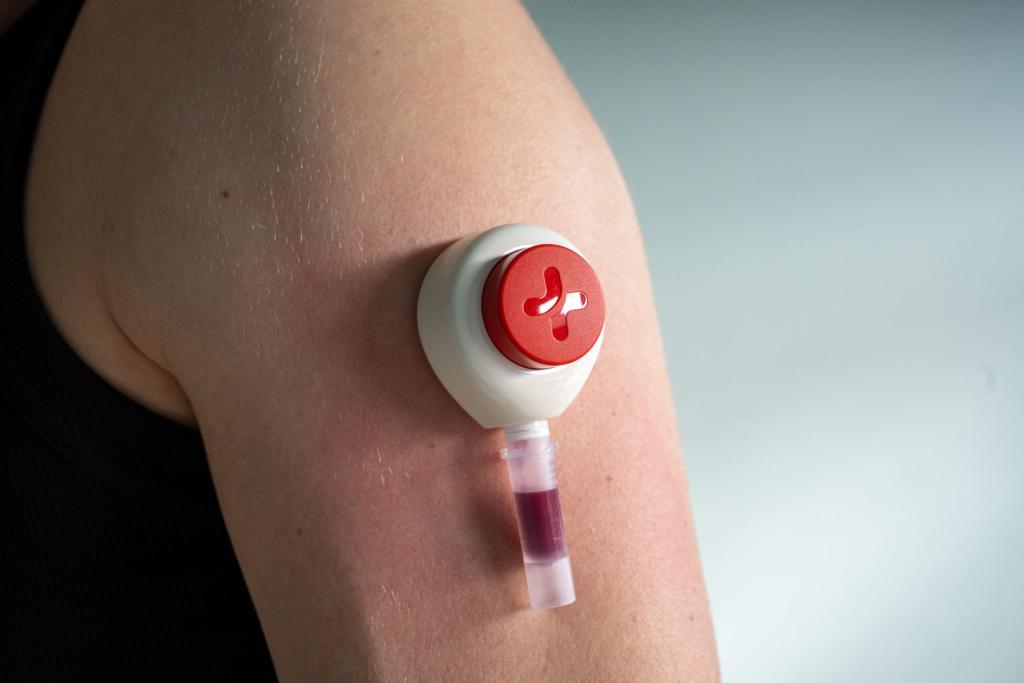
Glucose Monitors can transform blood sugar control for adults with type 2 diabetes who do not use insulin, according to a landmark trial published this week in The New England Journal of Medicine. In the six-month study, close to three hundred adults who wore a small sensor on their upper arm saw their average blood sugar fall from nearly nine percent to just over seven, while a comparison group receiving routine care improved far less. After adjusting for individual risk factors, the sensor wearers came out ahead by nearly a full percentage point. The finding challenges the long-standing assumption that continuous glucose monitoring only makes sense once a person starts insulin.
Until now, the devices have been recommended mainly for patients receiving insulin, leaving most people with diabetes to manage with occasional finger-prick tests and quarterly lab visits. The new evidence comes from more than twenty American primary-care clinics, and the trial was funded by Dexcom, the device maker behind the sensor used in the study, according to a report by Reuters. Researchers say the result is the strongest clinical backing yet for wearing a sensor earlier in the course of the disease.
What the trial measured
The trial's main yardstick was the standard measure of average blood sugar across several months. People wearing the sensor, a coin-sized plastic disc that sticks to the upper arm, lowered that measure by more than a point and a half over half a year, beating routine care by almost a full point. They also spent roughly five more hours each day inside the target glucose range, the study authors reported.
The gains appeared fast and held steady. Improvements showed up within the first week of wear and continued across the full study, reported by the Boston Life Sciences Times. By the final visit, nearly seven in ten sensor users had brought their long-term marker below seven and a half percent, and close to half had reached the stricter seven percent goal that doctors often aim for. When the study ended, nearly all participants were still wearing the device, most of them every day, a striking adherence figure for any wearable.
The benefit held across age, sex, income, education, insurance status and medication use. Even participants already taking newer diabetes medicines saw nearly a full point of extra improvement when they added the sensor, compared with routine care alone. Jake Leach, the device maker's chief executive, called the publication a significant moment for the sensor category, noting in a statement that the journal had not published clinical data on real-time glucose monitors for close to twenty years. The company is now urging physicians, insurers and health-system leaders to widen access.
Why coverage decisions may shift
Insurance has been the quiet gatekeeper. Because clinical guidelines positioned the sensors as tools for insulin users, many plans limited or denied reimbursement for everyone else, even though millions of people manage diabetes without insulin. Glucose Monitors were filed under "nice to have" for that population. A result published in a leading medical journal changes the negotiating math, though the guidelines themselves have not caught up yet.
There are caveats worth stating plainly. The trial was funded by the company that sells the sensor, and outside doctors caution that a wearable is a tool, not a treatment: it works when people act on what it shows, which may be one reason the benefit was so consistent among people who kept the device on. Still, the steadiness of the effect, from the first week to the final visit, is what the researchers themselves highlight. For readers managing diabetes without insulin, the practical next step is a conversation. Ask your clinician whether your plan covers a sensor, and bring your latest lab result to that appointment.
Glucose Monitors are part of a wider shift of wearables from fitness curiosities into clinical tools, a turn already visible in how diet data shapes behavior. A recent study linked daily soda to changes in young brains, and food-safety regulators keep tightening the rules on what goes into packaged goods, as seen in a recent statewide food-safety crackdown. Whether glucose sensors follow fitness trackers into the mainstream will depend less on the hardware, which keeps getting smaller and easier to wear, than on the paperwork: coverage decisions that turn a landmark finding into everyday care.
Comments 0
No comments yet. Be the first to share your thoughts!
Leave a comment
Share your thoughts. Your email will not be published.