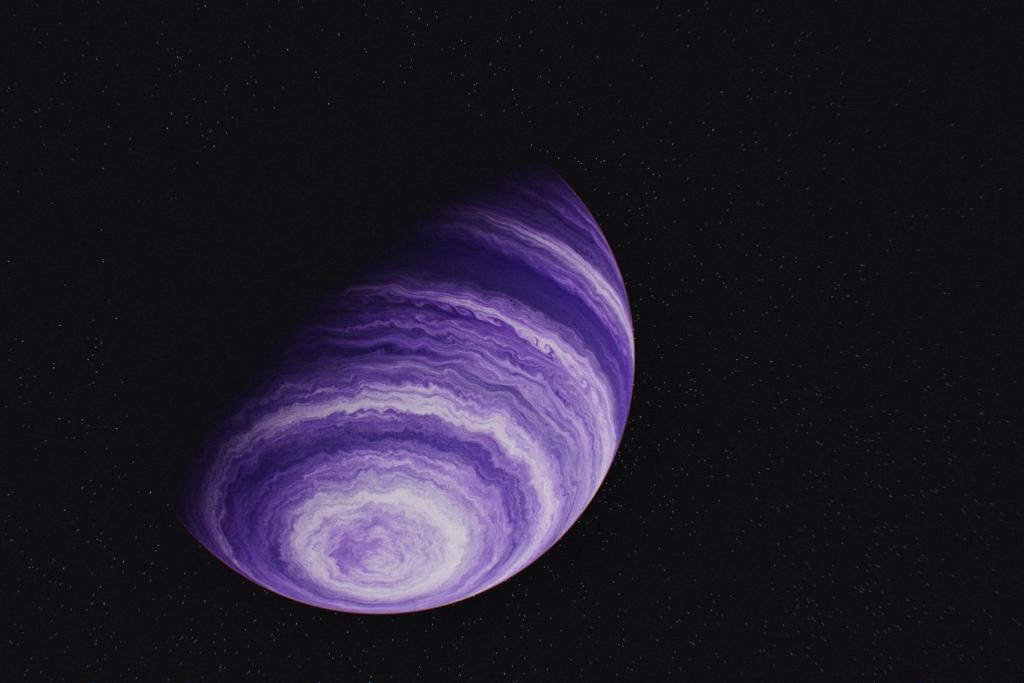
Something strange is orbiting a dead star roughly two hundred seventy light-years away, and it may be a Second-Generation Planet: a world that formed not when its star was born, but from the ashes left behind after the star died. Astronomers working with twenty-five-year-old Hubble observations report that the white dwarf catalogued as HS 0209+0832 carries a chemical fingerprint never before seen in such a remnant, and according to the study, the most plausible explanation is a giant planet assembled from material the star shed during its death.
The finding, published in early October in a leading astronomy journal, turns a cold case into a first-of-its-kind candidate. Hubble first observed the star in January 1999 and recorded about one hundred absorption features that astronomers of the era could not name. The spectral lines sat in the archive for decades, unexplained, until lead researcher Jamie Williams, a doctoral candidate at the University of Warwick, revisited the data with modern atomic databases. Many of the mystery lines matched niobium, an element that forms in the extreme furnaces of dying stars and had never been detected in a white dwarf's atmosphere before.
The abundance was not subtle. The star's atmosphere holds niobium at levels exceeding one thousand times the solar concentration, with zinc and copper also unusually strong. Just as telling is what is missing: silicon and iron, the rock-forming elements that usually dominate the atmospheres of polluted white dwarfs, are depleted. That flipped chemistry is the crux of the argument. Ordinary white dwarf pollution comes from rocky debris raining onto the remnant, and it looks like terrestrial rock. This chemistry looks like the output of a star's final act.
A twenty-five-year mystery, solved with better databases
The trail of evidence spans three generations of space missions. After Hubble's 1999 spectrum sat unsolved, archival ultraviolet data from the retired FUSE mission confirmed the niobium signatures. NASA's TESS observatory then monitored the star for four months and recorded a repeating brightness variation on a roughly four-and-a-half-day cycle, consistent with a close-orbiting giant world. Combining those threads, the team estimates the candidate is about the size of Jupiter and circles only a few million kilometers from the white dwarf.
The physics points back to a process called the s-process, the slow neutron capture that forges elements heavier than iron inside bloated red giants near the ends of their lives. "Elements heavier than iron are not formed in the cores of stars by thermonuclear fusion," said Nicholas Stone, a theoretical astrophysicist at the University of Wisconsin-Madison who joined the research effort. He described the observed pattern as a telltale sign of that dying-star chemistry, meaning the star appears to be accreting material produced during its own red giant phase rather than leftover birth material.
That distinction is what makes the object a Second-Generation Planet candidate instead of a first-generation survivor. Earth and its neighbors formed from the cloud that birthed the Sun; this world, if confirmed, condensed from the disk of gas and dust its own star expelled as it died. A handful of planets are already known around white dwarfs, but those are understood as survivors of their systems' original architectures. None showed the signature of being born from stellar death itself.
Why a candidate, not a confirmed world
Researchers are careful with the word. The team calls it a candidate because the evidence is spectroscopic, not photographic: no telescope has directly imaged the planet, and independent confirmation will require more observations to test how the world formed, how common such systems are, and whether the proposed interpretation holds. Alternative explanations, such as an unusually exotic accretion history, have not been ruled out.
Williams framed the stakes plainly. "Rather than the white dwarf stage being a kind of epilogue to the story of a star and its planets, this research points to the systems we are familiar with only being the first chapter of a potentially much longer tale, with some new characters showing up," he said. He added that the Second-Generation Planet was completely unexpected, calling it a bit like finding a planet that had risen from the ashes of the very star it once orbited.
For readers watching the night sky, the story lands in familiar territory: our own Sun will become a white dwarf billions of years from now. If stellar remnants can host a second act of planet formation, the long-term future of planetary systems is richer than textbooks suggest. The discovery also underscores how much science still hides in old data; this breakthrough required no new telescope, only a quarter-century of patience and a better chemical reference. Read more about space discovery in GenZ NewZ's deep-field mission coverage, how SPHEREx is reading the fingerprints of failed stars, and brain organoids flying to the space station.
Comments 0
No comments yet. Be the first to share your thoughts!
Leave a comment
Share your thoughts. Your email will not be published.