A Decade Before Diagnosis, your immune system may already be waving a flag. Scientists have found distinct antibody patterns in blood samples collected up to ten years before people developed inflammatory bowel disease, according to research presented at the European gastroenterology conference UEG Week and reported by Medical Xpress. The work could open a path to spotting risk long before symptoms begin — and to predicting which patients are headed for the roughest course.
Inflammatory bowel disease is a group of chronic conditions, chiefly Crohn's disease and ulcerative colitis, in which abnormal immune responses drive ongoing inflammation and damage in the digestive system. It is a lifelong illness that often begins in adolescence or early adulthood and can mean repeated hospital stays, long-term immunosuppressive drugs and sometimes surgery. Although doctors have increasingly suspected the disease brews for years before diagnosis, relatively little has been known about what the immune system is doing during that silent phase.
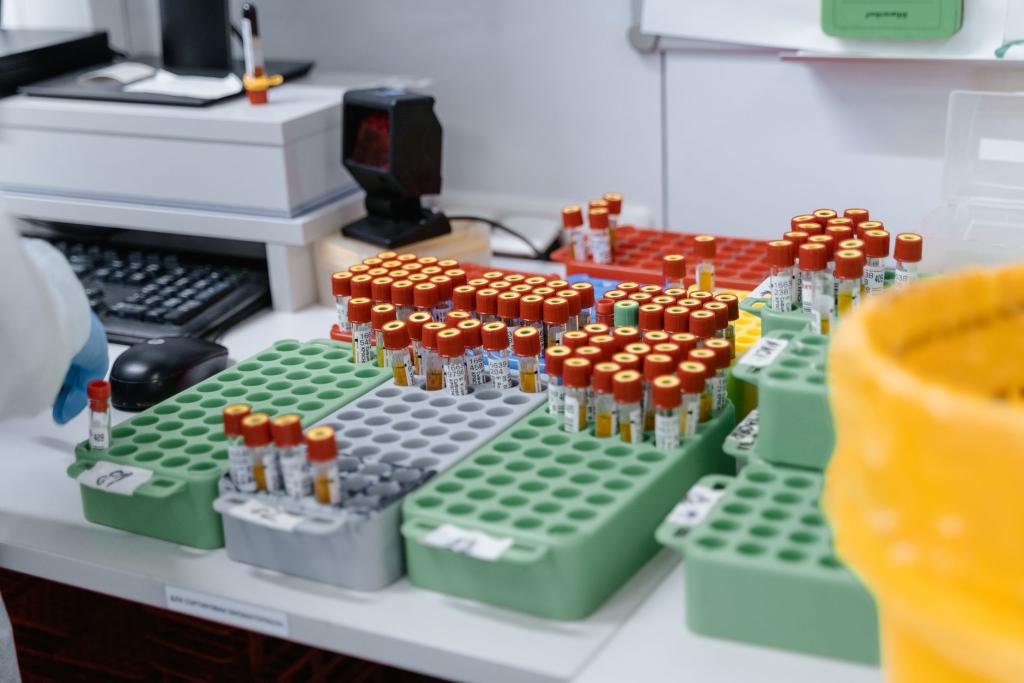
To investigate, the researchers analyzed two thousand serum samples drawn from five hundred people: two hundred who later developed Crohn's disease, the same number who later developed ulcerative colitis, and one hundred age- and sex-matched healthy controls. Samples were collected at diagnosis and roughly two, four and ten years beforehand. The team profiled antibody responses against more than three hundred fifty thousand microbial, viral, food and immune-related markers, and across the full set they identified more than a hundred twenty thousand distinct antibodies. Compared with healthy controls, antibody diversity was significantly lower in people who later developed either condition, with distinct responses already evident a full ten years out.
"It is fascinating to see that complicated Crohn's disease at diagnosis is associated with a distinct antibody profile years before the first clinical symptoms and is not simply the consequence of disease progression after diagnosis," said lead author Arno Bourgonje. "Finding these patterns so early points to the potential of antibody profiling to support earlier risk detection, distinguish between disease subtypes and help identify patients who may benefit from more intensive therapy as early as possible."
Crohn's and colitis diverge early
The two conditions did not march in lockstep. In people who later developed Crohn's, the team saw elevated responses against herpesviruses and against bacterial flagellin, a structural protein on microbes that the immune system often targets. Those elevations ran strongest in people who went on to develop complicated or ileal disease, the more aggressive forms that carry a greater burden of surgery and disability. Meanwhile, antibody responses to encapsulated bacteria faded as diagnosis approached. In ulcerative colitis the trajectory looked different: rising responses against herpesviruses and the body's own antigens, again paired with weakening reactivity to encapsulated pathogens.
When the researchers fed these early signatures into machine-learning models, the systems separated future patients from healthy controls up to ten years before diagnosis, with performance the authors described as strong — somewhat better for Crohn's than for ulcerative colitis. The profiles also distinguished people who would later develop complicated Crohn's from those with milder disease, again roughly a decade before the first symptoms. That split matters because aggressive disease is exactly where earlier, heavier treatment could change the outcome.
A growing timeline of early warnings
The new findings cap a remarkable few months for the idea that bowel disease announces itself early. This summer, scientists at Mount Sinai in New York reported in the journal Gut that immune changes were already detectable about ten years before diagnosis in nearly two thousand blood samples, with striking signals against Epstein-Barr virus and bacterial flagellins, according to coverage of that study. "IBD does not develop overnight," the senior author of that work, Saurabh Mehandru, said at the time. "Our findings show that the immune system is already changing years before patients experience their first symptoms."
Earlier this year, a separate team at the University of Oxford and collaborating institutions reported in the New England Journal of Medicine that about three and a half percent of patients carry antibodies that neutralize interleukin-10, one of the immune system's key brakes on inflammation — a discovery that could account for fifteen to twenty thousand cases in the UK alone, as reported at the time. Each study attacks a different layer of the mystery: one finds the immune system's brakes being disabled, another finds the alarm bells ringing a decade early.
For readers, the practical horizon is earlier and more personal treatment. If antibody profiling can flag high-risk people and sort aggressive from mild disease years ahead, doctors could one day start intensive therapy before irreversible bowel damage sets in, rather than cycling patients through drug after drug once symptoms appear. That is the promise; the caveat is that it is not a test yet. The authors stress that the signatures must first be validated in independent, more diverse populations followed forward in time, then translated into an affordable, reproducible assay — and finally shown to actually improve outcomes. Until then, A Decade Before Diagnosis remains a scientific window, not a screening appointment. It is a window that keeps widening, though: GenZ NewZ has also covered how childhood antibiotic use may raise IBS risk by young adulthood, the shifting science on ultra-processed food, and how added-sugar labels are changing grocery carts — all pieces of the same gut-health puzzle.
Comments 0
No comments yet. Be the first to share your thoughts!
Leave a comment
Share your thoughts. Your email will not be published.