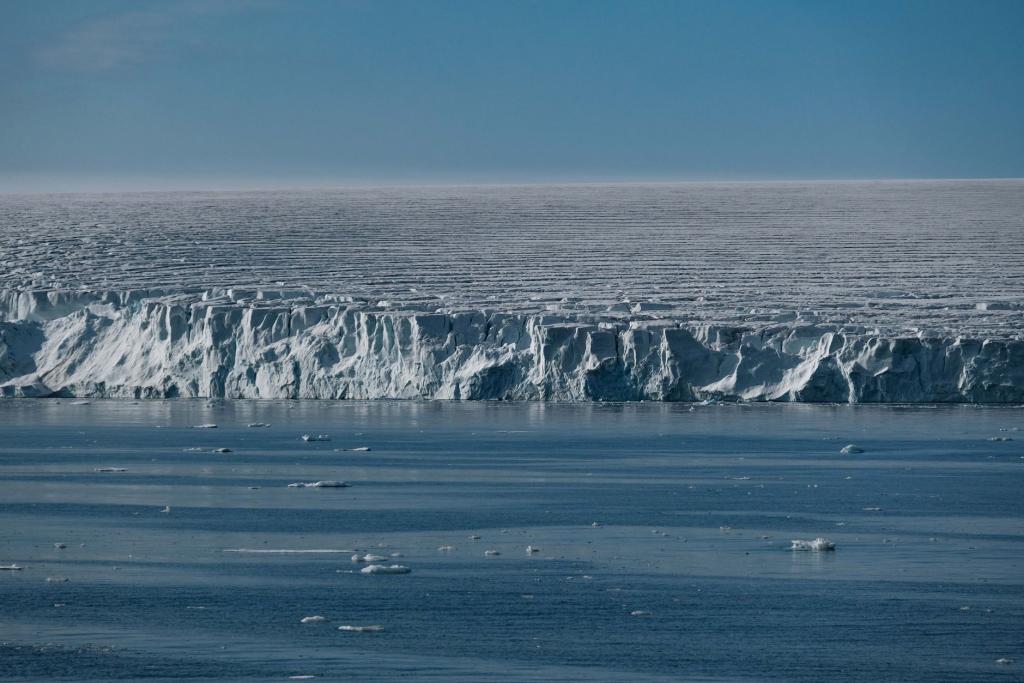
The Thwaites Glacier melting problem just got a lot more serious. A new study says Antarctica's so-called Doomsday Glacier could push global seas up by about thirty millimeters by the year twenty-one hundred, which is roughly double what earlier models predicted, even if the planet stops warming any further.
The research, published in Nature Communications, comes from glaciologists at the University of California, Irvine and NASA's Jet Propulsion Laboratory. According to the UC Irvine press release, the team rebuilt the glacier's computer model around a fresh idea about how ice meets the ocean. A thirty millimeter rise is about one point two inches, and that sounds tiny until you remember it comes from one glacier.
Why the Doomsday Glacier matters
Thwaites is the widest glacier on Earth. According to Al Jazeera, it covers around one hundred ninety-two thousand square kilometres, roughly the size of Senegal and bigger than Florida. It sits in West Antarctica and helps hold back a much larger ice sheet, which is about fourteen times its size.
Right now Thwaites already accounts for around four percent of global sea-level rise. Al Jazeera reports that studies show it has lost more than one thousand billion tonnes of ice since the year two thousand and keeps shedding about fifty billion tonnes every year. That is why scientists gave it the scary nickname in the first place.
The grounding zone twist
For decades, ice sheet models treated the spot where land-based ice starts to float as a thin, stable line. The new team argues that idea is outdated. Lead author Mattia Poinelli said satellite data shows a grounding zone that can be kilometres wide, where warm ocean water creeps far under the ice and causes vigorous melting.
The team used radar images from the Finnish ICEYE satellite constellation to spot tidal pumping, where seawater lifts and lowers the ice and flushes warm water underneath. Once they built that process into the model and checked it against more than twenty years of observations, the simulated retreat from the nineteen nineties to today came out four times stronger than traditional models showed.
What could happen next
The model points to a stabilizing underwater feature called the Mouginot Ridge. Right now it helps pin the main trunk of the glacier in place. If the ridge lets go, Poinelli explained, the glacier would keep retreating over a seafloor that slopes downward toward the next high point, the South Ridge. The study gives a sixty percent chance of that unpinning happening by the end of the century.
Co-author Eric Rignot of UC Irvine said earlier projections struggled to match the speed of real mass loss because they were missing physics. With the fuller model, he said, the projections double and the risk of coastal flooding in coming decades is greater than anyone had assumed. The Nature Communications paper puts the figure at thirty millimeters, give or take six.
What this means for you
Do not panic about your city vanishing next year. Al Jazeera notes that a full collapse of Thwaites is not expected for many decades or even a few centuries. Experts also say more research is needed to pin down exactly how much ice will go and when.
Still, a few extra centimetres of sea level changes how often storm surges flood streets, subways and basements. Coastal cities from Miami to Mumbai plan infrastructure around these projections, so doubling a major input matters for insurance, housing and the climate fights younger voters keep demanding action on. Read more in our climate emergency coverage.
Separate work adds to the worry. Al Jazeera says British Antarctic Survey researchers concluded in July that Thwaites will keep losing ice for at least the next one hundred fifty years, even under the most extreme ocean cooling imaginable. In other words, the Thwaites Glacier melting story is far from over, and the next few studies will show whether this doubling holds up.
Comments 0
No comments yet. Be the first to share your thoughts!
Leave a comment
Share your thoughts. Your email will not be published.