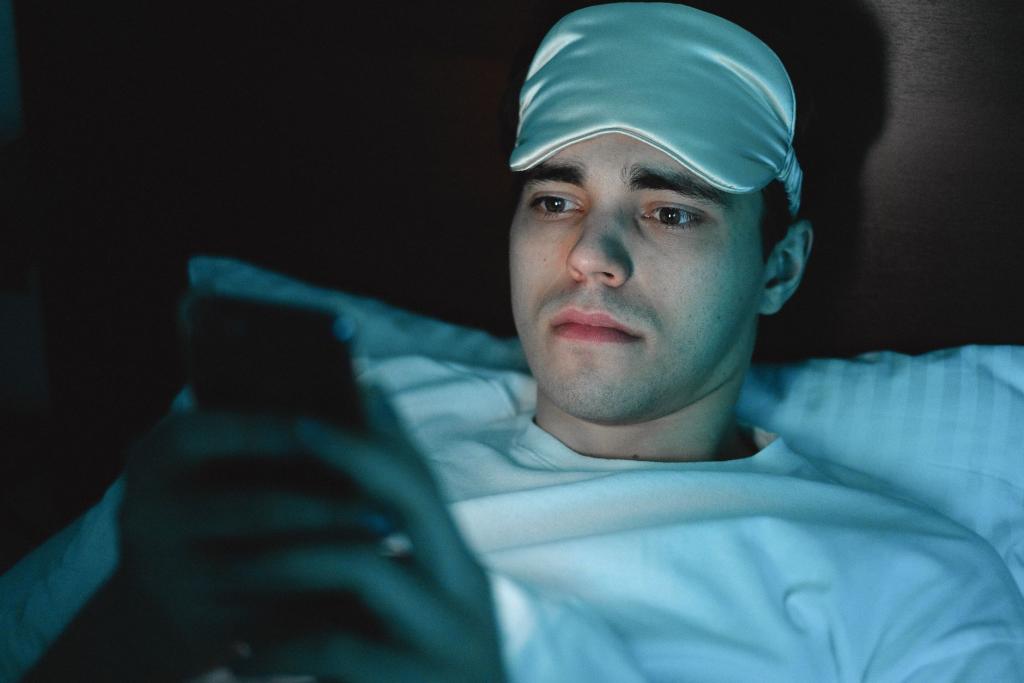
It is not just the late-night scrolling. A new Penn State study finds that the room you sleep in matters as much as what you do before bed: young adults whose bedrooms were too bright, too hot, or too noisy slept worse — even when they got just as many hours as everyone else. The research, published in the journal Sleep Health, tracked 372 young adults with an average age of 22 over two weeks, and it suggests that for dorm-dwellers and apartment-sharers with thin walls, the fix might be ear plugs rather than an earlier bedtime, according to Penn State's report on the study.
The headline finding is a split. Sleep quality — how fast participants fell asleep, how often they woke up, how long they stayed awake during the night — dropped when the bedroom was too bright, hot, or noisy. But sleep duration did not budge. "Young adults often have little control over their sleep environments," said Adwoa Dadzie, the doctoral candidate in biobehavioral health who led the study. "But habitual sleep disruptions can affect long-term health and development." Her team suspects younger people compensate for rough nights by simply sleeping in, which keeps their totals steady while the quality underneath erodes. In other words, your eight hours might be eight hours of bad sleep.
What the 14-Day Study Actually Measured
The researchers drew on the Future of Families' Young Adult Sleep Study. Every morning for fourteen days, participants reported how well they slept and whether light, noise, or temperature had disrupted them. They also wore wrist sensors that objectively recorded when they fell asleep, how long it took, and how restful the night was — so the results are not just vibes; the gadgets confirmed what the self-reports said. When the room was too bright, people fell asleep later, slept worse, and spent more time awake in the middle of the night. When it was too hot or too noisy, both the self-reports and the wrist sensors registered poorer sleep.
One finding cut against expectations: bedrooms that felt too cold did not measurably affect sleep in the data. The researchers also made a deliberate methodological choice — they asked about perceived disruption rather than measuring decibels, lumens, and degrees. Dadzie, who grew up in New York City, put it plainly: "What might qualify as normal background noise to me might seem extremely loud to someone who grew up in a rural area." Disruption is personal, and the threshold that wrecks one person's night is background texture to someone else.
Why Your Brain Stays on Guard Duty All Night
Noise gets a special mention in the findings, and the reason is evolutionary. "Parts of our brain stay vigilant to our environment during sleep, especially noises of something that could be a threat," said Orfeu Buxton, Dadzie's doctoral adviser and a professor of biobehavioral health at Penn State. Your sleeping brain is still running a threat-detection scan — the roommate slamming cabinets, the street traffic, the heating vent kicking on — which is why noise disrupts sleep quality even when you do not fully wake up. Light works through a different channel, delaying sleep onset and fragmenting the night, while heat seems to blunt the natural overnight drop in body temperature that deeper rest depends on.
The study also fills a demographic gap. "Sleep is most often studied in older adult populations," Dadzie noted, and her team wanted to know whether young adults respond differently to the same disruptors. The answer matters because young adulthood is when habits calcify: as Buxton put it, if you develop good sleep habits as a young adult, accumulated sleep loss is less likely to catch up with you later in life. Poor sleep quality in your twenties is not just a tomorrow problem.
The Phone in Your Bed Is the Other Half of the Story
There is a companion finding worth sitting with. A separate 2026 study in Frontiers in Public Health found that young adults know perfectly well that phone use before bed wrecks their rest — and do it anyway, describing the screen as a "cognitive off-switch" they need to decompress from academic pressure and social anxiety, according to the researchers' full report. Most participants could recite the blue-light-and-melatonin lecture and kept scrolling regardless, because the immediate psychological relief outweighed the long-term warning.
Taken together, the two studies paint a clear picture: the enemy is not ignorance, it is friction. Young adults do not need another lecture about sleep hygiene; they need environments that make good rest the default. That reframes the advice. If your dorm has paper-thin walls, a hallway light that never turns off, and a radiator with opinions, fighting for a perfect routine is less useful than changing the sensory inputs — which is exactly where the Penn State team landed.
Cheap Fixes That Actually Move the Needle
The researchers' recommendations are refreshingly low-budget: ear plugs, noise-cancelling earbuds, or even cotton to block sound; sleep masks or blackout curtains to block light. Dadzie's own framing is modest — "a few simple changes, like ear plugs or blackout curtains, might dramatically improve a person's sleep quality if they routinely go to bed in a loud or bright environment." No app subscription, no thousand-dollar mattress, no elaborate routine. Just fewer photons and fewer decibels.
The counterpoint is worth stating: this study measured associations over two weeks, not lifetime outcomes, and the cold-room non-finding is a reminder that not every intuition about comfort survives contact with data. But the core message is hard to argue with — quality beats quantity, and the room is part of the equation. For more on rest and the science of getting it, see our mind and body coverage, including what a massive review revealed about insomnia and long-term health risks.
Comments 0
No comments yet. Be the first to share your thoughts!
Leave a comment
Share your thoughts. Your email will not be published.