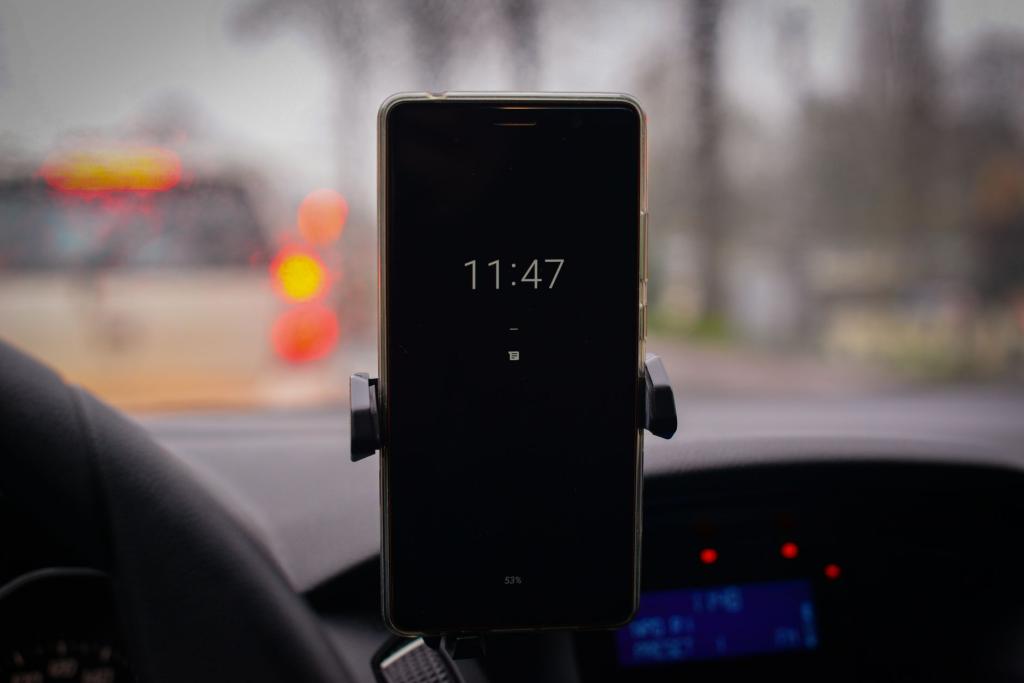
A federal appeals court just drew a bright line around real-time phone tracking. On September 24, the Fourth Circuit ruled that police use of a cell-site simulator — the fake-cell-tower device known as a Stingray — to follow a phone's live location is a "search" under the Fourth Amendment, according to LegalTechDigest. The decision, the first by any federal appellate court to say so, means officers need a full search warrant before they can track a phone's location in real time — not the lower-bar court order Baltimore police relied on.
It is a landmark for digital privacy law, and it arrives as the courts are rewriting the rules of phone surveillance in real time.
How the case got here
The case is Andrews v. City of Baltimore. Kerron Andrews was arrested in May 2014 after Baltimore police used a cell-site simulator borrowed from federal authorities to pinpoint the exact townhouse he was inside; his carrier's own records had only narrowed his location to a few blocks, PogoWasRight reported. The officers had secured a pen-register order — a legal threshold well below probable cause — to deploy the device.
Andrews sued for damages under federal civil rights law, arguing the tracking required a warrant. The court's opinion put it plainly: "We hold that the use of the cell-site simulator constituted a search within the meaning of the Fourth Amendment."
But the victory was bittersweet. Qualified immunity, state-law public-official immunity, and municipal immunity sank Andrews' damages claims, according to the Institute for Justice's Short Circuit newsletter, after he had spent nearly two years in pretrial detention. The court said the search was unconstitutional — and that no one would pay for it.
The panel also took aim at the secrecy around the tools. The court voiced concern about law enforcement relying on private nondisclosure agreements with simulator vendors "as an excuse to conceal or obfuscate important information when seeking a search warrant," Short Circuit reported.
Why bystanders should care about real-time phone tracking
Cell-site simulators work by impersonating a cell tower. The opinion explains the mechanics this way: "Cell-site simulators prompt all nearby cellphones to automatically send an electronic signal to the simulator, thereby revealing the location of each cellphone and, in most instances, the location of the cellphone's owner."
Read that again: all nearby cellphones. The device does not just find its target — it pings every phone in range, including bystanders at a protest, a festival, or on a college campus. An EFF and ACLU amicus brief in the case argued the devices force phones "to transmit data to the government that they would not otherwise reveal," according to SCWorld, and warned about the dragnet surveillance of innocent third parties. One Baltimore detective testified the department had used the simulators more than 4,300 times since 2007.
For a generation that lives on its phones, the stakes are obvious. You do not have to be the suspect for a Stingray to sweep up your location.
The cases that built real-time phone tracking law
The Andrews ruling did not arrive from nowhere. It follows a trail of court decisions racing to catch up with surveillance tech:
- May 2014: Baltimore police arrest Andrews using a borrowed simulator under a pen-register order.
- 2016: A Maryland appeals court rules the warrantless simulator use unconstitutional in a related case and suppresses the evidence.
- June 29, 2026: The U.S. Supreme Court decides Chatrie v. United States, holding that acquiring Google Location History through geofence warrants is a Fourth Amendment search.
- July 13, 2026: The same Fourth Circuit goes the other way in a different context, ruling that manual cellphone searches at the border are routine and require no individualized suspicion.
- September 24, 2026: The Fourth Circuit panel rules real-time simulator tracking is a search requiring a warrant.
The contrast with the border-search ruling matters. Courts are not handing down one sweeping privacy doctrine — they are deciding, technology by technology, where the line sits.
What the ruling does not do
The counterpoint comes from both inside and outside the opinion. Law-enforcement supporters argue real-time location work is often time-sensitive — finding a kidnapping victim or a fleeing suspect cannot always wait on a full warrant process, and a pen-register order was the faster tool. The ruling's own immunity holding blunts its bite: officers who used simulators without proper warrants face no damages, and departments face no new penalty for past conduct.
And the courts are pulling in both directions at once. Just two days after the Fourth Circuit's ruling, the Supreme Court's emergency docket cleared the revival of a national citizenship database built from Social Security data for voter verification ahead of the midterms, according to a privacy roundup at Grab the Axe. One court expands Fourth Amendment protection for phone tracking; another blesses large-scale repurposing of personal data collected for an entirely different purpose. The week's scorecard on privacy is anything but consistent.
For more on the courts versus your data, visit our Human Rights page — and see how lawmakers are approaching the same fight in EU KIDS Act Could Reshape Teen Social Media Rules.
Comments 0
No comments yet. Be the first to share your thoughts!
Leave a comment
Share your thoughts. Your email will not be published.