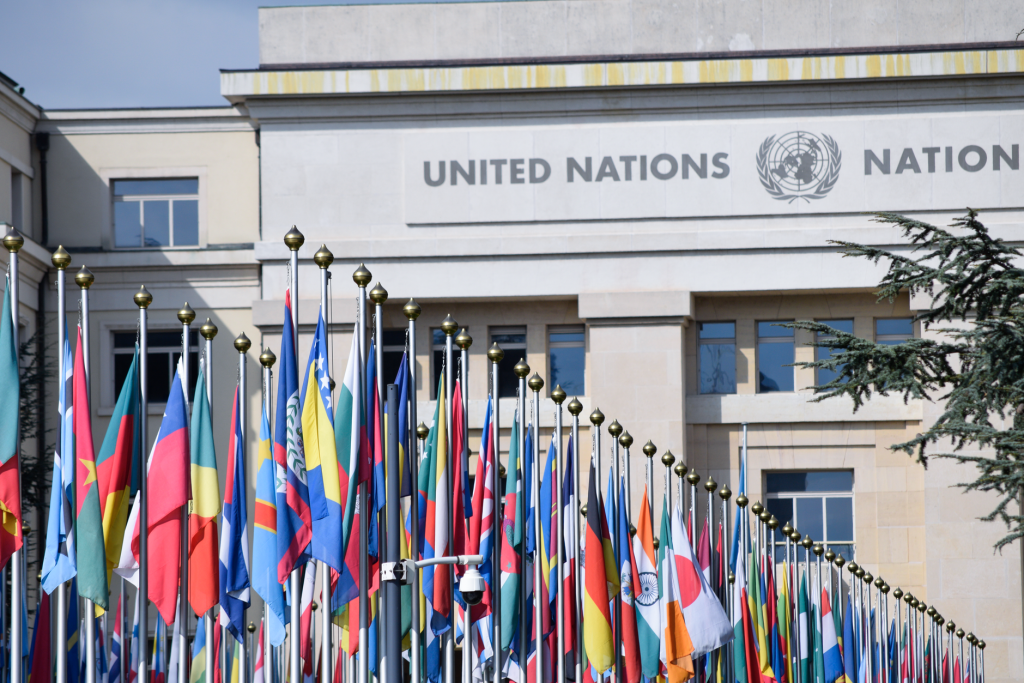
The quiet machinery that keeps governments accountable to the human rights commitments they signed for how they treat people is breaking down, and the world's top human rights official says the human rights treaty bodies may not survive the year in its current form. Speaking to the Human Rights Council on Thursday, UN High Commissioner for Human Rights Volker Türk warned that the global human rights treaty body system is at risk of crumbling under the weight of funding cuts.
Türk's message, delivered in Geneva, was blunt: budget pressure has forced staffing reductions that are slowing the system's ability to process requests for help, while fewer member states are even bothering to report on alleged violations. The treaty body system, made up of ten committees of independent experts based in Geneva, is the mechanism through which countries' progress on international agreements — from the elimination of racial discrimination to the protection of children's rights — is assessed and graded.
According to UN News, Türk told the Council he was deeply concerned that the entire system could crumble, framing the moment as a warning rather than a complaint. His appeal to member states to fulfill their international obligations arrives just ahead of a report on the treaty body system that UN Secretary-General António Guterres is expected to publish next week during the UN General Assembly's high-level week.
What the treaty body system actually does
For most people, the human rights treaty bodies are invisible. They do not deploy soldiers or run refugee camps. Instead, they perform a slower, less dramatic function: they read countries' reports, hear testimony, and issue findings on whether governments are living up to the treaties they signed.
Each of the ten committees focuses on a different convention. Together they cover racial discrimination, torture, women's rights, children's rights, migrant workers, persons with disabilities, enforced disappearances, and economic, social, and cultural rights, among others. When an individual alleges that a state violated their rights, these committees can also take up their complaints — which is why Türk's warning about delays in processing requests matters for real people, not just diplomats.
Human rights advocates describe the human rights treaty bodies as one of the few places where victims can seek a hearing when their own courts have failed them. It is low-cost work by UN standards: a handful of experts, modest staff support, and regular review sessions. But low-cost also means fragile, and the funding cuts hitting the broader UN human rights operation are now landing on the human rights treaty bodies themselves.
Why human rights treaty bodies face a funding crisis
The warning did not come out of nowhere. Funding for the human rights treaty bodies has been squeezed for years. Earlier this year, Türk launched a $400 million appeal for the Office of the High Commissioner for Human Rights, describing an office already stretched past its limits. At that point, the office had lost roughly 300 of its 2,000 staff and had been forced to close or sharply reduce its presence in 17 countries.
The consequences were concrete, according to the office's own reporting: 35 scheduled state review dialogues by treaty bodies could not take place, half of the planned visits by the Sub-Committee on Prevention of Torture were cancelled, and country missions by special rapporteurs were curtailed. Programmes in places like Myanmar, Honduras, and Chad were scaled back or suspended, cutting support for arbitrarily detained prisoners and vulnerable communities.
The UN's regular budget allocation for the office fell roughly 10 percent for 2026, and a broader liquidity crisis across the UN system has made the situation worse. As UN News reported, Türk has argued that the work is cheap compared to its impact — credible documentation of atrocities that informs Security Council deliberations, is cited by international courts, and gives victims an avenue for accountability.
Why the warning lands now
Timing matters. The appeal comes days before the General Assembly's high-level week, when heads of state gather in New York and Guterres's report on the treaty body system is due. Türk's warning puts funding for human rights monitoring on the agenda at a moment when world leaders are paying attention.
It also comes in a year when human rights defenders themselves have faced growing pressure. A separate UN report issued this week documented reprisals against activists, journalists, and lawyers who cooperated with the UN on human rights issues, with cases from 32 states — a reminder that the demand for international protection is rising even as the system's capacity shrinks.
For the people who rely on the treaty bodies — prisoners awaiting review of their cases, families of the disappeared, communities facing discrimination — the system's collapse would mean one less door to knock on. Türk's plea is, at its core, a simple one: the machinery that watches over human rights only works if someone pays to keep it running.
Comments 0
No comments yet. Be the first to share your thoughts!
Leave a comment
Share your thoughts. Your email will not be published.