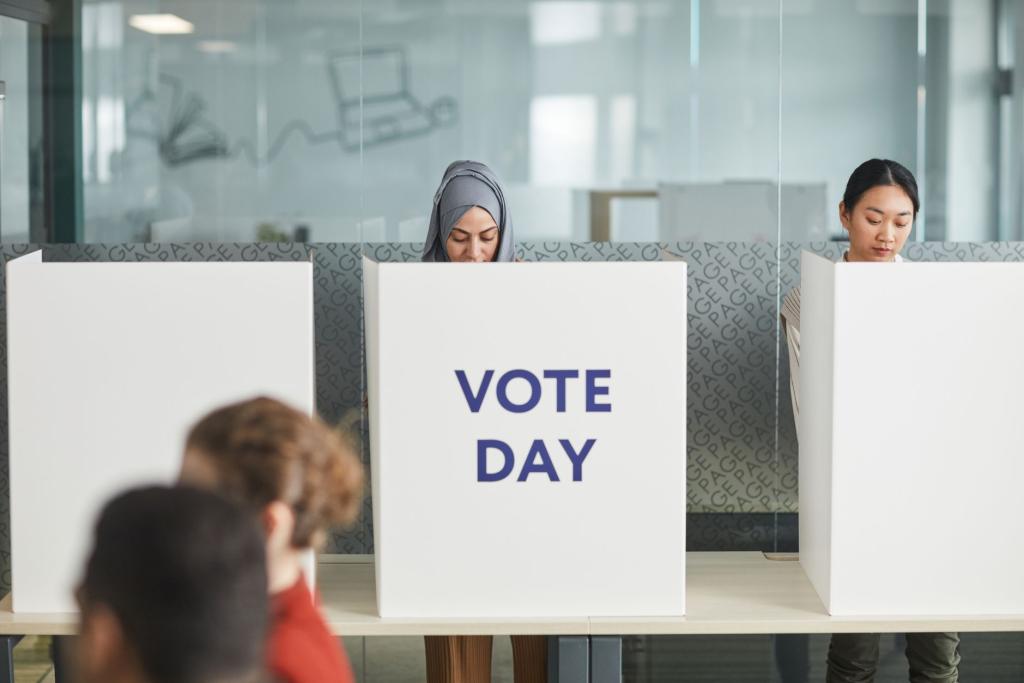
Virginia just became one of the most significant felony voting rights stories in the country this week. State election officials have implemented a federal court order that narrows the state's felony disenfranchisement rules down to just three crimes: murder, voluntary manslaughter and involuntary manslaughter. Everyone else with a felony record who has been released can now register and vote.
The change caps a three-year legal fight known as King v. O'Bannon. In 2023, Tati King and Toni Johnson sued officials at the Virginia Department of Elections, arguing that the state's practice of denying felony voting rights for nearly any felony conviction violated a Reconstruction-era federal law called the Readmission Act of 1870.
That law let Virginia regain congressional representation after the Civil War on one condition: the state could not pass laws that disenfranchise people for convictions other than a select few. According to the plaintiffs, Virginia did exactly what it had promised not to do, and a federal judge agreed in this felony voting rights case.
What the court actually ruled
In January, U.S. District Judge John Gibney partially struck down Virginia's policy. He ruled that the state could only apply disenfranchisement to the eleven common-law felonies recognized in 1870: arson, burglary, escape and rescue from a prison or jail, larceny, manslaughter, mayhem, murder, rape, robbery, sodomy and suicide.
The ruling did not end the dispute. The office of Attorney General Jay Jones responded by mapping those eleven historic felonies onto 284 modern-day crimes, a move that kept large numbers of people off the rolls. In August, Gibney rejected that approach. In an August 19 opinion, he wrote that Virginia "may not use any other felony conviction as a grounds for disenfranchisement."
Following that second ruling, a turning point for felony voting rights in Virginia, the Department of Elections removed the attorney general's 284-crime list from its website. Murder, voluntary manslaughter and involuntary manslaughter now stand as the only crimes in the commonwealth that trigger loss of voting rights. People who are still incarcerated cannot register to vote in Virginia.
The road to compliance was rough. State officials received an extension earlier this year and had until June 1 to implement the January order, but the ACLU of Virginia argued that the state missed the mark. Voter registrations for King, Johnson and others were left stuck in limbo, and because the ruling was applied incorrectly at first, potentially hundreds of thousands of Virginians who should have been able to vote in the August primary were prevented from exercising felony voting rights, according to the report.
The scale of the change
The numbers show how sweeping the shift is. There are more than 1,000 felonies in Virginia's criminal code, and the plaintiffs' legal team says nearly all of them no longer affect voting eligibility. In a joint statement released on September 16, human rights advocates at the ACLU of Virginia, Protect Democracy and the law firm WilmerHale said the change "virtually ends felony disenfranchisement in Virginia for those who have served their time." The groups called the order a milestone for felony voting rights.
The statement put the population affected at a quarter of a million Virginians who were ineligible to vote because of a felony conviction in 2024. Of that group, the lawyers said, only about 10 percent will remain disenfranchised under the new rules. That is the human scale of this ruling: the large majority of those people, who could not vote last cycle, may be able to vote this November.
What happens at the ballot box this fall
With upcoming elections drawing near, the timing matters for felony voting rights in Virginia. Early voting in Virginia's 2026 general election opened September 18, and the registration deadline is October 23. The state also offers same-day registration for voters who cast provisional ballots, which means newly eligible voters still have time to get on the rolls.
Separately from the lawsuit, Virginians will vote this fall on a ballot measure that would amend the state constitution to automatically restore voting rights to people who have completed felony convictions. In the joint statement, the plaintiffs' lawyers framed the order as a landmark for felony voting rights, saying, "This victory is an enormous step towards ending felony disenfranchisement in Virginia, one that Virginians can advance even further at the ballot box this fall."
For people who think they might now be eligible, the practical advice from voting rights advocates is simple: check the Department of Elections website to confirm your status, register if you have not already, and vote early if you can. For a quarter of a million people who sat out past elections, this fall is the first time felony voting rights are clearly on their side. You can read the full report on the ruling from WHRO.
Comments 0
No comments yet. Be the first to share your thoughts!
Leave a comment
Share your thoughts. Your email will not be published.