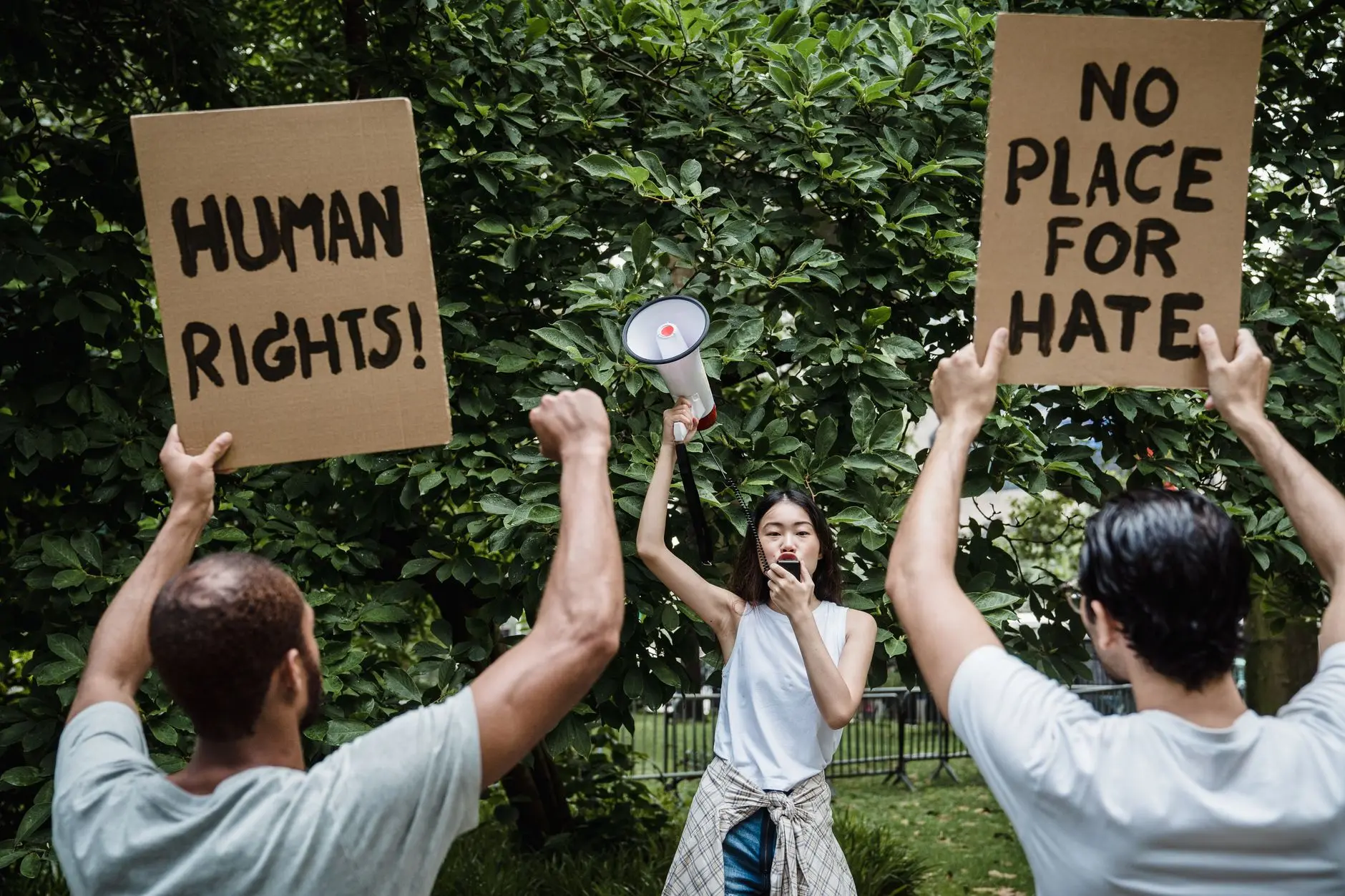
More human rights coverage. A strange thing happened in 2026. The United Nations Human Rights Council marked its 20th anniversary with a bigger budget and more independent investigations than at any point in its history. At the same time, the United States, historically the council's most powerful backer, has continued to pull away from parts of the human rights framework it helped build.
That contradiction is the story of human rights in 2026, and it is going to shape the world Gen Z inherits.
What the UN Is Doing
In June, the UN High Commissioner for Human Rights Volker Turk used a visit to the United States to call publicly for a "rethink" of American immigration policy, citing family separations at the border and the use of expedited removal without judicial review, according to the Associated Press apnews.com. It was an unusually pointed statement from a sitting high commissioner about the policies of the country that hosts the UN's headquarters.
The same week, the UN human rights office protested the arrest of Afghan women by the Taliban for alleged clothing violations, after the Taliban's morality police resumed arresting women in public for dress code infractions, as reported by the Associated Press apnews.com.
The pattern is the same one the UN has faced for years: the body's most powerful members ask it to investigate human rights problems in their adversaries while resisting scrutiny of their own. What is different in 2026 is that the gap between what the UN says and what its major members do is wider than it has been in a generation.
The Pullback in the United States
The Trump administration has reshaped the U.S. government's human rights footprint in ways that are still playing out.
The State Department's annual human rights report, which used to be a comprehensive country-by-country review, has been scaled back. Several country-specific reports have been shortened, and the section on reproductive rights has been removed entirely from the public version.
The Department of Education has pulled back from civil rights enforcement in schools, according to the Associated Press apnews.com. The department has dropped a number of investigations into discrimination against Black students and has reduced the scope of Title IX enforcement on campus. Civil rights groups have challenged several of the changes in court.
The Department of Homeland Security has continued to use expedited removal, which allows immigration officers to deport people without a hearing before a judge, in a broader set of cases than under previous administrations. Immigration lawyers say the policy has resulted in deportations of long-term U.S. residents with no criminal record.
These are not the only moves. The administration has also withdrawn from several UN human rights bodies and has not rejoined the Human Rights Council after leaving it during the first Trump term.
Where the Vacuum Is Being Filled
The U.S. pullback has created space for other actors to lead on human rights. More human rights coverage
The European Union has expanded its human rights sanctions regime, known as the EU Global Human Rights Sanctions Regime, adding more than 60 individuals and entities in 2025 and 2026, including officials in Iran, Myanmar, Russia, North Korea, and several African countries. The sanctions freeze assets and ban travel to the EU.
The United Kingdom has passed its own human rights sanctions law and used it to target individuals in Belarus, Russia, and Saudi Arabia.
Latin American countries have become more assertive on migration rights. Mexico, Brazil, Colombia, and Chile have all publicly criticized U.S. immigration enforcement and have moved to regularize the status of Venezuelan, Haitian, and Central American migrants within their own borders.
The African Union has launched new human rights initiatives focused on digital rights, climate displacement, and the rights of LGBTQ people, several of which would have been politically impossible a decade ago.
Civil society is filling in too. Reporters Without Borders, Human Rights Watch, Amnesty International, the Committee to Protect Journalists, and a long list of regional and national NGOs are doing more of the documentation and advocacy work that governments used to do.
The Press Freedom Battle
One of the most contested human rights fights of 2026 is over press freedom.
According to the Committee to Protect Journalists, more journalists are behind bars around the world than at any point since the organization began tracking in the early 1990s. China, Myanmar, Belarus, Russia, Iran, and Eritrea are holding the largest numbers.
In the United States, press freedom groups have raised alarms about a series of actions by the Justice Department, including subpoenas of reporter records, the use of grand juries to identify confidential sources, and criminal prosecutions of journalists under the Espionage Act for stories based on leaked information. The Biden administration had curtailed some of those practices; the Trump administration has restored them.
The Reuters Institute for the Study of Journalism at the University of Oxford has documented a global decline in trust in news media, with younger audiences in many countries more skeptical of mainstream news than older ones. That trend is not caused by human rights violations, but it makes the work of press freedom advocates harder, because a public that does not trust journalists is less likely to defend them.
Why This Matters for Gen Z
Human rights are not an abstraction for Gen Z. They are the rules that decide whether you can get a passport, speak freely online, marry who you want, change jobs without your government's permission, and live without fear of being disappeared.
The United States is no longer the unquestioned global leader on human rights. That does not mean the framework is collapsing. It means it is being reshaped, and the new shape depends on which countries and which movements fill the vacuum.
For Gen Z, the practical takeaway is that human rights work is no longer something that happens in Washington or Geneva and then trickles down. It is happening everywhere, on every platform, in every country. The people who win the next decade of human rights fights will be the ones who understand that.
Comments 0
No comments yet. Be the first to share your thoughts!
Leave a comment
Share your thoughts. Your email will not be published.