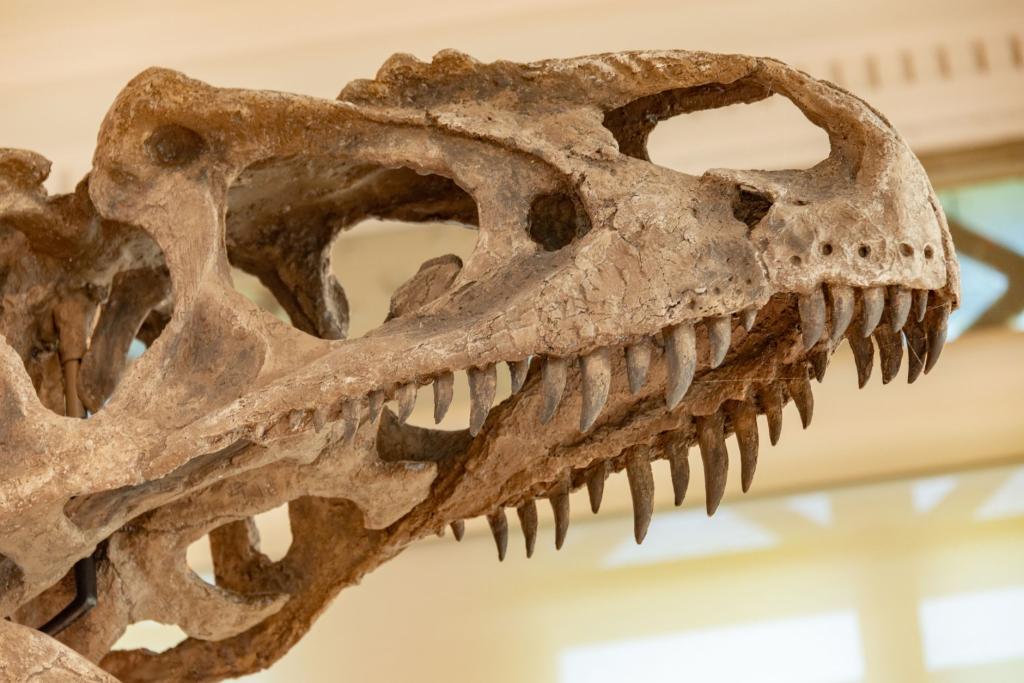
A newly named fossil animal from Morocco is giving crocodile evolution a strange new chapter. Researchers at the University of Portsmouth, working with colleagues at Hassan II University of Casablanca, have described a crocodile relative that lived about one hundred and seventy million years ago and carried a long, narrow snout packed with needle teeth so slender they look like the prongs of a comb.
The animal has been given the scientific name Ctenosuchus tenuidens, and it belongs to the thalattosuchians, a group of marine and freshwater crocodylomorphs that swam through the age of the dinosaurs. Its needle teeth are so unusual that the team says they are unlike those of any known close relative. For more discoveries from the lab and the field, browse our science section.
A Comb of Needle Teeth
The name tells the story. "Cteno" means comb, "suchus" means crocodile, and "tenuidens" means thin teeth — a label the researchers chose because the fossil's most striking feature is its comb of needle teeth. Where most of its relatives carried stout, conical teeth built for gripping, this animal's teeth were exceptionally thin and densely packed, a dental toolkit the paper's authors say has no match among known crocodile-line animals.
The discovery of the needle teeth was almost missed entirely. Lead author Hamzah Imran noticed tiny black circles on either side of a long bone in the middle of one fossil, and put it under a microscope. As reported by Phys.org, Imran carefully scratched around one of the circles with a scalpel — and watched it grow longer and longer as more of it was uncovered. The black circles turned out to be remarkably slender needle teeth, hiding in plain sight. He later said the comblike pattern is what inspired the animal's name, a detail that came straight from the fossil prep bench rather than any grand theory.
A Shrimp Hunter in Jurassic Waters
Two partial specimens of Ctenosuchus tenuidens came from red mudstones in the Talsint-Anoual area of southeastern Morocco, according to Sci.News. The rocks formed in ancient rivers and lakes in what is now the Atlas Mountains, a freshwater setting very different from the open ocean where many of its thalattosuchian cousins hunted. Researchers say the needle teeth point to a diet of shrimp and tiny fish, small slippery prey that a comb-like snout could trap rather than crush.
That feeding strategy is a sharp contrast with modern crocodiles, whose simple conical teeth seize and tear, and with other thalattosuchians, which tended toward long, gharial-like snouts. Similar dental specializations have evolved more than once in nature: the same narrow, interlocking tooth arrangement shows up in mesosaurs, in filter-feeding pterosaurs, and in living fish such as Atlantic needlefish and goblin sharks, all animals that catch small aquatic prey. The new species fits neatly into that company, a croc-line reptile that converged on a solution more familiar in fish. Readers who like Jurassic surprises can also see our story on a Jurassic swimmer that changed how scientists think mammals learned to drink milk.
A Note on the Fossils' Provenance
There is a caveat worth knowing. The fossils were purchased from commercial fossil collectors in Morocco rather than excavated by the research team, though the collectors supplied photographs of the site and locality data, according to Sci.News. Commercial collecting is a long-running tension in paleontology: dealers open up regions scientists rarely reach, but specimens bought on the market carry more uncertainty about their exact context than ones dug up in documented fieldwork. The team says the locality information checked out, and the paper appeared in the Journal of Vertebrate Paleontology in October 2026 after peer review.
Even with that footnote, the animal's needle teeth stand out. Crocodile relatives of the Jurassic are often cast as ambush predators waiting to lunge, but the needle teeth of Ctenosuchus tenuidens suggest a quieter, more delicate hunter — one that filtered ancient rivers with a living comb. It is a reminder that the fossil record keeps rewarding the patient: sometimes all it takes is a scalpel, a microscope, and the curiosity to ask what a tiny black circle really is.
Comments 0
No comments yet. Be the first to share your thoughts!
Leave a comment
Share your thoughts. Your email will not be published.