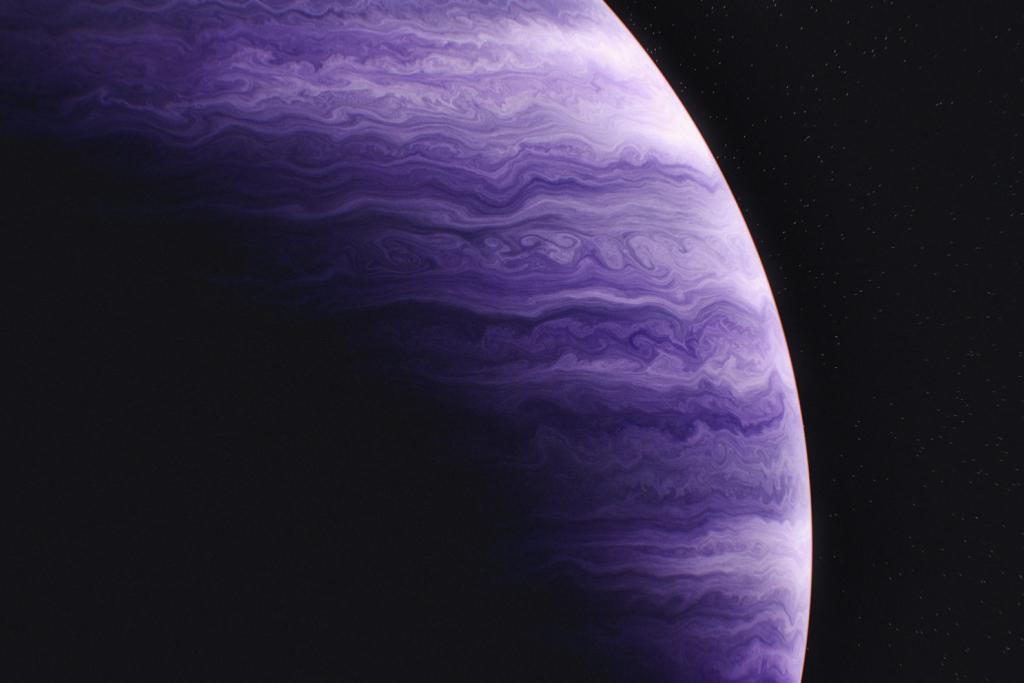
In a star system sixteen light-years away, two suns share the sky — and the biggest planets scientists expected to find there are not there. The twin suns of 70 Ophiuchi have just survived astronomy's most sensitive hunt for giant planets in a nearby binary system, and the hunt came up empty. But that empty result may be the best news yet for the search for another Earth, because a companion study found that a world our size could hold a stable orbit in the system's habitable zone.
The pair sits about five parsecs from Earth, making it one of the nearest binary star systems to us — and a regular subject of GenZ NewZ's science coverage. Both stars are slightly smaller and cooler than our sun, at about eighty-eight percent and seventy-three percent of its mass. Astronomers have watched the twin suns of 70 Ophiuchi for decades, yet no planet has ever been confirmed around either star. That makes the twin suns of 70 Ophiuchi one of the most watched double-star systems in the sky.
That long record has now produced two results at once. A University of Michigan-led team combined more than a century of radial-velocity and astrometric measurements with fresh data from the Magellan Clay Telescope in Chile and the Harlan J. Smith Telescope in Texas, ruling out Jupiter-mass planets across much of the inner system. Meanwhile, a dynamical study built on University of Michigan observations, with modeling by UC Riverside researchers, showed an Earth-mass world could keep a steady orbit where liquid water is possible. Together they sketch a tantalizing picture of the twin suns of 70 Ophiuchi: no giants, but possibly a real Tatooine.
The 170-year hunt for a planet
The story starts in the late 1700s, when German astronomer and priest Christian Mayer identified 70 Ophiuchi as a binary star system. Then in 1855, British astronomer William Jacob reported irregularities in the stars' motion and proposed an unseen planetary companion — one of the earliest formal exoplanet claims ever made. Jacob's claim did not survive later scrutiny, but the possibility of planets kept the twin suns of 70 Ophiuchi under watch for the next 171 years.
The two stars take roughly eighty-eight years to circle each other, which gave astronomers an unusually long baseline for refining their motion. According to the University of Michigan-led team, as reported by Phys.org, the researchers measured the orbital period with remarkable precision and determined the stellar masses with uncertainties below one percent. They even pinned down the choreography: the stars reached maximum separation in July 2024 and will not swing back to minimum separation until November 2077.
What once looked like a planet's gravitational wobble turned out to be the stars themselves. The primary star showed repeating signals near a twenty-day period — but they matched the star's roughly twenty-day rotation and its mathematical harmonics, not a planet. Starspots and bright magnetic regions can distort the spectral lines used to measure motion, and models of changing stellar activity explained the data better than any planet. As senior co-author Michael Meyer said, the work is "a cautionary tale about how stellar activity can mimic planet signals."
No giants — but room for an Earth
A non-detection is not a ban. The study rules out Jupiter-sized companions within about five astronomical units of the primary star and within about half an astronomical unit of the secondary — yet anything smaller than Saturn in the system's interior is still fair game. Around the primary, planets down to roughly a third of Jupiter's mass at one astronomical unit should have been visible, so their absence narrows the search to rocky worlds. As reported by The Brighter Side of News, lead author Yiting Li put it this way: "It's a mix of disappointment and excitement" — adding that "the study sets an upper limit, not a ban, on planets."
That is where the second study comes in. Using computer simulations, UC Riverside doctoral student Skylar D'Angiolillo placed an Earth-mass planet at different distances from the primary star of the twin suns of 70 Ophiuchi and tracked what happened over time: does it stay put, fall into the star, or get flung away? The answer: stable orbits exist from about two and a half to nearly three astronomical units out, as long as the orbit lines up reasonably well with the binary's plane — a range that comfortably includes the star's modeled habitable zone. "You might expect the second star to disrupt those orbits, but that isn't necessarily what happens," she explained, according to Phys.org's Q&A with the research team.
There is a caveat. The analysis found that strongly tilted planetary systems were less stable, because the companion star can drive large swings in orbital eccentricity. So a real Tatooine around the twin suns of 70 Ophiuchi would most likely share the binary's flat, orderly plane — good news, since planets usually form in such disks anyway.
The result matters because our single-star solar system may be the odd one out. Roughly half of sunlike stars have stellar companions, so understanding whether planets can survive around the twin suns of 70 Ophiuchi and systems like it is central to estimating how common habitable worlds really are. According to astrophysicist Stephen Kane, D'Angiolillo's adviser, other planetary systems "can look nothing like ours" — and a second sun may sound exotic, but it does not rule out habitability. A separate 2026 numerical study reached a similar conclusion, finding both stars could keep planets in permanently habitable regions under favorable arrangements.
Telescopes built for small worlds come next
The twin suns of 70 Ophiuchi are now a cleaner target than ever for the next generation of instruments. The University of Michigan is part of a team studying a proposed mission called SHERA that would focus on binary stars, and the system is also a natural target for NASA's planned Habitable Worlds Observatory, a 2040s flagship designed to image Earth-sized planets and scan their atmospheres. At only about five parsecs away, the primary star's habitable zone sits widely separated enough on the sky to be a strong candidate for direct imaging.
The timing is promising. In 2025, the James Webb Space Telescope found evidence of a possible giant planet around Alpha Centauri A, proving modern instruments can probe planets in extremely nearby multiple-star systems. For the twin suns of 70 Ophiuchi, astronomers now know what is absent and where to look — and Li says she would wager more planets are there. For more strange new worlds, see how a second-generation planet may have risen from a dead star. One of astronomy's oldest planet mysteries is still unresolved, but the worlds that may be hiding there have become smaller, closer, and considerably more interesting.
Comments 0
No comments yet. Be the first to share your thoughts!
Leave a comment
Share your thoughts. Your email will not be published.