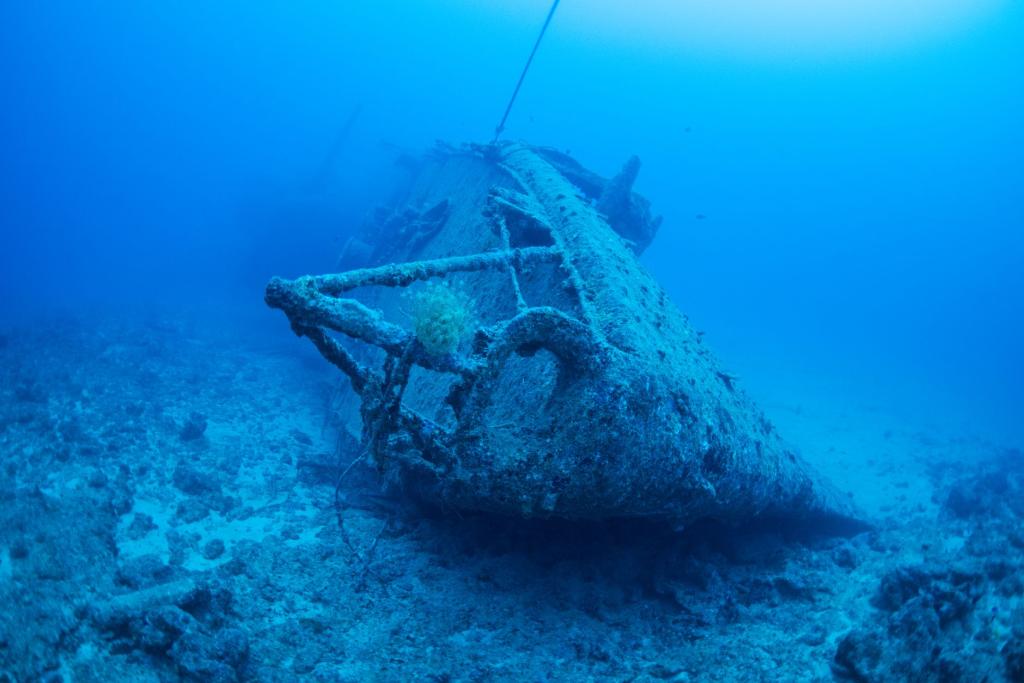
Turkey's Ministry of Culture and Tourism announced on Wednesday that archaeologists had found what they believe is the world's oldest shipwreck, resting off Kekova Island near Antalya. The cargo vessel dates to the Early Bronze Age, between forty-four hundred and forty-seven hundred years old, which makes it roughly contemporary with the construction of the Great Pyramid in Egypt. TBS News noted that the find pushes the known record back by centuries, past a wreck estimated at about forty-two hundred years old off Dokos Island in Greece, which had held the title until now.
The excavation of the world's oldest shipwreck was led by Hakan Öniz of Akdeniz University, working with the Mediterranean Archaeology Association. The team first spotted the wreck during an underwater survey two years ago and returned this year for a full dig. Öniz called the site "a time capsule at the bottom of the sea" in comments to the BBC, and told the broadcaster that his divers were the first people to handle the objects in roughly five thousand years. It is the second major dig to make headlines this month, after a thousand skeletons surfaced beneath a Copenhagen park.
The jars dated the ship because the wood is gone
None of the ship's wooden hull survived the millennia on the seabed, so the usual dating tools were off the table. Radiocarbon dating needs organic material, and there was none left to test. Instead, the team dated the world's oldest shipwreck through its cargo: more than thirty ceramic storage jars, known as amphorae, scattered across an underwater slope about thirty metres below the surface.
The jars carry a distinctive design, with two handles, a central ridge and a flat base, that matches pottery found in Egypt and the Middle East from the same period. After comparing the decoration techniques, Öniz said the team had no doubt about the wreck's age, describing the Early Bronze Age dating as "one hundred percent certain," according to the BBC's reporting. Turkey's culture minister added that one recovered jar carried nine different markings and two holes in its body, details the ministry shared when it announced the discovery.
Reaching the cargo was itself a constraint. The BBC reported that divers working the world's oldest shipwreck site were limited to thirty-minute shifts because of the depth, surfacing each time with the fragile jars, which are now going through conservation on land after thousands of years underwater.
Ancient cargo points to a Bronze Age trade route
The residue inside the world's oldest shipwreck may turn out to be the most revealing part of the find. Karin Sowada, an archaeologist at Macquarie University in Australia, examined the amphorae after they were brought up and found that several still held a thick, glossy residue. She told the BBC she looked inside one jar and "nearly fainted" at how much material remained. Laboratory analysis is now under way to determine whether the jars held olive oil, wine or tree resin, or whether they had been reused over a period of years.
Archaeology Magazine reported that the researchers believe the trade ship left a port in the eastern Mediterranean and was sailing toward northwestern Turkey or Crete when it went down near the island. A separate report noted the jars themselves were made in the Jordan Valley, which points to a Levantine departure point. Either way, the picture is of goods, and with them ideas and culture, moving across the sea far earlier than the shipping lanes most people picture when they think of ancient trade.
This is why the world's oldest shipwreck matters beyond the record books. Three large stone anchors lay alongside the jars on the seabed, the kind of spares a crew carries for long voyages, which suggests sailors who planned to travel real distances rather than hug the coastline. The vessel itself was only about ten metres long, a modest merchant ship by any standard, yet it was hauling cargo across the Mediterranean while Egypt's pyramids were still going up.
Turkey's waters have produced famous Bronze Age wrecks before, including the ships at Cape Gelidonya and Uluburun, and this find extends that history back further than anyone had documented. An earlier GenZNewZ story looked at an ancient observatory in Mexico that tracked the sun for twenty-five hundred years, another reminder of how much the old world still has buried. With residue analysis still to come and further excavation possible, the world's oldest shipwreck probably is not finished telling its story.
Comments 0
No comments yet. Be the first to share your thoughts!
Leave a comment
Share your thoughts. Your email will not be published.