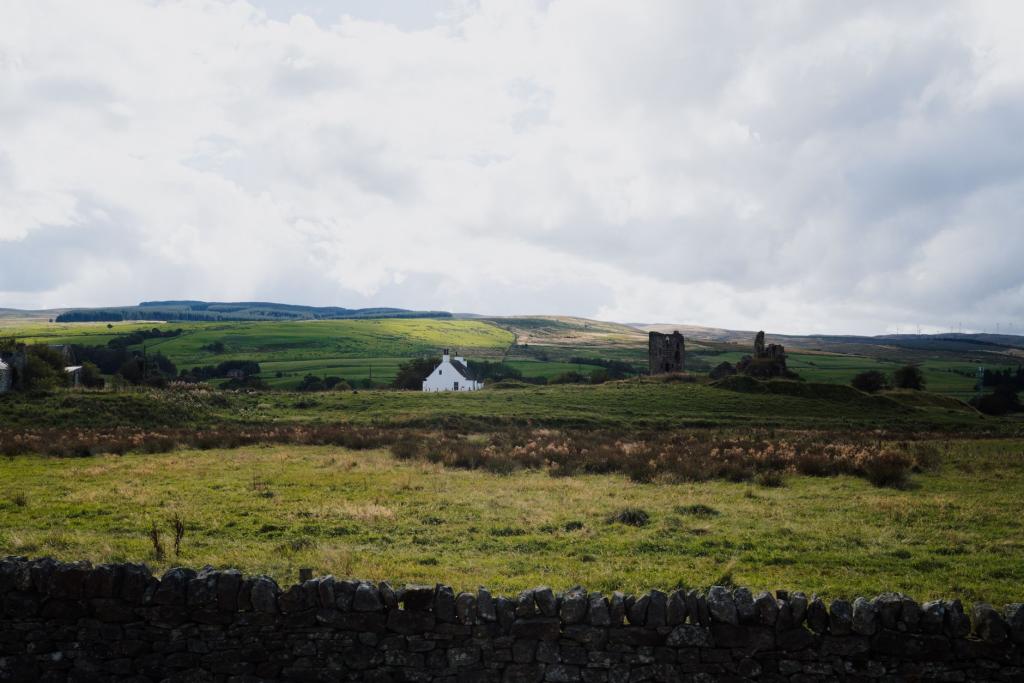
On a small Scottish island with barely 190 residents, history just got rewritten — by the residents themselves. A community-funded excavation on the Isle of Lismore has uncovered a major early medieval Scottish Monastery, a wealthy sixth-century religious centre that researchers say may have rivalled the most famous abbeys of its age.
For centuries, the island’s early monastery existed only in manuscripts and local legend. The islanders changed that by raising the money themselves — through grants, donations, legacies and a crowdfunding campaign — and hiring professional archaeologist Dr Clare Ellis of Argyll Archaeology to lead volunteers from the island in a dig around the site of the much later medieval cathedral. According to a report on the findings, the team uncovered extensive burial grounds, decorated stonework and early buildings belonging to a major early medieval foundation. The peer-reviewed results appear in the journal Antiquity.
The dig the islanders paid for
The investigation began with a simple question from the Lismore Historical Society: was the island’s 13th-century cathedral built on the site of an earlier monastery founded by the Irish missionary Moluag? Documentary evidence had long recorded a monastic settlement on the island, but apart from fragments of an early carved cross, almost nothing of it was visible above ground.
Ellis combined open excavation with geophysical survey of the surrounding landscape. What the volunteers found went far beyond a small island chapel. The dig revealed large burial grounds, structural remains of early buildings, and — the detail that changed the story — a workshop zone full of evidence for high-status craft production. The Scottish Monastery that emerged from the trenches was not a backwater outpost but a substantial, well-connected settlement.
Bob Hay, a former island resident who helped coordinate the funding and the volunteers, said the project proves what local history groups can achieve. “The discoveries at Lismore demonstrate the value of community-led archaeology in advancing academic research,” he said, according to HeritageDaily.
Gold workshops beside the prayer books
The most striking finds point to serious wealth. Excavators recovered casting moulds used to make penannular brooches — the ring-and-pin jewellery worn across early medieval Britain — along with an early medieval touchstone for testing gold, intricately decorated animal bones, and a large number of crucibles that had been used to cast gold and silver. The presence of precious-metal working suggests the monks were not only praying and copying manuscripts but running a production centre for luxury goods.
That reframes what the site was. Rather than a modest island church in an overlooked corner of the Gaelic world, the Lismore foundation looks like a high-ranking establishment of international importance — one whose goldsmiths served an elite clientele. The researchers note that the monastery likely operated as a centre of production and learning as well as worship.
Professor Gordon Noble of the University of Aberdeen, a co-author of the study, said the results close a centuries-old gap between legend and evidence. “For centuries, Lismore’s early monastery was known mainly from written records and local tradition. We can now see that it was a thriving centre of worship, craftsmanship and learning, whose importance may have rivalled some of the best-known monasteries in early medieval Britain,” he said, as the report notes.
A rival to Iona, on an island with no pub
The obvious comparison is Iona, the celebrated monastery founded by St Columba a short sail to the south-west, which became the beating heart of early Scottish Christianity. Tradition holds that Moluag — a contemporary of Columba — crossed to Lismore around fifteen centuries ago to convert the Picts, and island legend even claims the two saints settled their rivalry with a boat race. The new evidence suggests the Lismore house deserves to be discussed in the same breath: the island’s early Christian foundation inside the Gaelic-speaking kingdom of Dál Riata that grew into a wealthy ecclesiastical power.
For visitors, the story is refreshingly tangible. Lismore today is a quiet, fertile island with no row of shops and not even a pub — islanders meet for coffee at the Gaelic heritage centre — yet its ground holds one of the most significant early medieval discoveries of recent years. As this newsroom reported from Wales, Britain’s ancient sites keep surfacing in unexpected places; a record-breaking shipwreck off Turkey and a lost epic fragment in a Dutch library show how much of the past is still waiting underground — or underwater.
More digging is planned, and the researchers say the Scottish Monastery could yet reveal its full extent and its links to other early medieval religious centres across Britain and Ireland. The deeper lesson may be about who gets to write history: on Lismore, a couple of hundred people decided their island’s past was worth paying to uncover, and they were right.
Comments 0
No comments yet. Be the first to share your thoughts!
Leave a comment
Share your thoughts. Your email will not be published.