A 1,100-year-old mystery is taking shape on a German hilltop. Archaeologists working in October 2026 at the lost Ottonian palace of Helfta, near the town of Eisleben, have uncovered a second stone building from the 900s — and nobody knows what it was for. The Medieval Mystery Building joins a stone palace, a royal church and a possible open-air assembly terrace on the same hill, in what was once one of the grandest royal residences of the Holy Roman Empire, according to Archaeology News Online Magazine.
The site belongs to the era of Otto the Great, the tenth-century ruler who forged the empire out of a patchwork of duchies and made its kingship Christian Europe's dominant power. Helfta was one of his curtis imperialis stops — a court complex where the king stayed, issued decrees and displayed the wealth of his reign. Finding a previously unknown stone building beside the main palace raises a fresh question: who lived and worked in the shadow of royalty?
A second stone building with a basement and surviving stairs
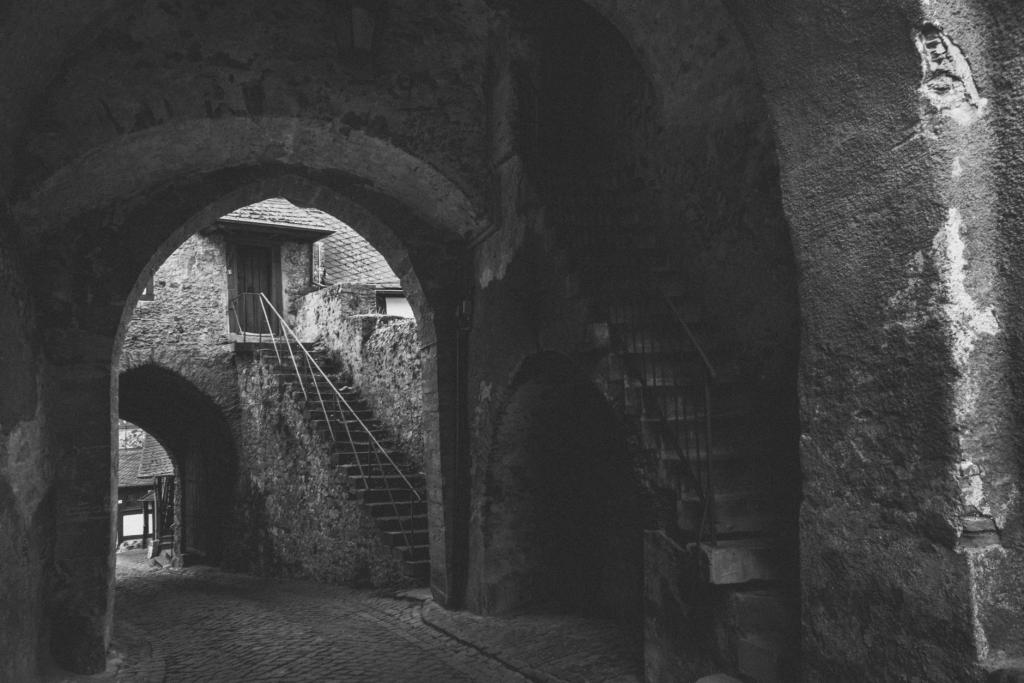
The newly uncovered building sits right beside the palatium, the royal palace hall. Associated finds date it firmly to the same century as the palace, and it measures roughly nine by five meters, with a cellar below and an entry staircase that survives in remarkably good condition. That makes it one of the earliest secular stone buildings anywhere in Saxony-Anhalt — a rare survivor from an age when nearly everything was built from timber.
Its function is the open question. Heritage Daily reports that the dig team is weighing two explanations: the building may have housed members of the king's noble entourage, or it may have been the seat of a burgrave — the official who ran the palace and its estates whenever the ruler was away. Both theories point to the same conclusion: this was a structure for people close to power, not for farmers or laborers. Whatever the Medieval Mystery Building turns out to be, it adds a new character to the palace story.
The 2026 season has also revealed a stone-reinforced terrace on the eastern side of the palace, facing the courtyard between the royal hall and the church. According to the archaeologists, it likely served as a platform for open-air gatherings — the medieval equivalent of a rally stage. Together, the church, the palace and the new building formed a cluster of stone architecture visible from far away, which in the 900s was the whole point: stone announced authority.
Stone was a statement in a timber world
To understand why a single building matters, it helps to picture the 900s. Most ordinary structures in central Europe were sunken-floor pit houses with woven-branch-and-clay walls and wood or reed roofs, warmed by stone-lined hearths. The Helfta dig has uncovered plenty of those in the settlement's southeastern outer bailey — and the finds inside them tell a story of workaday life: clay loom weights for weaving textiles, crucibles for copper-alloy casting, and a lime kiln for making plaster and mortar.
Those pit houses stood just hundreds of meters from the royal complex, yet the gap between them could not be wider. Walls and ditches split the royal world from the common one, and the building materials themselves drew the line: stone for the emperor, mud and timber for everyone else. A stone building was not simply shelter — it was a deliberate flex, visible proof that the king commanded labor, materials and craft on a scale nobody else could match.
The small finds on the hill underscore how long Helfta stayed important. Silver coins span the tenth through fifteenth centuries. Ottonian jewelry includes earrings and enameled cloak clasps, including one rare crescent-shaped brooch. There are iron arrowheads, pottery with Slavic wave patterns, a nearly playable bone flute and a fragment of an antler box with ring-and-dot decoration from around the year 1000. War, royal display and busy trade left their traces across the same hill for centuries.
The dig is a long story that keeps growing
The 2026 campaign is the latest chapter of a dig that began in 2020. Those earlier seasons already identified the big landmarks: the church of St Radegund, which the emperor founded before 969, plus its cemetery, the stone palace, strong defensive walls around the main fort and its outer yards, Carolingian-era graves, and post holes from an even older palisade reaching back to the pre-Roman Iron Age. A later twelfth-century castle of the Hackeborn family, with its rectangular keep found in 2023, occupies the same hill as a reminder that Helfta's strategic value outlived its royal phase.
This year's work, which resumed on August 31, 2026, is led in the field by Prof. Dr. Felix Biermann of the State Office for Heritage Management and Archaeology, with roughly twenty volunteers working alongside the professionals. The team wraps up on October 24, 2026. The renewed excavation is also exploring a second late-medieval underground tunnel, more church graves and further wall and ditch segments from repeated rebuilding of the hill.
Why this matters — and what happens next
The reader angle here is travel. Eisleben, the nearest town, is already building visitor facilities around the site, and the state government is funding that effort through its structural development programme. The palace complex is on its way to becoming a proper stop on the region's heritage map, alongside Eisleben's famous Martin Luther sites. A new discovery like this season's gives the future museum something nobody else has: a genuine, still-unsolved question visitors can think about.
The counterpoint is worth stating plainly: a building's purpose is hard to prove from walls alone, and both the guest-house and burgrave theories could turn out wrong. The archaeologists are not claiming certainty — they are presenting the evidence and the open question. That honesty is part of why the story resonates: it is research in progress, not a closed case.
For now, the hill keeps its secrets. But every stone that comes out of the ground sharpens the picture of a place where power announced itself in architecture — and where, more than a thousand years ago, someone important enough to live in stone walked up those surviving stairs every day. The final weeks of the 2026 season, which run through October 24, may bring more answers before the trenches are backfilled for winter.
Related reading: this newsroom recently covered colossal royal statues uncovered in Egypt's Nile Delta and an ancient solar observatory in Mexico; more ancient-world finds are collected on our The Old World page.
Comments 0
No comments yet. Be the first to share your thoughts!
Leave a comment
Share your thoughts. Your email will not be published.