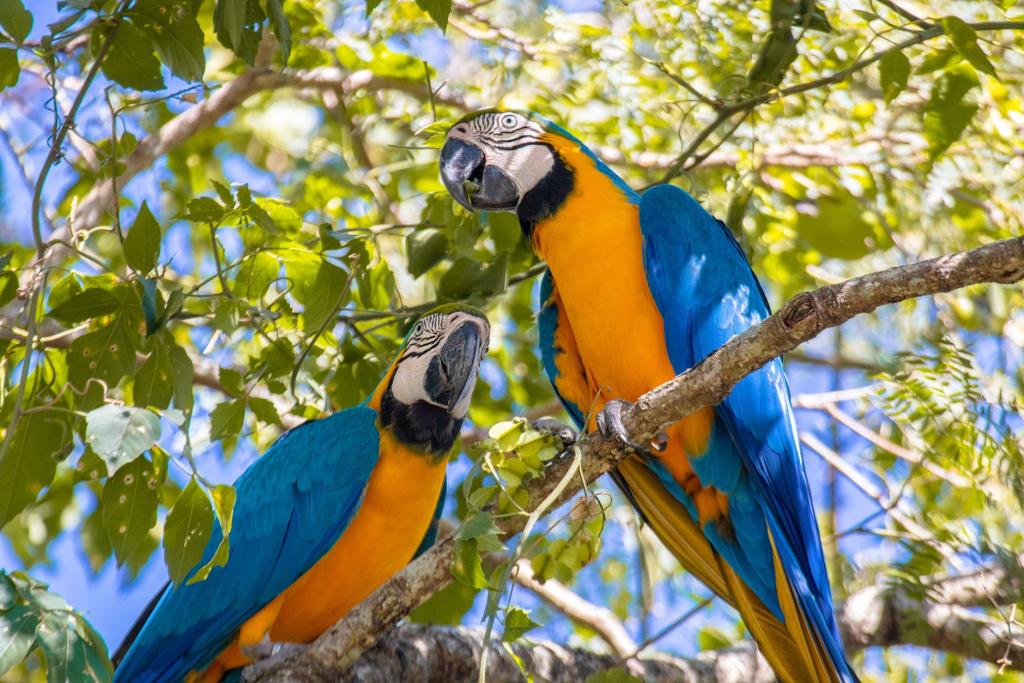
The Rio Bird Comeback was supposed to be the feel-good conservation story of the decade: the brilliant blue parrot that starred in the animated film Rio, gone from the wild for a quarter of a century, flying free again over the dry forests of northeastern Brazil. Instead, the project has lurched from triumph to crisis, derailed by a deadly virus, a court-ordered roundup of the birds it freed, and a fight over two dozen macaws that ended up in a private Indian zoo.
The latest chapter arrived this month. According to a report published in early October by Mongabay Brazil, the country's environmental agency is now negotiating with the Indian zoo over the future of the birds it holds, the newest turn in a saga that blends science, politics, and a bidding war over some of the rarest birds on Earth.
The comeback that almost worked
The Spix's macaw was already one of the most fragile species in conservation history. By the late 1980s only three individuals were known to survive in the wild, and by 1990 a single male remained, pairing with a macaw of a different species because no mate of his own kind could be found. He vanished in 2000, and the species was formally declared extinct in the wild in 2019. The entire global population survived only in captivity, scattered across aviaries in Germany, Brazil, and Qatar.
In 2019, Brazil's federal biodiversity agency, ICMBio, signed a five-year agreement with the German nonprofit Association for the Conservation of Threatened Parrots, known as ACTP. The group flew fifty-two birds to Brazil, where a purpose-built breeding and release center was established in Curaçá, Bahia. In June 2022, the first twenty macaws were set free in the Caatinga, the dry scrubland that is the bird's only natural home. To help the captive-bred birds cope, conservationists released them alongside blue-winged macaws, which acted as mentor birds, demonstrating how to forage and roost.
The early results looked like a miracle. More than half of the released birds survived their first year, an unusually high rate for parrot reintroductions, and in 2023 the first chicks hatched in a wild nest in more than three decades. Parrot species that have never raised chicks in the wild should not know how to parent, yet the pairs fed, guarded, and fledged their young exactly as their ancestors had. Similar conservation wins, like the record recently set by NASA's Perseverance rover on Mars, remind us how long-odds missions can still land, as GenZ NewZ's science coverage has shown.
A virus stopped the story cold
In May 2025, technicians at the BlueSky breeding center in Curaçá noticed that a wild-born chick was not developing its feathers properly. Tests confirmed psittacine circovirus, the cause of beak and feather disease, a condition with no known cure that is usually fatal in parrots. According to a detailed reconstruction of the crisis, Claudia Sacramento, the ICMBio coordinator who oversees wildlife health emergencies, described the mishandling of that first case as a mix of innocence, negligence, or recklessness: the sick chick had been housed alongside birds slated for release, giving the pathogen a direct route into the wild population.
The planned June 2025 release was canceled, but the damage was already spreading. In October, after the center resisted handing the wild birds over for months, a court ordered their recapture. When the eleven remaining free-flying macaws were tested in November, every single one came back positive, the first time the virus had ever been detected in wild birds anywhere in South America. Two of the recaptured birds had been born in the wild and had never spent a day in a cage.
The fallout was brutal. Inspectors who visited the breeding center found feeders described as extremely dirty and encrusted with waste, while staff handled birds in flip-flops, shorts, and t-shirts, according to reporting by AFP. The agency fined BlueSky 1.8 million reais for failing to implement biosafety protocols. The center pushed back publicly, saying in a statement that no birds died, that all had excellent flight capacity, and that they were feeding well. Still, the recapture erased nearly all the progress the reintroduction had made since 2022.
The birds at the center of a three-country fight
Even as the virus crisis unfolded, a separate controversy was already burning. In 2023, ACTP moved roughly two dozen of its Spix's macaws from Germany to Vantara, a private zoo in India, without Brazil's consent. Brazil's government said it had not authorized the transfer and described the deal as a commercial transaction. India's Supreme Court later reviewed the operation and found no formal violation, but Brazil's environment ministry cut its partnership with ACTP entirely in 2024, arguing that birds sent to a facility outside the official conservation program could not be properly monitored.
The Indian zoo has faced broader scrutiny well beyond the macaws. Non-governmental groups have said Vantara imported tens of thousands of wild animals from around the world, including species never legally exported from their home countries, according to an open letter reported in late September. Signatories urged the zoo to commit to a permanent end to wild-animal imports and to support sanctuaries in the animals' countries of origin instead. Meanwhile, European regulators warned they would scrutinize any future exports of Spix's macaws to similar facilities more rigorously, and Brazil, India, and Germany are holding talks under the international wildlife-trade treaty CITES to settle how the species should be managed.
The dispute is not abstract. With only a few hundred Spix's macaws left on Earth, every bird matters, and low genetic diversity means the captive population cannot afford to lose breeders to legal limbo. That is why the October talks between Brazil's agency and Vantara matter: they could determine whether those two dozen birds ever rejoin the official breeding and release program. For context on how painstakingly researchers reconstruct lost histories, see this recent find, proof that patience can pay off even after centuries.
What comes next for the Rio bird
The comeback is not dead, but it is on life support. In May 2026, Brazil's agency moved the remaining birds out of the Curaçá breeding facility to a conservation center in Petrolina, and a second release site about two hundred kilometers south is undergoing habitat restoration, with the first birds expected there in 2028. The official long-term goal is to downgrade the species from critically endangered to endangered by 2030, but that target now depends on rebuilding trust between institutions, tightening health protocols, and redefining which birds get released, and when.
The deeper lesson is the one the Rio Bird Comeback keeps teaching. Extinction in the wild is not a theoretical future; it happened to a bird famous enough to carry a blockbuster movie, driven by habitat loss and the illegal pet trade. Recovery is possible, the reintroduction proved that, but it is fragile in ways that have nothing to do with biology: paperwork, biosecurity checklists, and who owns the birds. As climate pressure reshapes where and how people and wildlife can live, reported in GenZ NewZ's coverage of shifting travel patterns, conservation work like this is only getting harder. The Rio Bird Comeback may still have a happy ending, but nobody involved is calling it a success yet.
Comments 0
No comments yet. Be the first to share your thoughts!
Leave a comment
Share your thoughts. Your email will not be published.