Europe's top tourism official just said the quiet part out loud: the biggest threat to the continent's travel industry is not crowds, prices, or instability. It is the climate itself. Speaking at the Euronews Travel and Tourism Summit in Brussels this week, European Travel Commission chief executive Eduardo Santander said climate change is "the biggest threat to tourism right now, by far," according to Daily Guardian Europe's coverage of the summit, pointing to a summer of heat-warped railway tracks and rivers too dry for cruise ships.
For Gen Z travelers planning the classic post-graduation or gap-year Europe trip, the message is blunt and practical. The peak-summer Mediterranean holiday — blazing August in Barcelona or Rome — is becoming the worst-value window on the calendar: the hottest, most expensive, most disruption-prone weeks of the year. The industry's answer has a name that is already trending in travel circles: the coolcation, a trip built around cooler destinations, shoulder seasons, and milder weather.
A summer when the infrastructure buckled
Santander did not speak in abstractions. "We see that trains cannot run sometimes because the rails are expanded because of the heat," he told the summit, according to coverage of the event. "We saw this at the cruise lines on the European rivers — they couldn't run because it was too dry." Those two sentences sum up summer 2026 in Europe better than any brochure.
The numbers behind his warning are stark. Spain logged 61 heatwave days in 2026, the most ever recorded, in what was the country's hottest summer since records began in 1961. Italy endured its hottest summer since 1950. On the water, the Rhine gauge at Kaub — the key navigation marker for Europe's busiest inland waterway — fell to roughly five centimeters in late September, against a previous statistical low of 25 centimeters set in 2018. Around 40 percent of Rhine monitoring stations and nearly three-quarters of Danube stations sat at extremely low water at the same time, E-Global Travel Media reported in late September, forcing river cruise operators into ship swaps, motorcoach transfers, and outright cancellations. Viking, the largest European river cruise operator, saw more than half of its sailings affected from mid-July onward, with about one in ten clients on disrupted departures cancelling outright, according to Insurance Business Mag.
All of this unfolded while Europe's skies were setting records. EUROCONTROL logged a daily average of nearly 36,000 flights across July and August, peaking at 37,659 on a single day in late July — a new network record. The split screen is the story: record air demand on one side, fragile rail and river infrastructure on the other.
The coolcation shift is already measurable
Travelers are adapting faster than the infrastructure. Research from the European Travel Commission shows roughly 81 percent of Europeans say climate change affects how they travel, up seven percentage points from last year. About 15 percent now actively seek milder climates, and 14 percent avoid extreme-heat destinations, according to the commission's consumer sentiment work reported by Travel Weekly UK.
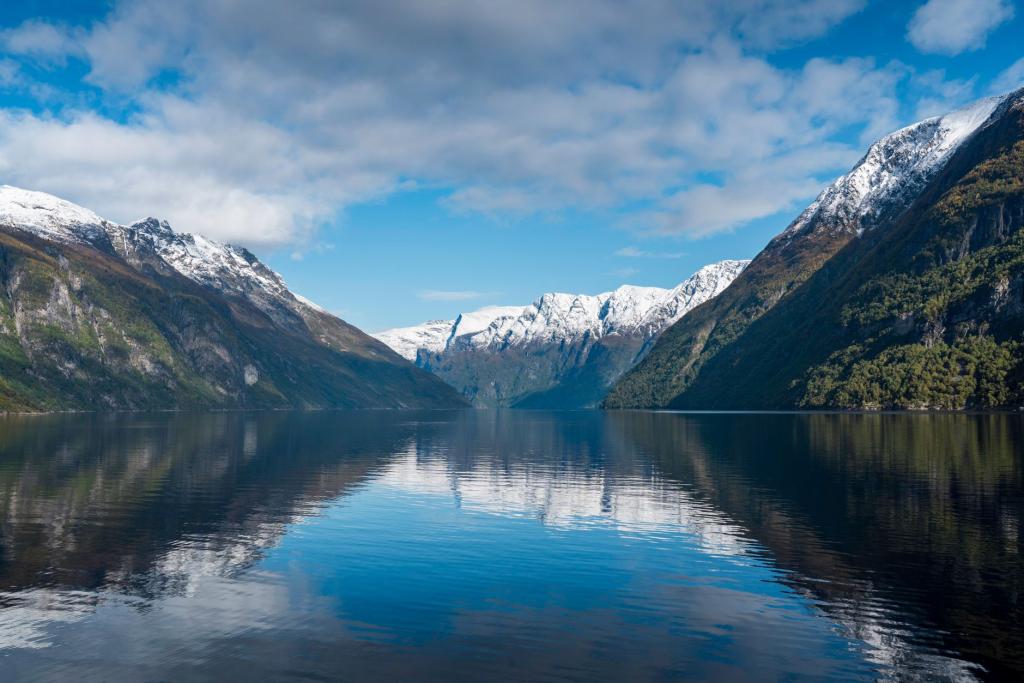
But this is adaptation, not abandonment. The same research found 61 percent of intended European travelers still prefer Southern and Mediterranean Europe — up four points year on year. People are not quitting the Med; they are shifting when and where they go within it. That is the essence of coolcations: the Nordics, the Baltics, Ireland, the Alps, and shoulder-season southern Europe instead of peak-August beach towns.
Santander framed it as a question of resilience. "We see resilience becoming one of the engines of European tourism," he said at the summit. "We have to become even more resilient to whatever is next." Tourism accounts for about a tenth of Europe's economy, and in Spain a similar share of GDP, with some markets reaching up to a fifth — so the stakes of getting this wrong are macroeconomic, not just personal.
What it means for your trip budget
What matters for trip planning is this: coolcations pair naturally with the rest of the budget-travel playbook, from free resources like a library card to shoulder-season fare alerts. For more on shifting travel patterns, see GenZ NewZ's travel coverage. The core appeal is price: cooler destinations and shoulder seasons mean cheaper flights, cheaper beds, and thinner crowds — a May fjord trip or an October Lisbon long weekend costs a fraction of the August peak. A few practical moves follow from the summer's lessons.
A few practical moves follow from the summer's lessons. First, treat climate timing as a booking skill: traveling in May, June, September, or October is now the value play, not just the hipster play. Second, if you are doing the Interrail or night-train circuit, build slack into summer itineraries — heat restrictions can slow or reroute trains. Third, check travel insurance for weather and disruption coverage; the river cruise chaos of 2026 showed that even premium trips ended up on replacement coaches, and budget travelers have less cushion to absorb a cancelled leg.
The counterpoint: is heat really the main problem?
Not everyone buys Santander's framing. The European Parliament's transport and tourism committee adopted a resolution in March 2026 describing overtourism — roughly 790 million annual international visitors concentrated in barely a tenth of Europe's territory — as one of the EU's most critical challenges. Santander, by contrast, downplays overtourism and argues congestion is the more pressing issue. There is a genuine unresolved tension: is the core problem rising temperatures, or simply too many people in too few places?
There is also a self-interest question worth noting. Santander used the summit to call for greater investment in tourism infrastructure — transport, accommodation, resilience. That ask comes from the chief executive of the body that lobbies for the industry that would benefit from the spending. The diagnosis (climate is the top threat) can be right even if the prescription deserves scrutiny.
Either way, the direction of travel for young travelers is clear. The era of the default August Mediterranean blowout is ending — not because anyone banned it, but because the weather, the prices, and the crowds are all pushing the same way. The coolcation is not a trend piece invention. It is what happens when a record-hot summer meets a generation that plans trips on a budget and checks the forecast before the flight deals.
Comments 0
No comments yet. Be the first to share your thoughts!
Leave a comment
Share your thoughts. Your email will not be published.