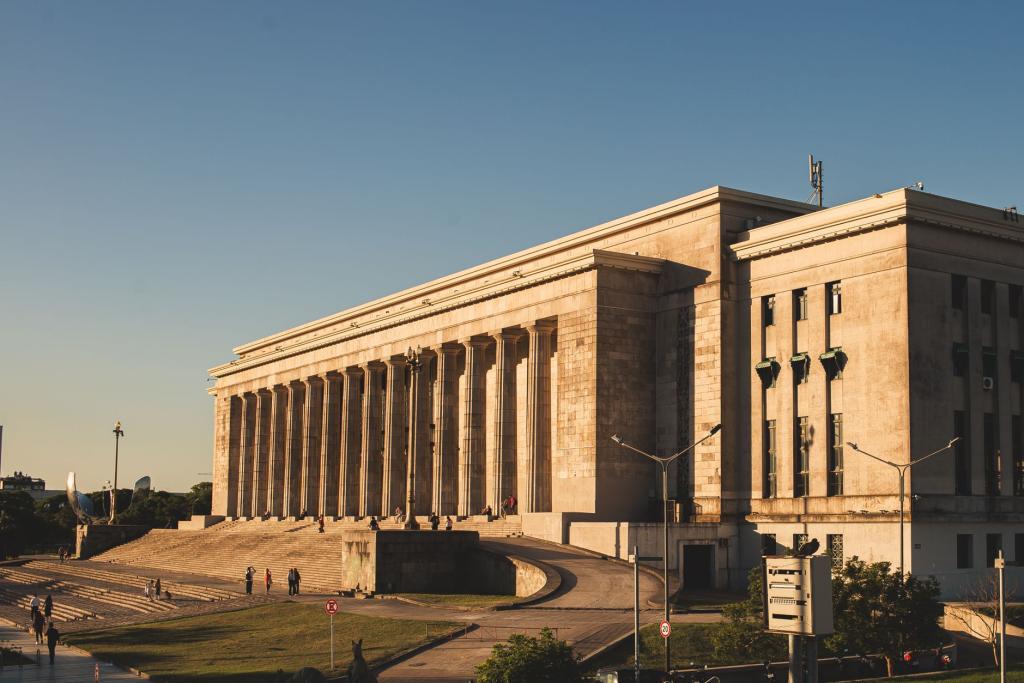
Students are Occupying Campuses across Argentina to defend the free public universities they say President Javier Milei's government is starving of funds. The occupations follow a massive mid-October march on the National Congress in Buenos Aires that ended with police firing tear gas and water cannons at demonstrators, and they mark the fifth major wave of university protests since the austerity program began.
On the Friday after the march, students and professors at the University of Buenos Aires announced a one-day takeover of its Exact and Natural Sciences building, with banners demanding restored salaries, scholarships, and research money. The protest quickly spilled back onto the streets, where a wider general strike turned violent as security forces moved in with tear gas and rubber bullets, leaving dozens injured and twenty-five people detained, according to reporting by The Ground Narrative.
A law that exists on paper but not in the budget
The core of the fight is a university financing law passed by lawmakers last year that was meant to restore funding and fix academic salaries that have been eroded by years of high inflation. The president vetoed it, Congress overrode him, and a court ruling in June ordered the government to comply — yet the administration has refused to release the money, saying the law is suspended while it pursues further legal action.
The numbers behind the anger are stark. Public university spending fell sharply in real terms, with the Center for National Economic Research at the University of Buenos Aires reporting a forty-one percent drop in the first half of this year compared with twenty twenty-three. Protesters say the decline has already driven faculty departures and scholarship cuts, a claim echoed by physics student Emiliano Gato, who told Al Jazeera reporter Teresa Bo, reporting from Buenos Aires, that he dreams of doing research and teaching at the public university but no longer knows what will happen to it. The students Occupying Campuses across the capital say the court-ordered daily fines prove the government knows the law is binding.
The courts have begun pushing back. A federal judge started fining the state one hundred thousand pesos per day for failing to implement parts of the funding law, according to NewsNation Online's reporting, though enforcement so far has been weak. The standoff shows no sign of ending: presidential spokesman Adrian Ravier confirmed this week that the government is continuing its legal challenges to keep the law from taking effect, a position the administration frames as necessary fiscal discipline.
What happens next for free education
For students, the stakes go beyond one budget line. Argentina's constitution guarantees free public education, a pillar of the country's social contract that generations have relied on as a path into the middle class. If the funding squeeze continues, organizers warn, the damage will be permanent: researchers leaving for private institutions or abroad do not come back, and lost scholarships close doors for students who cannot afford private alternatives.
The government sees it differently. Milei's team argues that balancing the public finances is the only way to tame inflation and restore confidence, and that every peso spent must fit inside the austerity program. Critics respond that cutting the universities that train the country's scientists and doctors is the kind of saving that costs more than it saves.
This is not only Argentina's fight. Around the world, Gen Z-led movements are testing how far they can push governments on the streets: in India, young protesters have filled Delhi and Mumbai this month demanding electoral reforms, as covered in GenZ NewZ's reporting on India's youth demonstrations, and more recently in the Cockroach Janta Party march where leaders were detained. The Argentine students are betting that the same persistence works for campus funding — and they are showing no sign of leaving the buildings.
The question now is whether the courts can force the government's hand before the next budget cycle locks in the cuts. With a two thousand twenty-seven budget debate ahead and the daily fines accumulating, both sides are dug in. Organizers have said the occupations will continue until the government releases the money the courts have already ordered. For the students Occupying Campuses in Buenos Aires, the demand is simple: a law that was passed, upheld, and ordered must finally be paid for.
Comments 0
No comments yet. Be the first to share your thoughts!
Leave a comment
Share your thoughts. Your email will not be published.