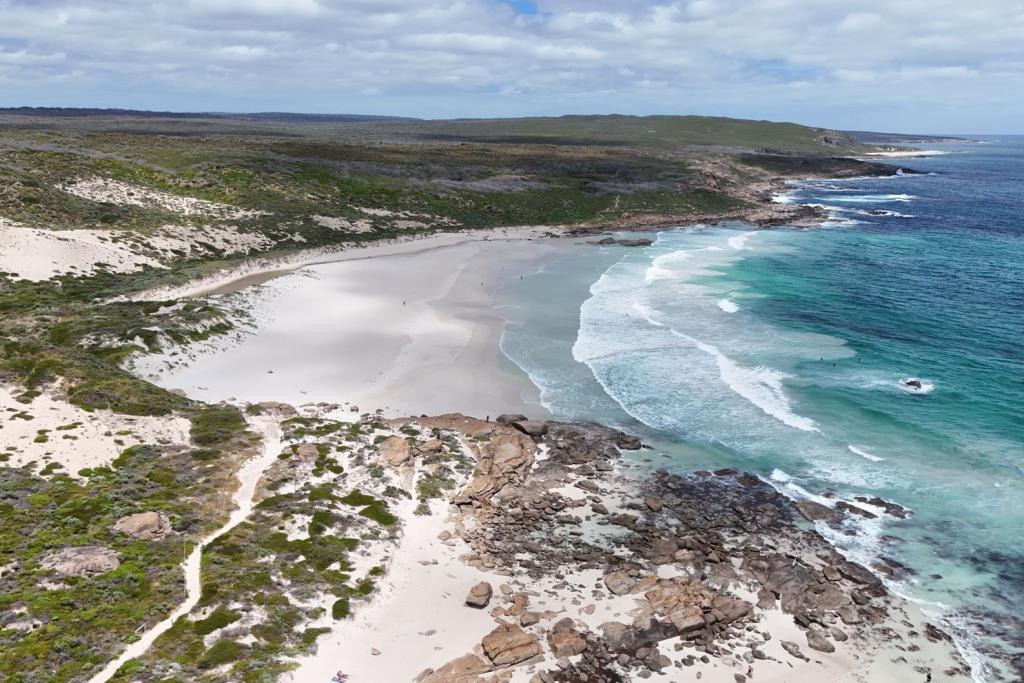
A Toxic Algae Bloom off the coast of South Australia has killed more than 8,000 sharks and rays across thirty-one species, in what researchers describe as the largest mass death of its kind ever recorded anywhere in the world. The bloom, driven by a rare and poisonous algae never before seen in the country's waters, began spreading along the shoreline in 2025, and eighteen months later scientists are still measuring the devastation.
An analysis of citizen science reports and government records, led by marine ecologist Janine Baker, documented about 4,460 southern fiddler rays, 850 Port Jackson sharks, 670 cobbler wobbegongs and 650 western shovelnose rays among the dead. The true toll is almost certainly higher, since the count excludes shark eggs and animals that died far offshore, according to the Guardian's reporting on the findings.
An entire food web took the hit
Bottom-dwelling species dominated the death toll, but the damage spread far beyond them. White sharks and bronze whalers were also affected, and more than eight hundred species in total were caught up in the event. For many of the sharks and rays examined, adults and juveniles alike showed blood pooling beneath the skin and bleeding from the orifices, the report said. The wider collapse reached far down the food web: researchers recorded a catastrophic decline in giant cuttlefish alongside deaths of thousands of sea dragons, pipefishes and seahorses. The die-off unfolded over roughly a year and a half, and scientists identified the culprit as Karenia cristata, a microscopic algae whose toxins proved devastating at a scale the country had never confronted.
Endangered animals were among the victims. Coastal stingarees, listed as endangered by the International Union for Conservation of Nature, turned up in the death records, along with pygmy thornback skates found only in the state's waters and vulnerable Melbourne skates. More than fifty shark and ray species swim in these waters, many of them small and found nowhere else, which makes the losses especially hard to replace. The Toxic Algae Bloom is the first outbreak of its driving species ever recorded in the country's waters, and scientists say its scale caught everyone off guard.
Why the sharks never stood a chance
Sharks and rays turned out to be strikingly susceptible to this kind of event. "One of the surprising things with the bloom is that it didn't just impact a couple of species but a whole range of sharks and rays," said Prof Charlie Huveneers, a shark ecologist at Flinders University. "And that suggests that sharks and rays are highly susceptible to these blooms." He warned that the event had potentially led to the collapse of some local populations, adding: "The scale of the harmful algal bloom is unprecedented, the number and diversity of shark and ray species impacted is something never seen before."
Some local habits made things worse. Certain Port Jackson shark populations in the region stay put year-round rather than migrating, which left them sitting inside the affected zone for the bloom's full duration. "Australia was a hotspot for shark diversity and the algal bloom had affected pretty much the entire food web, all the way to the top," said Prof Culum Brown, a fish and shark researcher at Macquarie University. "To see these deaths at this sort of scale is pretty heartbreaking."
Officials are still working out what recovery looks like. The state's environment department is finalising a comprehensive assessment of the bloom's impact on nearshore marine life, including sharks and rays, to guide restoration efforts. A department spokesperson said citizen science projects had supplied critical information on the ecological damage that would shape expected recovery timelines and the design of future monitoring programs. For now, the Toxic Algae Bloom stands as a warning about how fast an ocean ecosystem can unravel: one microscopic organism, eighteen months, and a death toll no coastline has seen before. Marine groups say the event shows why long-term monitoring matters, since without the volunteer sightings and government records stitched together in this analysis, the true scale of the die-off might never have been known. Readers tracking ocean health can follow related coverage of Antarctica's accelerating ice loss, a rare win for the Amazon rainforest, and why techno-optimism is cooling climate action.
Comments 0
No comments yet. Be the first to share your thoughts!
Leave a comment
Share your thoughts. Your email will not be published.