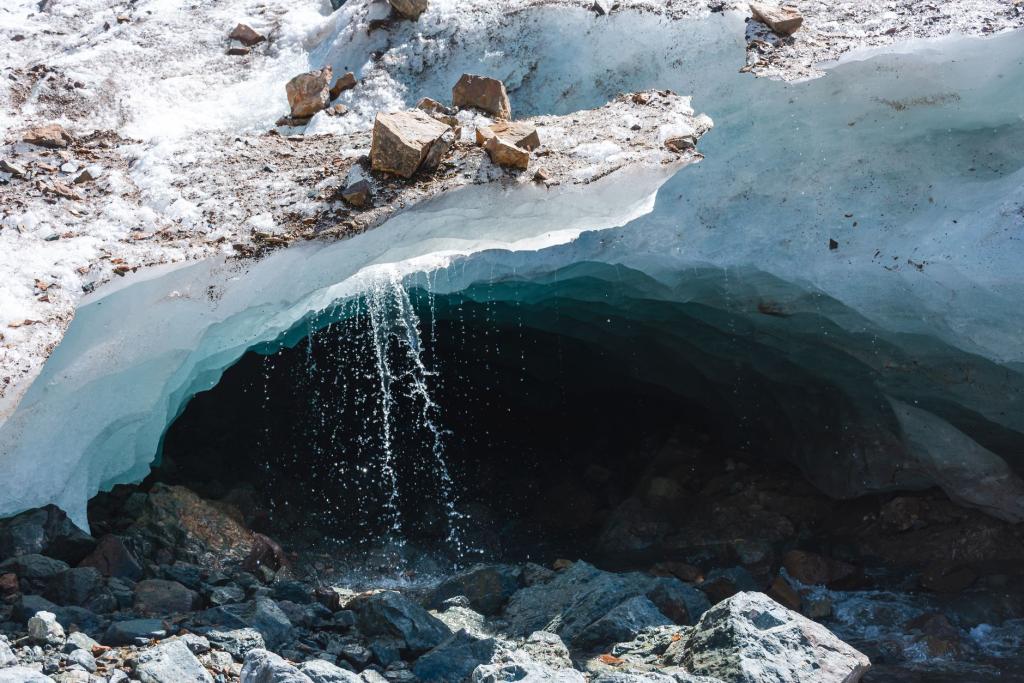
High in the Jotunheimen mountains, about 200 miles from Oslo, archaeologists have spent the summer pulling history out of melting ice. During a three-week expedition in southern Norway, the team recovered forty-eight prehistoric arrows, Smithsonian reported, including a slate arrowhead researchers estimate is between five thousand and six thousand years old. The melting ice arrows are the program's newest finds.
According to Smithsonian, which reported the finds on October 1, the melting ice arrows belong to Secrets of the Ice, the largest glacial archaeology program in the world. The program is run by the Innlandet County Council with Oslo's Museum of Cultural History, and its crews have worked Jotunheimen's ice patches since 2006. In that time they have pulled more than 5000 artifacts from 73 archaeological sites, including reindeer-hunting equipment, the remains of packhorses and ordinary clothing.
What the team found this summer
The melting ice arrows found this season came from ice patches beside the Langfonne, Storfonne and Handklefonne glaciers in the Kvitingskjolen mountains, according to Smithsonian. Next to the ancient slate point, the team found a complete 3600-year-old arrow with a wooden shaft and an arrowhead carved from a freshwater mussel shell. Several other points were made of bone, including one roughly 1800 years old that was still joined to its shaft, and the team also turned up an iron arrowhead from a much later period.
The variety of materials is what makes these melting ice arrows remarkable. Wood, bone and shell almost never survive this long outside of ice. As Anna Fiorentino wrote for Smithsonian in May, "ice pauses the process of decay" by keeping organic material at a consistent low temperature without oxygen, which slows the microbial activity that would otherwise rot it within months. That same freezer effect explains earlier finds from the same program, including a 3400-year-old leather shoe, the world's oldest intact pair of wooden skis, a complete tunic from 300 C.E. and a complete mitten from 1000 C.E., according to Smithsonian.
The oldest ice is vanishing
When excavations began in 2006, most finds were under 2000 years old. The picture has changed dramatically since then, the researchers wrote in a recent update reported by Smithsonian, because human-caused climate change is melting glaciers and ice patches that had survived for millennia. "The melting has been extensive," they wrote. "In many places, ice that has survived for thousands of years is now beginning to disappear completely. And this is where we see the connection: The oldest ice contains the oldest finds."
That contradiction is wearing on the people doing the work. "We have always acknowledged this contradiction and the reality behind our work," the project's lead glacial archaeologist Espen Finstad told Science Norway reporter Ida Irene Bergstrøm, according to Smithsonian. "But this is the first time it has truly affected us on an emotional level. This year, there was a much deeper sense of seriousness and sadness. ... It's brutal. And this year, that reality struck us more forcefully than ever before." Each of the melting ice arrows shows why the work matters, and each one surfaces only because the ice that held it is disappearing.
Based on twenty years of fieldwork, the team suspects the ice at many of their sites will be gone within the next two decades, which would end the steady arrival of melting ice arrows. "There has been ice here for between six thousand and seven thousand years," Finstad told Bergstrøm, according to Smithsonian. "Nature has been warning us and sending signals for many years. But now it's giving up. Now it is simply going to melt."
For now the artifacts are being secured and documented at the Norwegian Mountain Center in Lom, where visitors can see some of them in a special refrigerated display case. In December the collection moves to the Museum of Cultural History for further processing and conservation, and the team hopes to get back out before winter fully sets in. Recent digs keep rewriting deep history, from the Göbeklitepe burials to Chile's Ice Age gomphothere, and the melting ice arrows are the latest finds to surface from ice that will not hold them much longer.
Comments 0
No comments yet. Be the first to share your thoughts!
Leave a comment
Share your thoughts. Your email will not be published.