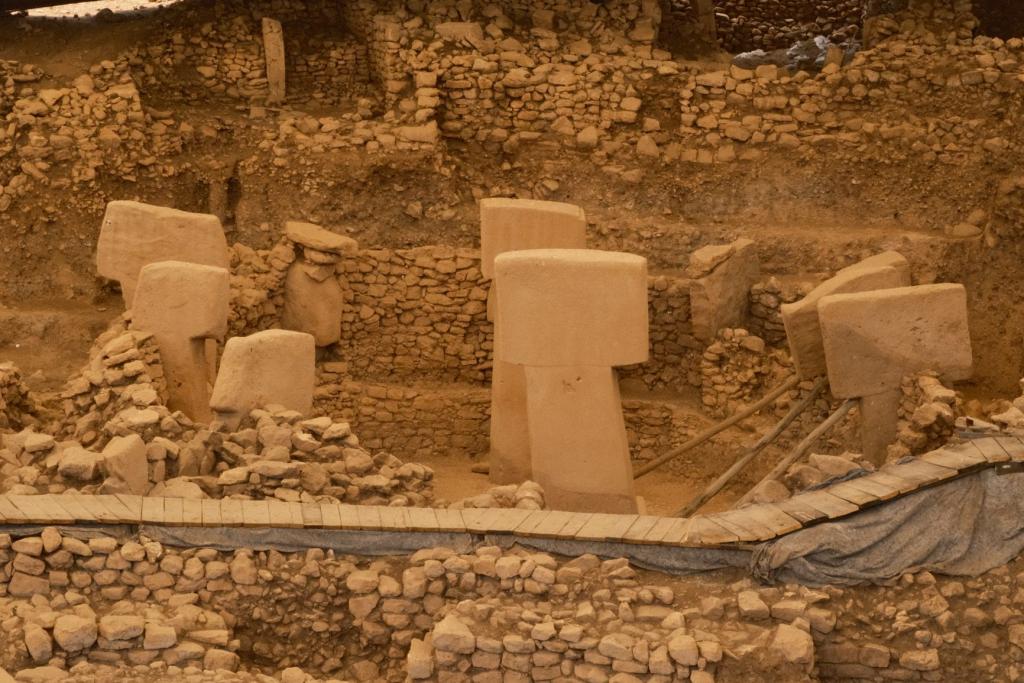
The world's oldest known temple complex has finally given up one of its oldest secrets. Archaeologists at Göbeklitepe in southeastern Türkiye have uncovered the first two intact burials ever found at the site, according to a report in Heritage Daily. The graves date to the Pre-Pottery Neolithic B period, roughly ten thousand years ago, and the Göbeklitepe burials could settle a question that has followed the dig for decades: why are hundreds of fragmented human bones scattered through the soil inside the site's monumental stone enclosures?
Göbeklitepe sits a short drive northeast of the Turkish city of Şanlıurfa, not far from the Syrian border. The UNESCO World Heritage Site is famous for its enormous T-shaped pillars, many carved with foxes, snakes, vultures and other wild animals. The settlement mound built up over roughly sixteen centuries, during the long shift from mobile hunting and gathering to settled farming. For years researchers treated the place as a ritual centre visited for ceremonies. Newer digs have turned up houses and traces of daily life, which suggests people actually lived there the whole time. The same region keeps producing headline finds: a new fragment of the Kadesh peace treaty turned up at Hattusa in Türkiye earlier this month.
The first intact graves at Göbeklitepe
The first burial came to light in twenty seventeen, when workers were digging a drainage channel for the protective shelter over the main excavation area. Beneath the plaster floor of a rectangular Neolithic building, archaeologists found a kidney-shaped pit holding the remains of at least three people. There was a woman in her late thirties, a man in his twenties, and a girl in her early teens, with signs that a fourth person may have been buried there too. The bones had been deliberately rearranged, with skulls gathered in one corner of the pit, long bones laid along the western wall, and smaller bones toward the centre.
The bones were no longer lying as the bodies had been placed, but the presence of tiny hand and foot bones told the researchers that whole bodies, or at least complete limbs, had gone into the grave first. The team thinks the pit was reopened each time someone new was buried, with earlier remains pushed aside to make room, since the pit was simply too small to have held three bodies at once. It looks like a collective family grave that stayed in use over time, with the dead first buried under the house floor and their bones reorganised later.
The second burial lay just west of the monumental Building A. Researchers first noticed it in twenty twelve but sealed it and left it for a later season, finally excavating it in twenty twenty two. It held a young adult, most likely a woman in her twenties, laid on her left side in a flexed position, facing east. Much of the skeleton was still in its original position, resting on a layer of stones. There was no clear burial pit, which the researchers say probably means the grave once lay under a floor that has not survived.
A landslide explanation for the scattered bones
The scattered bones are the real puzzle here. Apart from the two new graves, researchers have catalogued over nine hundred individual bone fragments from across the site, belonging to men and women of different ages. Some show deep cuts and deliberate modification. Many more look damaged by natural processes. Until now, nobody could explain why they were so widely spread through the deposits filling the great stone enclosures.
The new study, published in the journal PLOS One, offers a plain explanation. Both intact burials show the same fragmentation, mineral crusts and animal gnawing marks as the scattered bones. According to the study authors, many of the loose bones started out as ordinary graves beneath house floors higher up the mound. Over thousands of years, erosion and landslides dragged soil, stones and human remains downhill into the monumental buildings, which sit in a natural depression. Earlier work had already suggested the enclosures were filled partly by slope wash rather than deliberate burial, and the new skeletons back that up.
The skull rituals remain a separate story
None of this wipes away the stranger finds. Cranial fragments from a handful of individuals carry deep incisions that could only have been made by human hands, which points to ceremonial treatment of selected skulls after death. The site's carvings include headless human figures and animals shown with human heads. Similar practices show up at neighbouring Neolithic sites: at Sefertepe, archaeologists found a chamber holding more than twenty human skulls, most facing southeast, and at Karahantepe, skull fragments show cutting, scraping and burning. It is not the only ancient riddle to fall lately; researchers also solved the mystery of England's Devil's Arrows standing stones. The Göbeklitepe team concludes that ordinary house-floor burials probably existed side by side with far more elaborate death rituals.
Taken together, the finds keep nudging Göbeklitepe away from the old picture of a hilltop shrine and toward something more lived-in: a settlement where people built houses, raised families, buried their dead under the floors, and occasionally treated the skulls of the dead with ceremony. The researchers say more bone analysis and precise dating are still needed to map how these practices changed across the site's long occupation. For now, though, these Göbeklitepe burials have answered a question that eleven thousand years of mudslides kept asking. Readers who want their ancient history up close can also catch the Bayeux Tapestry on show in London right now.
Comments 0
No comments yet. Be the first to share your thoughts!
Leave a comment
Share your thoughts. Your email will not be published.