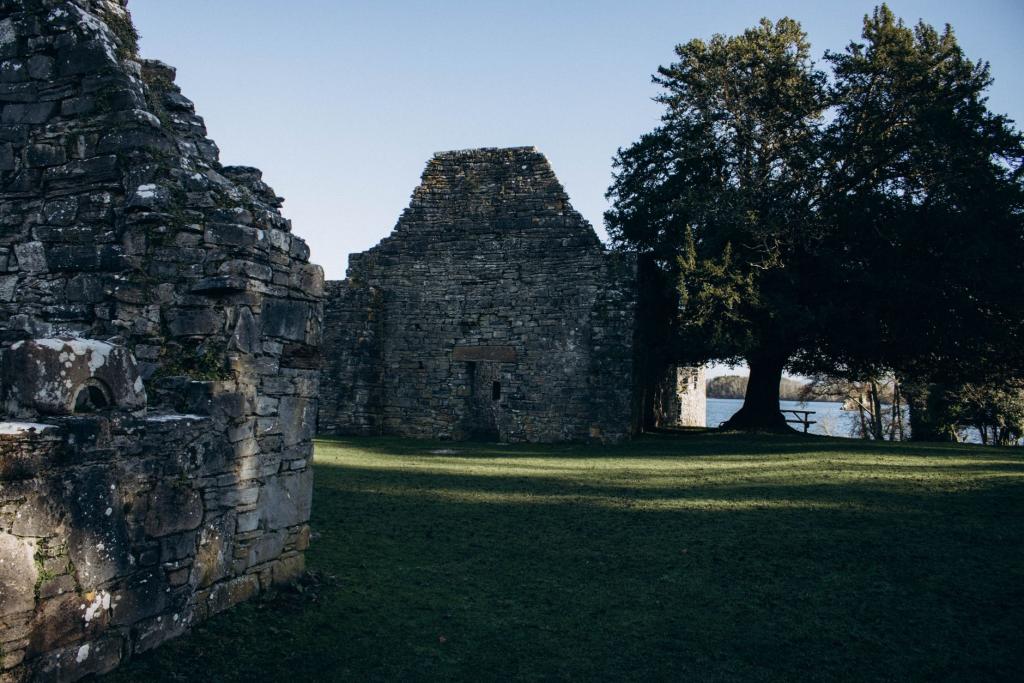
Local volunteers on a tiny Scottish island have dug up the remains of a major early medieval monastery, rewriting what archaeologists thought they knew about the spread of Christianity in Britain. Excavations on the Isle of Lismore in Argyll, led by professional archaeologist Dr Clare Ellis of Argyll Archaeology, uncovered extensive burial grounds, decorated stonework and early stone buildings belonging to the Lismore monastery of Lios Mòr, according to research published in the journal Antiquity and reported by Phys.org and The Guardian this week.
The monastery was founded by Saint Mo Luóc, known as Moluag, in the sixth century, when Irish missionaries were moving into northern Britain to preach Christianity. Historians knew the site from written records, place-name evidence and local tradition, but almost no physical traces had ever turned up apart from a few fragments of an early carved cross found over the years. Lismore is home to 190 people and has no row of shops or even a pub. The only place islanders can meet for coffee is the lively Gaelic heritage centre, which records centuries of community life on the island.
Gold in a boggy trench
In one unfavourable, boggy section of the dig, volunteers pulled out what turned out to be some of the finest small crucibles ever found in Scotland. Post-excavation analysis showed the islanders had been melting gold, copper and silver and making jewellery there in the seventh century, according to the project team. The excavators also found mould fragments for penannular brooches, motif pieces with fine chip-carved designs, a touchstone for testing gold now held by National Museums Scotland, and an oval stone building with an adjoining workshop area. Radiocarbon dating places the building and the burials in the seventh to tenth centuries, a period when Lismore sat in the Gaelic kingdom of Dál Riata.
A centre that mattered
The scale of the finds puts Lismore in the same league as Iona, the far better known early Christian site a little to the south-west. Archaeologists now describe the Lismore monastery as a high-ranking religious centre of international importance rather than a small island church in an overlooked backwater. The Antiquity paper, co-authored by Ellis and colleagues and published online by Cambridge University Press, notes its strategic position near Dunollie, in the heart of Cenél Loairn, one of the kindreds competing for supremacy in Dál Riata, and suggests the interplay between church and secular power there may have been more dynamic than previously understood. Gordon Noble, a professor of archaeology at the University of Aberdeen, described the results as hugely exciting and called the site a really important early Christian establishment.
The dig itself was community-funded from start to finish. Members of the Lismore Historical Society raised the cost through grants, donations, legacies from locals and a crowdfunding campaign, and retired plant scientist Bob Hay, a former island resident, coordinated the fundraising and the volunteers. Raising the low five-figure sum needed to run the dig was simply a matter of getting down to it and organising, Hay said. The rewards were remarkable. "To be digging out the best small crucibles ever found in Scotland, it is extraordinary," he told The Guardian. "They had been melting gold, copper, silver, and they were making jewellery on our little island in the seventh century."
The project is also a demonstration of what community-led archaeology can achieve. Local people carried out the digging alongside professional supervision, and the results were peer-reviewed for publication in Antiquity. The authors argue that the site’s wealth and artistic sophistication, from precious metalworking to yew woodcraft, antler working, leather embossing and stone carving, parallels other major Insular monastic sites such as Iona and Portmahomack. Future research will try to map the full extent of the monastic enclosure, explore the upper cemetery and trace the broader ecclesiastical estate. For an island with no shops and no pub, that is a considerable legacy to unearth.
Related reading: Göbeklitepe’s ancient burial mystery is finally solved and Alexander the Great school unearthed in Greece.
Comments 0
No comments yet. Be the first to share your thoughts!
Leave a comment
Share your thoughts. Your email will not be published.