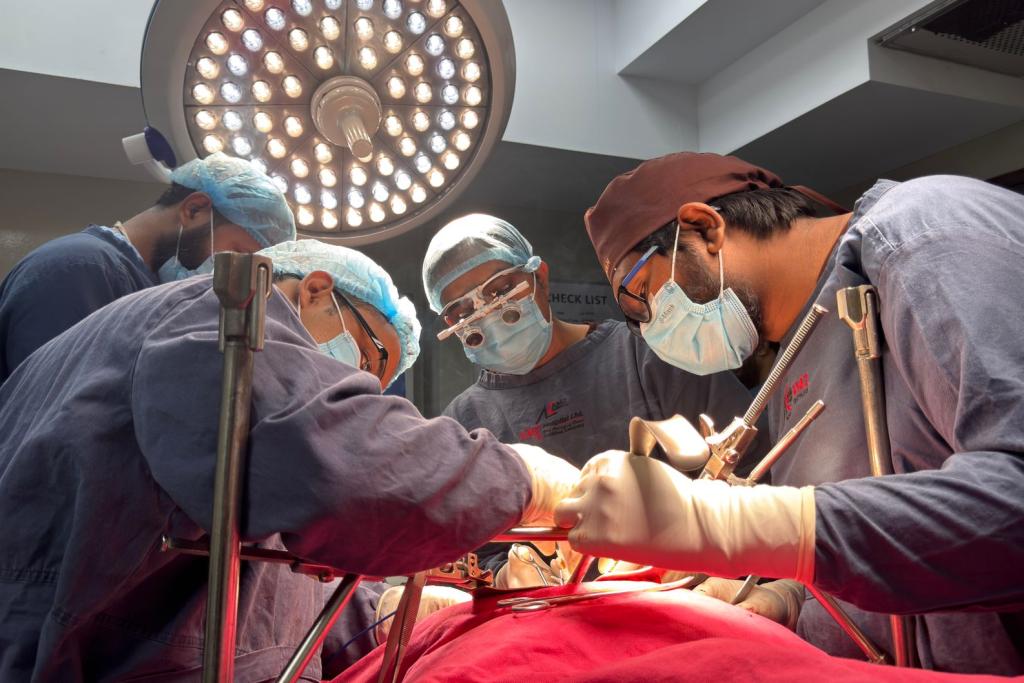
A pig kidney spent more than a year frozen solid in a laboratory freezer and came back to life. Researchers at the University of Minnesota cooled the organ to minus one hundred fifty degrees Celsius, held it in a glass-like state for months, then rewarmed it and transplanted it into a pig. The kidney regained its color and started making urine, the two signs that matter most, according to a report from MIT Technology Review.
Transplant surgeons live on a clock. Once a donor organ comes out, it starts deteriorating, and the team has only hours to get it into a recipient. In the United States, more than one hundred four thousand people are waiting for a kidney, and seventeen die each day while they wait. Roughly one in three donated kidneys is discarded, often because matching and travel take longer than the organ can survive on ice. Reliable organ banking would end the race against the clock entirely.
Standard practice keeps organs on ice at about four degrees Celsius, which slows decay but buys roughly twenty-four hours. Freezing is out of the question. As water inside the tissue turns to ice, crystals grow and tear cells apart, leaving the organ useless. That is the wall organ banking research has been running into for decades.
Glass instead of ice
The Minnesota team used vitrification instead of freezing. The kidneys were treated with cryoprotectant compounds that work like antifreeze, then cooled so deep that the water inside turned to glass rather than ice. In that glass-like state, the organs sat in storage for months. One kidney stayed there for more than a year, far longer than any preservation method used in clinics today, and the longest proof yet that organ banking could work.
The hard part is the trip back. Warming a glassy organ unevenly lets ice form inside, which defeats the whole exercise. The team rewarmed the kidneys evenly, ran them through machine testing, and then transplanted them into pigs. The organs recovered. Erik Finger, the transplant surgeon at the University of Minnesota who co-led the work, called the result "a big deal" and said that a decade earlier he had not expected the approach to work, MIT Technology Review reported. The research was posted as a preprint on bioRxiv and has not yet been peer reviewed. Even so, outside experts treated it as a milestone for organ banking rather than a curiosity.
Days versus a year
Another group is chasing a shorter version of the same dream. At Texas A&M University, thermodynamicist Matthew Powell Palm built a sealed chamber that holds kidneys under constant pressure, which stops ice from forming even below the freezing point. His team supercooled pig kidneys to minus four degrees Celsius and kept them there for up to seventy-two hours, with no cryoprotectants at all, a different route to the same organ banking goal, WebProNews reported. Surgeons then removed each animal's other kidney and replaced it with the stored one. The supercooled organs woke up faster than kidneys kept on ordinary ice, and one pig thrived for two hundred days.
Seventy-two hours versus more than a year: the two approaches sit at different points on the same road. Supercooling stretches the transplant window from hours to days, which could save organs lost to travel and logistics. Vitrification points further, toward true organ banking, where donor organs could sit in storage the way blood sits in a blood bank, waiting for the right match instead of racing the clock.
Why organ banking would change the math
A working kidney bank would attack the waste in the system directly. Organs could be flown across the country to the best match rather than the nearest one. Surgeons could schedule transplants instead of operating through the night. The one-in-three discard rate, much of it a logistics problem, could fall. Peter Kilbride, a cryobiologist who cofounded the cryopreservation funding group Kyros Kairos and was not involved in the Minnesota work, said the result was a real breakthrough after years of failed attempts, according to MIT Technology Review. Korkut Uygun, a Harvard Medical School biomedical engineer and professor of surgery, said the work could make it possible to bank organs indefinitely, calling it a revolutionary time for transplantation.
What still has to be proven
The celebration comes with caveats, and the researchers do not hide them. The revived kidneys were not perfect, and the team has not yet shown that a vitrified organ can keep an animal alive over the long term. The results still need peer review, and human kidneys are a separate challenge the group has yet to take on. But for a field that has been stuck at the same wall for decades, a pig kidney that survived more than a year in the deep freeze and then did its job resets expectations for organ banking.
Further reading: TikTok CEO's AI Science Breakthroughs Prediction, Explained, GenBio AI Virtual Cell Lets Scientists Test Drugs In Silico, and New PANXEON Blood Test Catches Pancreatic Cancer Early.
Comments 0
No comments yet. Be the first to share your thoughts!
Leave a comment
Share your thoughts. Your email will not be published.