The head of TikTok thinks your science textbook is about to get a rewrite. Shou Zi Chew, the chief executive of TikTok, told an audience in Singapore on October 12 that artificial intelligence is on track to produce genuine scientific breakthroughs within two to three years, naming physics, biotechnology, chemistry and materials science as the fields most likely to change first. CNBC reported his remarks from the DBS Asia Future Forward Conference, and the AI science breakthroughs forecast has been ricocheting around tech media since.
Chew runs TikTok, among the most watched consumer platforms on the planet, yet his forecast skipped chatbots and feeds entirely and went straight for the lab bench. The timeline is only part of it; the research his company is already funding and the warnings he tucked inside the optimism matter just as much. That is what makes the AI science breakthroughs prediction worth unpacking.
What Chew actually said
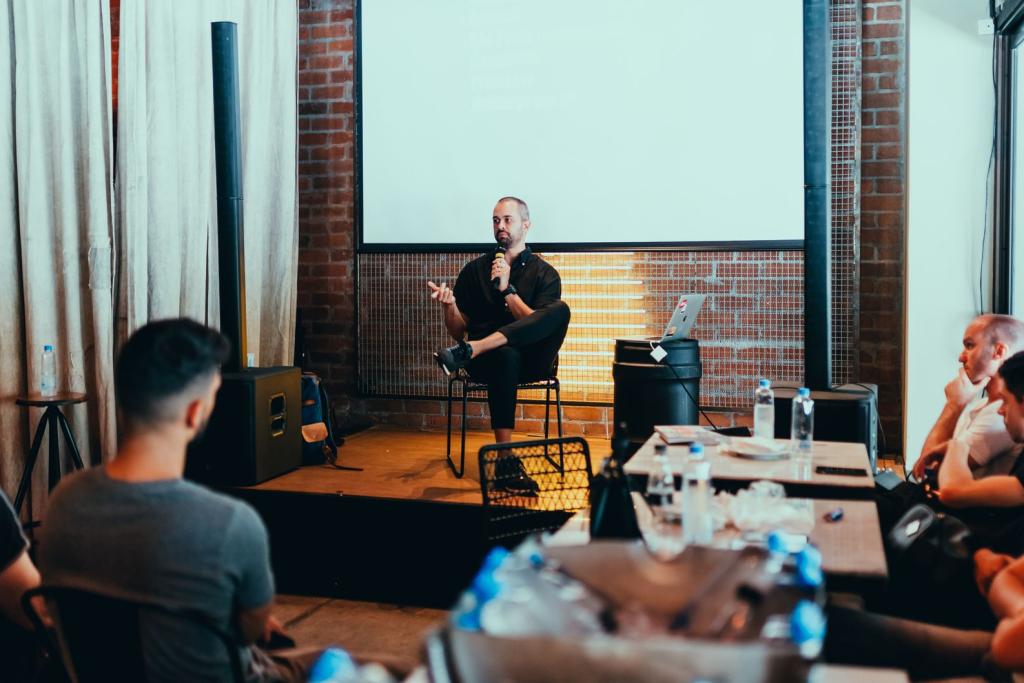
Speaking in a fireside chat at the Singapore conference, Chew said AI would deliver a real scientific breakthrough across physics, biotech, chemistry and materials science inside that window, calling such an outcome very, very, very possible, according to WebProNews. He described current AI capabilities as only the beginning of what the technology can do for science, and said progress is following a steep curve, Digital Today reported.
He also pushed back on the hype cycle itself. Chew said the near-term impact of AI is probably overstated, while its long-term potential remains underestimated, reported by TheStreet. That framing shapes how seriously to take the AI science breakthroughs forecast: cautious about what AI does for your feed next quarter, confident about what it does for a chemistry lab later this decade.
Why ByteDance is betting on the lab
The AI science breakthroughs prediction did not come out of nowhere. ByteDance, TikTok's parent company, has been pushing its AI research well beyond recommendation feeds. In April, its Seed research team released Protenix-v2, a model built to predict and design biomolecular structures, with drug discovery as an obvious application, according to TradersUnion. ByteDance made the system open source, and WebProNews reported that its accuracy on antibodies and antigens jumped thirteen percentage points over its predecessor.
ByteDance also runs an AI drug discovery unit called Anew Labs, and Chew said the company is exploring collaborations with working scientists, Newsy Today reported. The throughline is hard to miss: the company that perfected the attention economy now wants a seat at the bench where medicines get designed.
How the forecast compares
Chew is not the only tech chief to put a clock on machine-made discovery. Anthropic chief Dario Amodei has said AI systems could outperform humans across most tasks on a similar timeline, Newsy Today noted, while Google DeepMind chief Demis Hassabis has talked about a ten-to-fifteen-year new renaissance for scientific discovery. Chew's AI science breakthroughs timeline sits between those bets: sooner than Hassabis, framed more narrowly around the hard sciences than Amodei.
There is already a precedent for prize-worthy AI science. Hassabis and John Jumper won the 2024 Nobel Prize in Chemistry for AlphaFold's protein-structure predictions, with David Baker honored for computational protein design, Tech Insider noted. If Chew is right, that prize will look like a warm-up act.
Skeptics have reason to pause, too. Tech Insider noted that after OpenAI released more than seven hundred AI-generated math manuscripts, independent checks with the Lean verification system confirmed fewer than half of them, drawing scrutiny from mathematicians. An earlier GenZNewZ report on AI-generated math papers made the same point: generating research is getting cheap, and checking it still takes longer. GenZNewZ also recently argued that the super intelligence rebrand is a loyalty test, not progress, a useful reminder that big AI predictions often serve a marketing calendar.
The warnings inside the optimism
Chew paired the AI science breakthroughs forecast with cautions about what happens as AI systems get more capable. He warned that users may hand broad authority to AI agents without fully grasping the outcomes, Digital Today reported, citing the example of an agent making purchases on its own and buying more than its user intended. He also said the falling cost of running sophisticated models is making fraud and attacks cheaper to carry out, which means platform companies need stronger defensive tools.
As AI performance improves, Chew said, control and safeguards become more important, and the next task once AI starts producing real scientific results is aligning models and machines with human ethical standards. Microsoft's own AI emergency brake moment suggests the industry is already feeling that pressure. It is a notable stance from the chief executive of a company whose core product is an engagement machine: the AI science breakthroughs he is predicting will need guardrails as much as computing power.
Working scientists, not keynote speakers, will decide whether the timeline holds. Last week, Meta, Google and the United States government announced a one point eight billion dollar initiative to build AI models that predict cell behavior for biological research, TradersUnion reported, which suggests the money is already moving in the direction Chew described. The companies that spent the last decade fighting over screen time are now racing to claim the laboratory.
Comments 0
No comments yet. Be the first to share your thoughts!
Leave a comment
Share your thoughts. Your email will not be published.