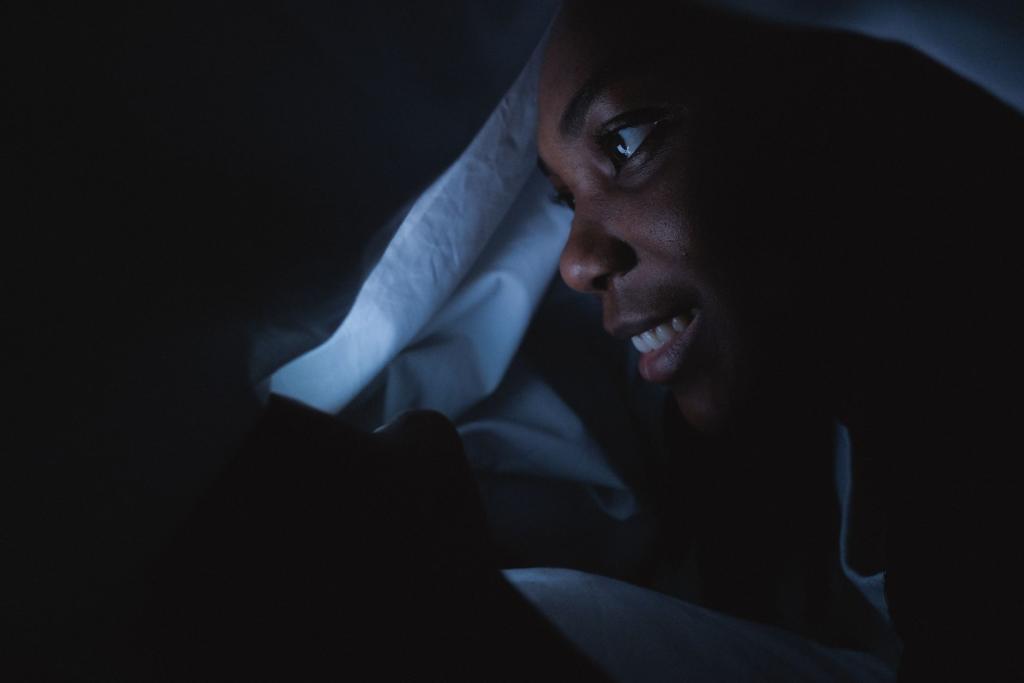
Every year, millions of twelve-year-olds unwrap their first smartphone. A new analysis of the largest long-term study of brain development and child health ever conducted in the United States now puts hard numbers on what that moment is associated with — and the First Phone at Twelve may reshape teen health in ways that surprise even the researchers' critics. According to coverage by Tech Insider, children who already owned a smartphone at age twelve had thirty-one percent higher odds of depression than peers who did not.
The figures come from a cohort study that enrolled ten thousand five hundred eighty-eight children across twenty-one research sites and followed them from before adolescence, tracking brain development, behavior and physical health in the same battery of measures. Within the wave of data collected at age twelve, researchers split participants into two groups: six thousand seven hundred thirty-nine children who already owned a smartphone, and three thousand eight hundred forty-nine who did not. That scale is what sets the finding apart from two decades of smaller survey-based screen-time research — the design gives a before-and-after vantage point that retrospective polls could never replicate.
The First Phone at Twelve gap shows up across three health outcomes. Depression carried the headline odds ratio, but sleep showed the widest relative divide: insufficient sleep was sixty-two percent more likely among twelve-year-old smartphone owners. Obesity landed between the two, with forty percent higher odds for owners. The depression gap is also visible in plain diagnosis rates — six point four percent of smartphone-owning twelve-year-olds in the sample had a depression diagnosis, versus four point five percent of those without a phone.
Why Sleep Loss May Be the Engine
Of the three outcomes, sleep may do the most quiet damage. One slice of the reporting attaches a nightly number to the gap: smartphone ownership at twelve was associated with an average of nearly seventeen fewer minutes of sleep per night. That sounds trivial on its own, but sleep researchers have long argued that adolescent sleep debt compounds night after night in ways a single-night figure understates.
The suspected mechanisms are familiar ones — later bedtimes, hours lost to feeds and group chats, blue-lit rooms that push melatonin later — but the study documents the association without isolating which channel matters most. Lost sleep could be driving the mood and weight findings, or all three could share a root in how a phone reorganizes a twelve-year-old's evening. The researchers were careful to frame the odds ratios as relative likelihoods inside this specific dataset, not guarantees for any individual child, a nuance emphasized in the peer-reviewed writeup hosted on the NIH's public archive.
Delaying One Year Did Not Erase the Pattern
The most pointed part of the analysis is not the age-twelve snapshot at all. Among participants who did not own a smartphone at twelve, those who acquired one by thirteen showed worse mental-health outcomes and more insufficient sleep at thirteen than peers who stayed phone-free through that year. Delaying by a single year simply shifted the point where the pattern appeared.
That detail complicates the simplest reading of the data — that any specific birthday is a magic threshold. Instead it suggests the acquisition event itself, the moment a child moves from no smartphone to owning one, is where the outcomes shift, whenever that moment arrives during early adolescence. A medical journal framed the shift directly, describing first-phone acquisition as an inflection point in the early-adolescent digital environment, language that treats the device like an exposure worth tracking the way epidemiologists track pollutants.
That framing splits experts into two camps. Social psychologist Jonathan Haidt, author of "The Anxious Generation," has spent years arguing that phone-based childhood displaced something healthier; as he put it in comments carried by the Atlanta Journal-Constitution, "Play-based childhood ended in 2010, and it was replaced by phone-based childhood." In an interview with People, he framed the stakes in concrete terms: "Imagine there was suddenly a toy introduced which would cause children to get less sleep, get less exercise, spend less time with other children. It would make them incredibly self-conscious, and it would lower their self-esteem and cause depression and anxiety."
The Counterpoint: A Cutoff Is Not a Cure
Not everyone reads the same numbers as an argument for age limits. Children's Hospital of Philadelphia, whose researchers contributed to the analysis, published its own explainer arguing that age limits alone won't fix the risks the data point to — a pushback against the idea that a single cutoff age is a complete policy answer. The hospital's position implicitly accepts that the risks are real enough to act on while rejecting the notion that legislation can settle them with total confidence.
Every outlet covering the research attached the same caveat, and it deserves plain statement: these are associations, not proof of causation. Children who get phones earlier may differ from those who do not in ways the study cannot fully control for — household income, parental supervision style, existing mental-health conditions — and any of those could push both acquisition and outcomes in the same direction. The First Phone at Twelve debate will likely spend the next year exactly in that tension: real enough to act on, not proven enough to legislate with total confidence.
For families, the practical reading is narrower than the headlines. The acquisition event matters more than the birthday, which means the conversation with a twelve-year-old about when and how a first phone arrives may matter more than any fixed rule. GenZ NewZ has previously reported on how phone habits and parental limits shape teen screen time, and on what a long-running teen brain study says about protective habits — context that frames this new finding as one data point in a much larger picture of adolescence online.
Comments 0
No comments yet. Be the first to share your thoughts!
Leave a comment
Share your thoughts. Your email will not be published.