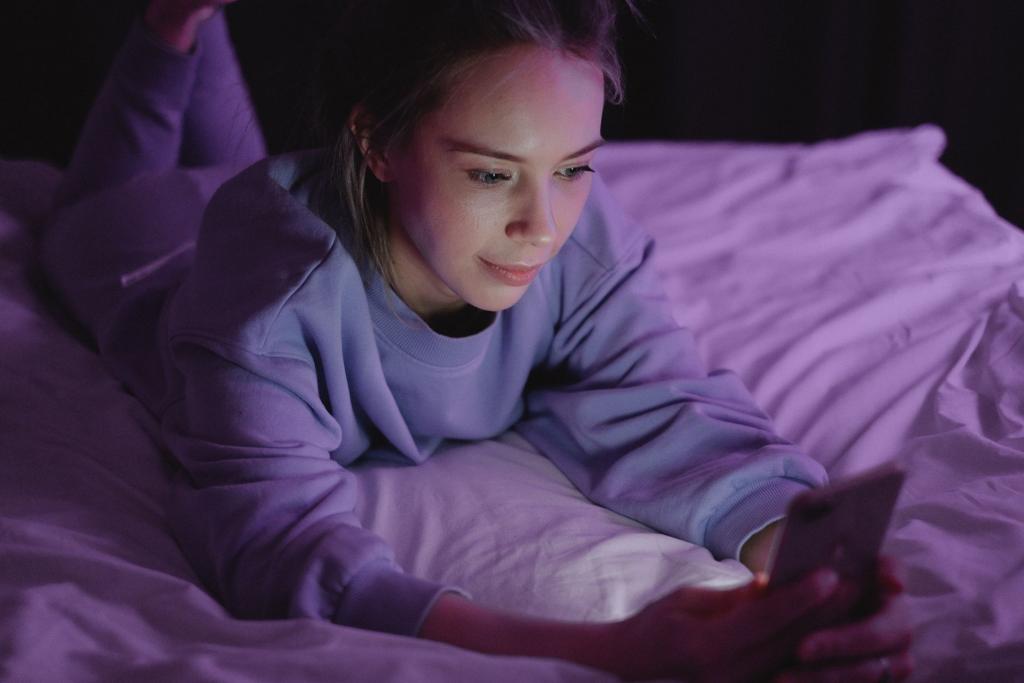
Forget self-reported screen time. A new study published in Pediatric Research put a passive sensing meter directly on the phones of 233 nationally representative American teenagers and watched what their devices actually did, all day and all night. The picture that emerged was not one average teen but several very different ones — and teen phone habits split along three dividing lines: identity, household resources, and house rules.
The research team was led by Gina Marie Mathew of Stony Brook University's Program in Public Health, working with colleagues at Oregon Health and Science University, Seattle Children's Research Institute and Special Olympics International. Participants were 13 to 18 years old, with an average age just under 16, and they kept the tracking software installed for at least three days. Every app session was logged with exact timing, so researchers could separate total daily use from evening use and the critical overnight window from 11pm to 6am. The models controlled for a full set of sociodemographic characteristics, isolating which gaps held steady when everything else was accounted for. As reported by Scienmag, which covered the findings in October 2026, this method matters because survey estimates of screen time routinely diverge from what devices actually record.
Identity, income, and the rule book
The headline finding concerned LGBTQIA+ teenagers. After full adjustment, these teens averaged 0.94 hours more per day on their smartphones than non-LGBTQIA+ peers. The gap persisted across all three time windows the researchers examined, including roughly 13 extra minutes of evening use and about 23 extra minutes of nighttime use — deep inside the hours when screens do the most damage to sleep.
Household resources mattered too. Teens whose parents had less formal education spent 0.37 more hours on their phones during the overnight window than teens with more highly educated parents. Nighttime use is the pattern most tightly tied to lost sleep, and lost sleep is tied in turn to weaker cognition and rising depression and anxiety — so this disparity may carry outsized weight, the researchers argue.
But the single largest difference in the entire study came down to something a family can actually change. Teens with no parental screen limits used their phones 1.24 hours more per day than teens whose parents set restrictions, and the surplus spilled into both the evening and the night. The authors describe household rules as a modifiable target: unlike identity or income, they are something a family can adjust, and even modest limits around the hours after dark could claw back the screen time that interferes most with sleep. GenZ NewZ has previously covered how bedtime phone use can compound into late-night scrolling — another reason the overnight hours matter so much.
The catch: more screen time is not always just screen time
Here is where the story gets complicated, and where simple advice starts to wobble. Earlier research has shown that online spaces do real work for LGBTQ+ youth — offering community, identity exploration, and social support that may be thin on the ground offline. Other work has linked negative online experiences to depression and anxiety in LGB+ young adults, a concern that sits alongside the broader turning point in teen mental health. In other words, the measured gap may not be pure entertainment; some of it may be a support network. The new findings cannot say whether the additional phone time is protective, harmful, or some mixture of both.
That uncertainty carries a practical warning. Blunt restrictions — the kind some school districts and legislatures are now considering — could land very differently on different groups. For a teen whose group chat is the one place she is fully herself, a phone ban is not the same experience as it is for a classmate whose phone is mostly a game console. The journal study suggests that average screen time numbers hide these disparities, and that population-level interventions need to account for them.
There is a flip side, too, and parents should not miss it. The house-rules finding was the biggest effect in the data, and it sits entirely within a family's control. Consistency matters more than severity: limits enforced every night, especially keeping phones out of the bedroom during the sleep window, target the hours the study flags as most harmful. The difference between a rule-free night and a phone-free bedroom could return a meaningful chunk of lost evening hours to rest — a small change with an outsized payoff for teen phone habits.
The authors say the underlying data are available on reasonable request, and note that partial support came from the Della Pietra Family Foundation, which played no role in the design or analysis. Passive sensing tools like the ones used here — deployed with the research firms Ipsos, the Generation Lab and RealityMine — are turning digital behavior into something population health can measure properly. The full paper, "Sociodemographic differences in time-specific smartphone use among a national sample of adolescents," is listed under DOI 10.1038/s41390-026-05563-7 and can be found via the publisher's record.
Comments 0
No comments yet. Be the first to share your thoughts!
Leave a comment
Share your thoughts. Your email will not be published.