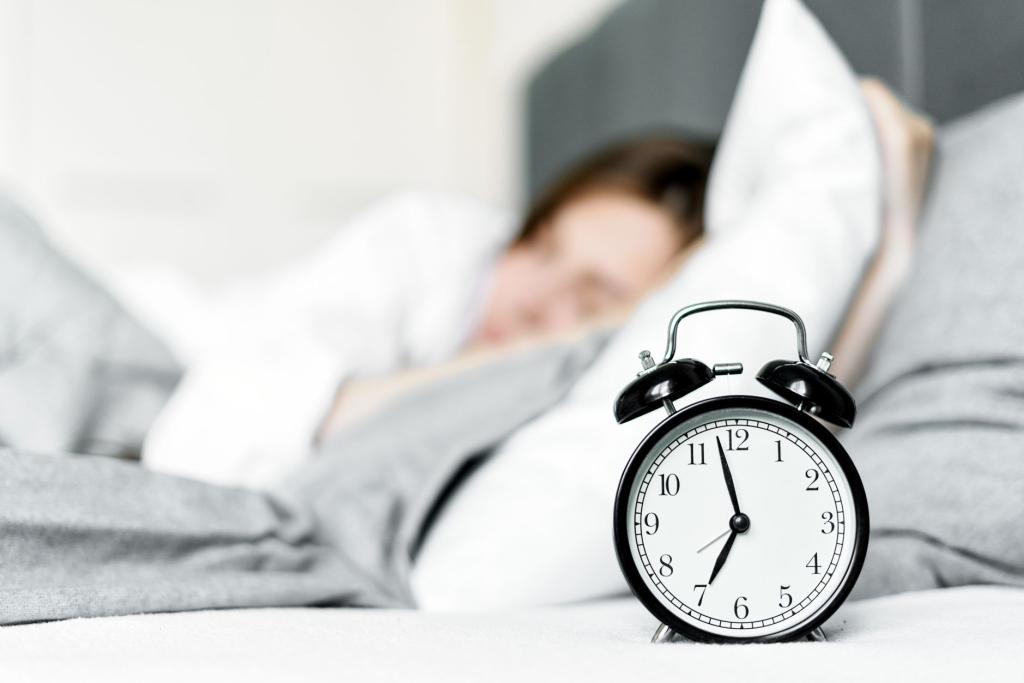
The latest teen sleep data from the U.S. Centers for Disease Control and Prevention show that 24% of high-school students got at least eight hours of sleep on an average school night in 2025. The figure is roughly one student in four, and the CDC classifies the change since 2023 as no change.
That short-term result sits beside a longer decline. The CDC’s teen sleep data series shows that the share meeting the eight-hour threshold was 27% in 2015, fell to 22% in 2019, and stood at 24% in 2025. The headline is therefore not a sudden new drop, but a decade-long pattern that has not returned to its 2015 level.
What the Teen Sleep Data Show by Grade
In its Youth Health in Focus sleep summary, the CDC lists 23% for 2023 and 24% for 2025, but labels the two-year comparison no change. That wording matters: a one-point difference between rounded survey estimates is not evidence of a meaningful rebound. The agency’s longer comparison, 2015 to 2025, is classified as worsened.
The full sequence helps put the latest number in perspective: 27% in 2015, 25% in 2017, 22% in 2019, 23% in 2021, 23% in 2023 and 24% in 2025. It is not a straight downward line. The share fell, then edged upward in later cycles, but the 2025 estimate remains three percentage points below the 2015 figure.
Put another way, about three in four surveyed students fell short of the study’s eight-hour cutoff on an average school night. That is a population estimate, not a count of individual students or a diagnosis. Those teen sleep data measure average school-night duration; they do not capture every aspect of sleep quality, weekend schedules or a student’s full health.
Grade-level differences are larger than the latest change
The CDC’s 2025 teen sleep data breakdown shows 26% of male students and 22% of female students reporting at least eight hours. By grade, the estimates were 31% for ninth graders, 25% for tenth graders, and 20% for both eleventh and twelfth graders. The gap between ninth and twelfth grade is much larger than the one-point difference between the 2023 and 2025 national estimates.
The CDC’s technical tables report that the male-female difference was statistically significant, as were comparisons between ninth grade and each of the older grades. The difference between eleventh and twelfth grade was not statistically significant. These are comparisons between groups in one survey cycle; they do not follow the same students as they move through high school, so the figures cannot show that an individual student’s sleep changes by a particular amount with age.
The eight-hour cutoff also has context. The CDC says adolescents aged 13 to 18 should get about eight to 10 hours a night, citing the American Academy of Sleep Medicine. Eight hours is the lower edge of that range. The survey’s threshold is useful for tracking a broad pattern, but it compresses a wider range of sleep needs into a yes-or-no measure and does not reveal whether someone’s sleep is regular or restorative.
Who answered—and what the survey can represent
The national Youth Risk Behavior Survey is the source for these teen sleep data and is designed to represent students in grades 9 through 12 attending public, charter, parochial and other private schools across the United States. It is anonymous and voluntary. That makes it a large national snapshot of enrolled high-school students, not a survey of every teenager, young adult or person outside school.
According to the CDC’s 2025 technical notes, students completed 11,097 questionnaires in 108 schools. After data editing, 10,710 questionnaires were usable. The overall response rate was 30.6%, combining a 47.0% school response rate with a 65.2% student response rate.
For the sleep estimate specifically, the technical table lists an unweighted sample of 8,725 students and a 95% confidence interval of 22% to 27% around the 24% estimate. The interval and response rate are reminders that the number is an estimate from a survey sample, not an exact headcount. The results are still valuable for tracking patterns, but readers should avoid treating a one-point change as a clear shift when the CDC itself reports no change.
The survey’s question is direct: on an average school night, how many hours of sleep do you get? Students chose from categories ranging from four hours or less to 10 or more. That design makes cycles easier to compare, while leaving unanswered questions about why students sleep less, whether school schedules or other factors matter, and what any one student should do.
What the 2025 result does—and does not—say
These teen sleep data show that the national share meeting the eight-hour mark did not materially change from 2023 to 2025, even as the longer 2015-to-2025 trend remains worse. The subgroup estimates show that grade-level differences are larger than the short-term national movement, but they do not explain the reasons behind those gaps.
The CDC identifies sleep as relevant to physical and mental health, safety and school focus, and separately describes family and school strategies for supporting sleep. The survey itself cannot prove that any one practice or policy caused the numbers. Keeping the difference between surveillance and cause-and-effect clear is especially important when a chart is shared without its technical notes.
For a useful read of the next update, compare the same measure, population and time window rather than looking only at a single percentage. Check whether the CDC labels a change statistically meaningful, and read the sample notes before turning a group-level figure into a claim about every student. A previous GenZNewz sleep-efficiency explainer addresses the separate question of how well someone sleeps, not how many hours students report on school nights. The 2025 result is a cautious signal: the latest two-year measure is stable, but the decade comparison has not recovered. Readers can find more wellness coverage in GenZNewz’s Mind & Body section.
Comments 0
No comments yet. Be the first to share your thoughts!
Leave a comment
Share your thoughts. Your email will not be published.