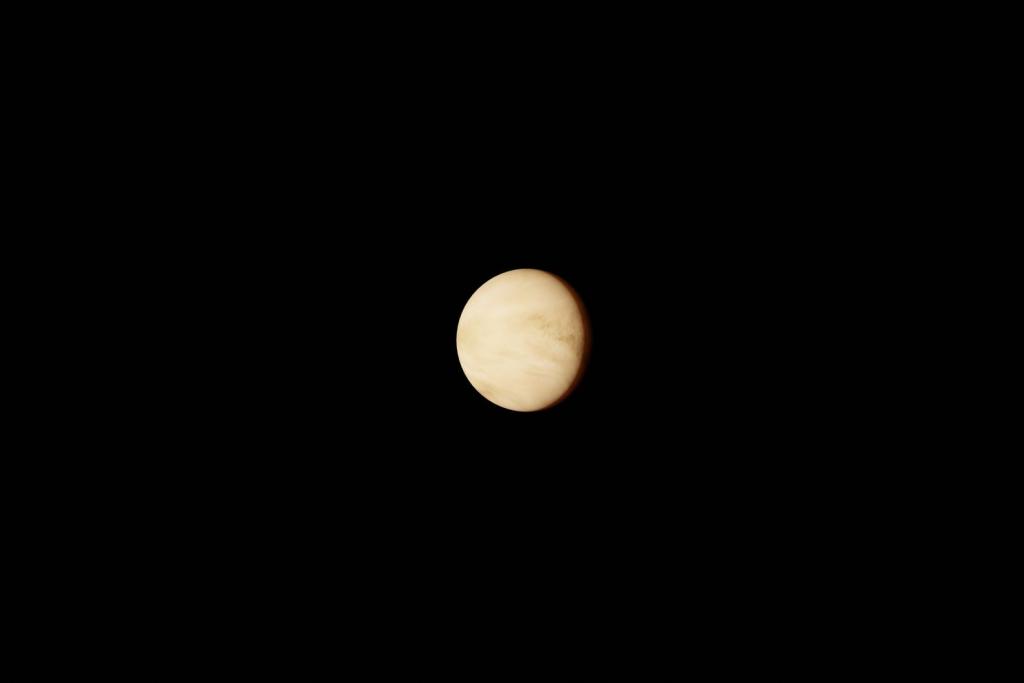
A TESS planet candidate is making headlines because the person who flagged it has no telescope, no astronomy degree, and a very busy set of AI subscriptions. Pavel Rabtsevich, a Spain-based product manager and space hobbyist, pointed AI agents at public NASA data and came back with a star that seems to blink on a schedule, according to Scientific American.
The Hobbyist Who Out-Searched a Mountain of Data
The data came from NASA's Transiting Exoplanet Survey Satellite, better known as TESS, a space telescope that hunts for the tiny dimming caused when a planet crosses in front of its star. Rabtsevich ran a custom-built AI algorithm over more than one hundred twenty-six thousand target stars. That is not a weekend hobby project by human standards, which is exactly the point of the story.
His machine-learning assistant kept steering him toward one star in particular, catalogued as TIC 4206066. It sits roughly one hundred sixteen light-years away in the Orion constellation, and the readings showed it dimming for about two hours every three days. Rabtsevich then dug through the archives and found twenty-two more dips, which turned a curious blip into a pattern.
What the Signal Could Be
If the dimming really is a planet, it would be a super-Earth with a radius around one point four times that of our own world. It would probably be rocky, but its three-day orbit would make it brutally hot, with an estimated surface temperature near one thousand degrees Fahrenheit, or five hundred forty degrees Celsius. Think lava-world energy, not vacation destination.
Gizmodo, which covered the story earlier this month, reported that Rabtsevich handed the dataset to several AI tools, including Anthropic's Claude Code and OpenAI's Codex, and had them look for dimming patterns and narrow the list of candidates step by step. He told the outlet that without these tools he could not have processed a dataset this size and carried it through to a result, according to Gizmodo.
Why Everyone Is Being Careful
Here is the part that matters for anyone tempted to scream "new planet" on social media: this TESS planet candidate is not confirmed. Stars dim for plenty of reasons that have nothing to do with planets. Rabtsevich himself noticed that the dips in 2018 tended to line up with moments when TESS fired its thrusters, which could have skewed the results.
He is blunt about the limits. All he will say is that he has a repeating transit-like signal in open data, with a plausible planetary explanation and alternatives that are not yet ruled out. His line on the AI angle is also worth stealing: models agreeing with each other is not evidence. What he trusts, he says, is a signal anyone can measure, calculations anyone can rerun, and rules published before the next data arrives.
The Pros Saw It Too
The twist is that Rabtsevich may not be the first to spot it. Pablo Mercader Perez, a doctoral student at the Massachusetts Institute of Technology and a member of the TESS team, told Scientific American that a detection filter picked up the signal in twenty twenty but rejected it for lack of conclusive evidence. Since then TESS has gathered far more observations of that patch of sky, and the candidate only became effectively detectable this January.
A deep-learning model built by Mercader Perez's team also flagged the star. Separately, astronomer Michelle Kunimoto's software, called LEO-Vetter, had selected the same candidate in early twenty twenty-six, so it would almost certainly have shown up on the official list within months anyway. Yale astronomer Greg Laughlin, who now works in the AI industry, called the analysis a great example of human and AI teamwork and described the potential for at least one planet as solid.
The Test Comes in November
Here is where it gets fun, because this story has a deadline. NASA's TESS team plans to reexamine the star once the spacecraft's orbit brings the target back into position in November, and the star has reportedly been added to the high-cadence list, which should raise confidence in whatever the telescope sees. Rabtsevich has also posted predictions in advance for when the star should dim, so nobody can move the goalposts later.
He has recruited other astronomers to critique his work, and his findings include a speculative second planet on a wider orbit. Other amateurs are now running their own AI-assisted dives through public TESS and NASA datasets, and some have reported promising early results. If the star dims on schedule, the debate shifts from "is this real" to "who gets credit."
Why Gen Z Should Care
Strip away the jargon and this is a story about who gets to do science. Decades of space data sit in public archives, and the bottleneck has always been the time and skill needed to dig through it. AI agents are shrinking that bottleneck, which means a curious person with a laptop can now contribute to a field once reserved for observatories and big university teams.
It also comes with a warning label. AI can write code, run it, and check its own work, but it can also produce confident nonsense, and the professionals in this story are treating the result with exactly the skepticism it deserves. The healthy takeaway is neither hype nor panic. It is that open data, public predictions, and expert review are what turn a cool hunch into real discovery. For more space and research coverage, check our science section.
Until November, TIC 4206066 stays what it is: a promising dot of light with a mystery attached. Whether it turns out to be a scorching super-Earth or a thruster-fueled illusion, the hunt already shows how fast the tools of discovery are changing, as reported by Scientific American and Gizmodo.
Comments 0
No comments yet. Be the first to share your thoughts!
Leave a comment
Share your thoughts. Your email will not be published.