For nearly five decades, one of wildlife science's strangest disappearances had no explanation — a genuine Frog Mystery. In the 1970s, frogs began vanishing from Brazil's Atlantic Forest, a rainforest famous for its amphibian diversity, and nobody could say why. Now researchers have an answer: the culprit was a deadly skin fungus known as chytrid, and the evidence was sitting in museum jars the whole time, according to reporting by Phys.org.
The work comes from scientists at the Center for Conservation Genomics at the Smithsonian's National Zoo and Conservation Biology Institute (NZCBI) together with Pennsylvania State University, and it was published in the journal Molecular Ecology this month. Study lead Jack Boyette, an NZCBI graduate fellow and Penn State doctoral candidate, described the declines as "some of the most enduring cold cases in wildlife epidemiology."
A Vanishing, a Fungus, and a Missing Link
The timeline of the mystery is part of what made it so hard to solve. Researchers first noticed drastic amphibian declines in the forest during the 1970s, and a series of die-offs at the Boracéia Biological Station between 1979 and 1982 drew particular alarm. Some scientists at the time blamed climate change or extreme weather events. Meanwhile, a microscopic fungal pathogen believed to have originated in Asia was quietly sweeping across the globe through the 1970s and 1980s. Scientists did not formally describe that pathogen, Batrachochytrium dendrobatidis, until 1999 — long after catastrophic amphibian declines had already pushed hundreds of species to the brink of extinction or beyond. Because so many die-offs happened before the killer was even named, tracing the connection decades later looked nearly impossible.
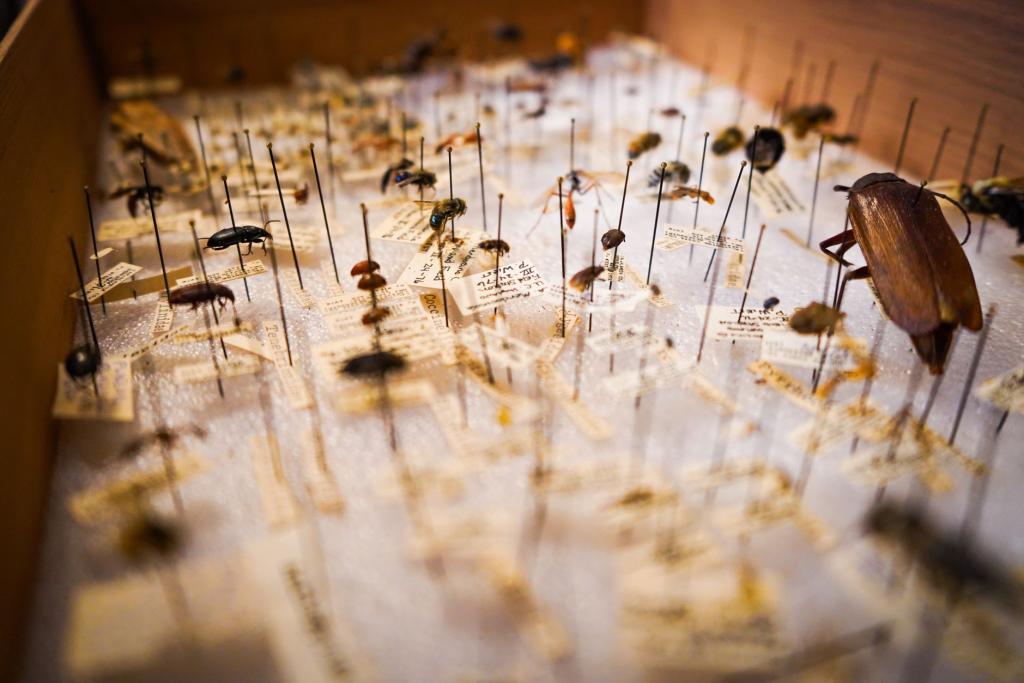
That detection lag is exactly what the new study overcomes. Instead of relying on field records from an era when nobody knew what to look for, the team went hunting through the amphibian collections of the Smithsonian's National Museum of Natural History, assembled by former curator William Ronald Heyer. Heyer collected frogs at Boracéia across five field campaigns, two in the 1970s before the sudden declines and three in the 1980s in their aftermath. Solving the Frog Mystery meant testing animals collected before science officially knew the pathogen existed — and those shelves of preserved specimens became a time machine.
The Jars That Held the Answer
The Smithsonian team sampled more than 370 museum specimens covering 17 species, checking each for traces of chytrid DNA. The pattern was stark: specimens collected before 1979 showed no sign of infection, while more than half of the specimens from the 1980s tested positive. The timing matched the disappearance window so closely that Boyette said the results most directly implicate the fungus, even if environmental stressors played a supporting role, as he explained to Phys.org.
The most surprising result, though, was the one that seemed backwards at first. The frog species that suffered the most dramatic declines had no detectable infections at all, while the species that never declined were the most heavily infected. The researchers hypothesize that this reflects natural disease tolerance: the hard-hit species may have been so susceptible that infected individuals died before they could ever be collected, while the survivors carried the fungus without succumbing to it. It is a useful reminder that in wildlife disease work, the absence of a pathogen in a sample can be evidence of lethality rather than innocence.
To see how the story ended, the team also returned to the field station six times between 2022 and 2024 with researchers from the University of São Paulo to sample living amphibians. Of the species in Heyer's old collection, they could relocate only a dozen, and the continued absence of the rest raises concerns that some may have been lost locally. The good news is that most species at the site appear to have recovered since the early 1980s, and the infection patterns now suggest that widespread pathogen tolerance evolved among the survivors — a quiet, generational adaptation playing out across decades.
What a Cold Case Teaches About the Next One
The Boracéia result matters beyond one field station in Brazil. Genomicist Michael Campana, who participated in the study, said museum collectors could never have anticipated how vital their collections would become to modern conservation, yet without them researchers would never be able to detect pathogens that went unnoticed for decades. The study also lands as a warning: another fungal pathogen, B. salamandrivorans, is already threatening salamanders in Europe and could pose a serious risk to salamander populations in North America. Knowing how fast chytrid moved through a naive amphibian community helps scientists anticipate what a similar invasion could look like elsewhere.
There are honest limits, which the researchers state plainly. The study is specific to one site, so its results cannot simply be extrapolated across the broader Atlantic Forest region. But the method travels: DNA recovered from museum specimens, plus upcoming work using ancient environmental DNA to fill gaps in historical records, gives researchers a blueprint for reopening other disease cold cases. For young people who grew up hearing that amphibians are disappearing worldwide, this is a rare story with an answer — and a reminder that the dusty collections in natural history museums are not relics. They are evidence lockers, and some of the cases inside are still waiting to be cracked.
Related reading: browse more Science coverage, including how early land animals could barely turn their heads.
Comments 0
No comments yet. Be the first to share your thoughts!
Leave a comment
Share your thoughts. Your email will not be published.