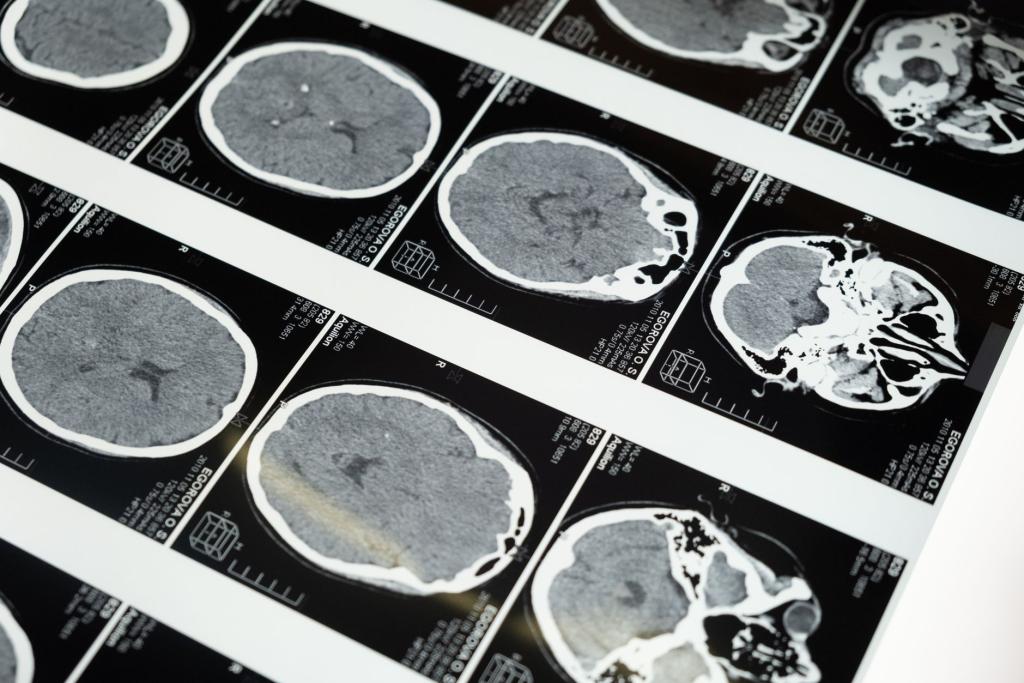
One of the largest maps of the teen brain ever made is now open to any scientist who wants it. Researchers at the University of Pennsylvania have released an open dataset of more than 24,000 MRI scans from over 10,000 adolescents, built to show how the teen brain's wiring develops across adolescence, according to a study published in mid-October 2026.
The work, led by the Perelman School of Medicine and published in the journal Neuron, focuses on white matter — the connections that let different parts of the brain communicate. Using advanced diffusion MRI, which tracks how water moves through brain tissue, the team found remarkably consistent developmental patterns in teen brains across 21 study sites, despite big differences in scanner technology and image quality.
“We showed that advanced state-of-the-art approaches to diffusion MRI can reveal aspects of adolescent brain development that conventional measures may miss,” said senior author Ted Satterthwaite, MD, director of the Penn Lifespan Informatics and Neuroimaging Center (PennLINC), in the university's announcement.
Twenty-One Scanners, One Big Harmonization Problem
The raw scans came from the Adolescent Brain Cognitive Development study, a National Institutes of Health-funded project that is the largest long-term study of brain development and child health in the United States. It is an enormous resource, but it comes with a built-in catch: scans collected on different machines, with different software, at two dozen research sites, can differ so much technically that those differences drown out the biological changes researchers are trying to measure in a teen brain.
“Large studies like ABCD give us enormous statistical power, but they also introduce major technical challenges,” said first author Steven Meisler, PhD, a PennLINC postdoctoral fellow. “When scans are collected on different scanners, with different software and at different sites, those technical differences can be larger than the biological changes we are trying to measure.”
To fix that, the team used open-source image-processing and statistical methods developed by Penn researchers for large, multi-site neuroimaging data. After accounting for the technical quirks of each scanner, the developmental patterns in the teen brain snapped into focus — and harmonizing the data substantially improved the consistency of the patterns across all of the study locations, as Medical Xpress reported.
Ten Thousand Teen Brains: the Open-Resource Playbook
Perhaps the most important part of the Ten Thousand Teen Brains project is not the finding itself but the gift wrapped around it. The processed data are being released as the ABCD-BIDS Community Collection, along with the open-source tools used to build it, so other researchers can reuse and extend the work without starting from scratch. That matters because in large research consortia, the processing needed to make data scientifically useful is often difficult for individual labs to reproduce, Meisler noted.
That kind of openness changes the pace of science. Researchers at PennLINC are already using the resource to investigate how white matter development in teen brains relates to environmental exposures and other aspects of adolescent health and development, per the Penn Medicine announcement. In the coming years, scientists could use the dataset to probe how screen time, sleep habits, sports injuries, or substance use intersect with a maturing teen brain.
Why It Matters — and What It Doesn't Prove
For teenagers and their families, this is the infrastructure behind future answers, not a diagnosis in a scanner. Nobody can point the open collection at your head today and tell you whether late-night scrolling is reshaping your white matter. What it provides is a shared, reproducible reference for the questions that matter most during the years when the teen brain's communication highways are being paved — from mental health risks to the effects of the environments young people grow up in.
There is also a quieter signal here about how science is done: this project treated reproducibility as the product, not an afterthought. In a field where flashy one-off findings have burned readers before, a teen-brain study spending its effort on cleaning and opening a shared resource is the opposite of that instinct. The counterpoint is that an open dataset is only as good as the analyses built on it — and the real test will be what independent researchers discover now that the doors are open.
Related reading: recent coverage includes why your brain is rooting for you to start lifting weights, the teen ICU mental health risks that doctors keep missing, and how alcohol-related brain damage starts with immune cells.
Comments 0
No comments yet. Be the first to share your thoughts!
Leave a comment
Share your thoughts. Your email will not be published.