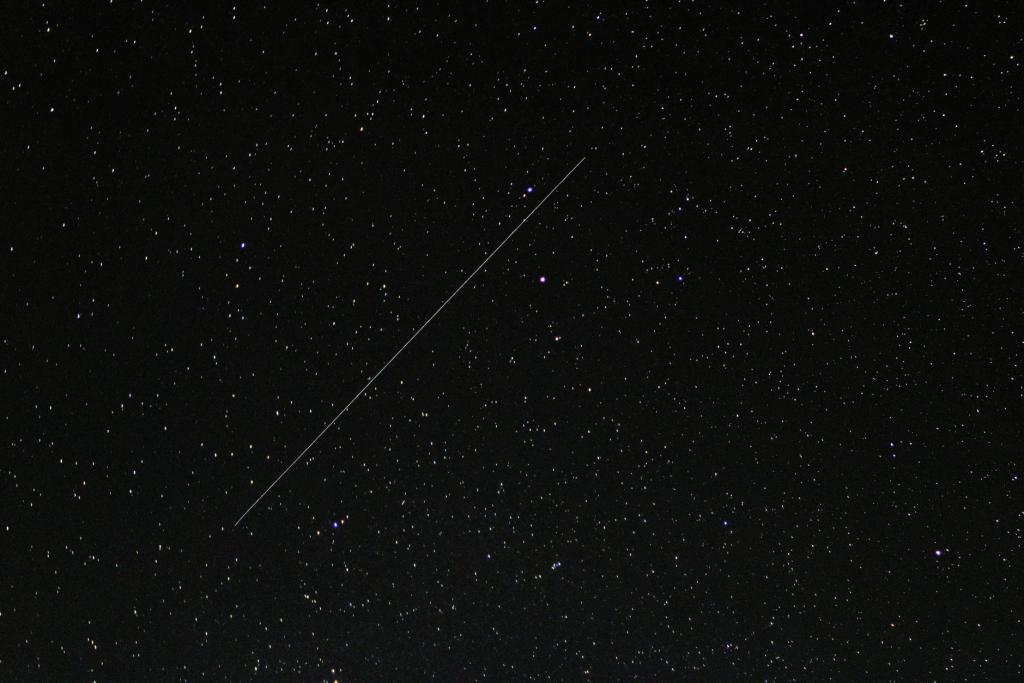
Earth is getting two close visitors today, and astronomers only spotted them days ago. Two small asteroids are sweeping past our planet about 19 hours apart, each passing closer than the Moon. The first made its closest approach at about 12:57 a.m. Eastern time, coming within roughly 141,000 miles of Earth. The second follows at about 7:57 p.m. Eastern, passing even nearer at roughly 136,000 miles, according to NASA Jet Propulsion Laboratory close-approach data.
Neither rock poses any danger. Their closest approaches keep them comfortably outside half the distance to the Moon, and astronomers have ruled out any impact. But the flybys are a vivid reminder of how busy Earth's neighborhood is — and how much of planetary defense depends on spotting small rocks quickly, sometimes just days before they arrive.
What we know about the pair
Both objects were discovered in early October, only days before their flybys. Two Asteroids Found Days Ago Are Buzzing Earth Closer Than the Moon, and both were unknown to science until this month. Scientists have not measured their sizes directly, but based on how bright they appear, each is likely between about 30 and 75 feet across — roughly the size of a small house. They are far too faint to see with the naked eye or a typical backyard telescope, so most of us will experience this double flyby only through the tracking data.
In astronomical terms, these are near misses in the friendly sense: each rock passed at roughly three-fifths of the Moon's average distance from Earth. Close approaches like this are routine for NASA's Center for Near-Earth Object Studies, which catalogs thousands of such encounters. This week alone has been busy: another small asteroid flew past Earth just days earlier at a similar distance, and another close pass is expected within days, according to the asteroid-tracking site Asteroid Today.
Why nobody is worried
A rock a few dozen feet wide sounds alarming until you put it next to what astronomers actually track. The famous Chelyabinsk meteor that exploded over Russia in 2013 was about 65 feet across — bigger than either of today's visitors — and even that object never reached the ground intact. It burst apart in the atmosphere, and most of the roughly 1,500 injuries came from shattered glass as the shockwave rolled through the city. Objects this size burn up or break apart high above the surface.
Planetary defense experts draw a sharp line between rocks like these and the ones that keep them up at night. NASA and its partners focus their surveys on objects large enough to cause regional damage, and none of this week's visitors come close to that category. The minimum possible distances computed for both of today's rocks stay well above half the distance to the Moon, leaving an enormous margin.
Why it still matters
The real story is the detection. A decade ago, a rock this small could easily have slipped past unnoticed until long after it was gone. Automated sky surveys now photograph the night sky night after night, and software flags anything moving against the background stars. Once a candidate is spotted, observatories share measurements within hours, and orbit calculations tighten fast. That pipeline is exactly what would need to work on a larger, genuinely dangerous object.
Each routine flyby also sharpens the tools. Every new observation feeds the orbital models that predict where near-Earth objects will be years from now, and every successful detection-to-announcement cycle rehearses the communication chain — from telescope to tracking center to public alert — that a real threat would trigger. That work is already happening elsewhere in the solar system: ESA's Hera mission has begun braking toward its own asteroid target. Astronomers who study similar flybys often make the same point: the system is working when you hear about a close pass and nothing happens.
So today's double flyby is less a scare than a status update. The sky is full of small rocks, the surveys are finding them, and the math says we are fine. If you want to follow along, the tracking data is public: Nature World News has a full rundown of both passes, and a tracker listing this week's close approaches is at Asteroid Today.
Comments 0
No comments yet. Be the first to share your thoughts!
Leave a comment
Share your thoughts. Your email will not be published.