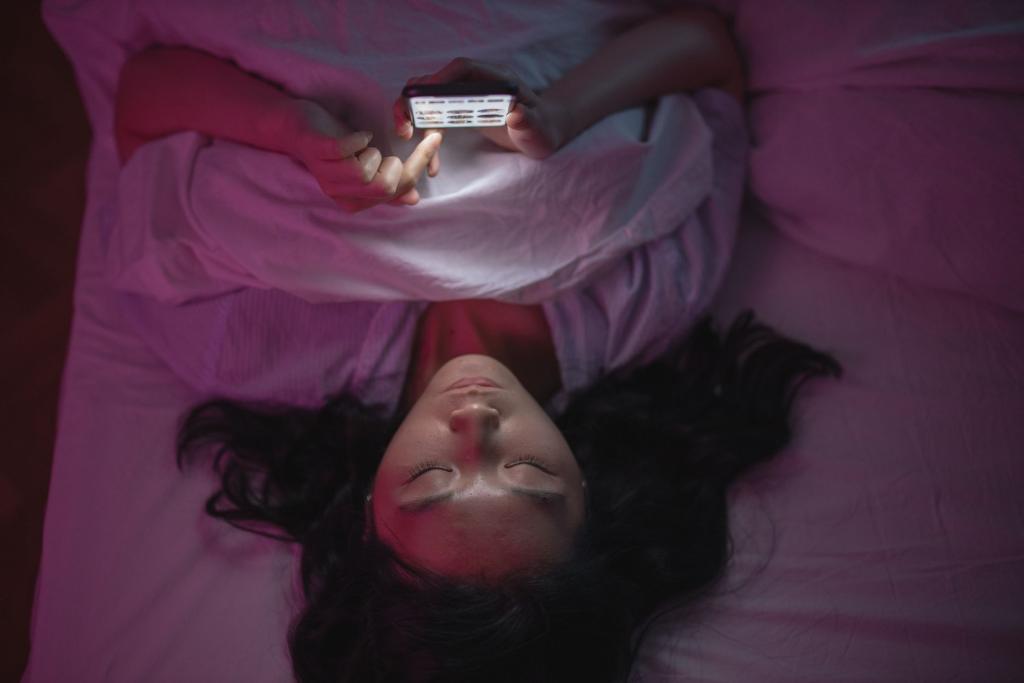
College students who spend more time on social media tend to sleep worse — and that shaky sleep, months later, leaves them rating their own health more poorly. That is the chain a new George Mason University study traces across a full academic year, and the researchers say it is the first study to show that poor sleep quality may be the pathway connecting social media habits to how young adults perceive their health.
The research, published in the journal Public Health Reports, drew on the university's long-running Mason: Health Starts Here cohort, which follows undergraduates across their four years. The team found a clear temporal sequence: greater social media use at the start of the school year predicted poorer sleep quality six months later, which in turn predicted worse self-rated health six months after that. "These findings suggest that students' social media habits early may have effects beyond the time spent on the phone," said study lead author Akosua Mainoo, an alumna of the university's Department of Global and Community Health. "Sleep appears to be one way those habits may carry over into how students perceive their health months later."
The surprise: bedtime scrolling was not the villain
Here is the twist the researchers did not expect. Greater overall social media use was linked to poorer sleep, but nighttime use specifically was not. That runs against the usual advice to simply put the phone down before bed, and the team acknowledged that previous studies on nighttime use and sleep have produced mixed results. One possibility, they noted, is that the effects depend on factors beyond timing alone, such as light exposure affecting melatonin levels — meaning what you do on the screen, and how stimulating it is, may matter as much as when you do it.
The finding reframes the problem. If total daytime scrolling quietly erodes sleep quality months down the line, then a strict phone curfew at 11 p.m. might miss the bigger leak. The damage appears cumulative and delayed: habits formed in September show up in sleep by spring, and in self-rated health by the following fall. For students, that means the cost of heavy scrolling is easy to miss in the moment — it arrives as a slow drift toward worse rest, then a vaguer sense of feeling run down.
Why the link matters beyond one campus
The backdrop makes the result harder to dismiss. Young adults now spend roughly five hours a day on social platforms, and in the George Mason cohort more than eighty-five percent of students reported using YouTube, Instagram, and Snapchat every day. Meanwhile, about one in three college students regularly falls short of seven hours of sleep a night, even though seven to nine hours is the recommended range. Chronic short sleep is not a minor inconvenience: over time it has been linked to depression, obesity, heart disease, and diabetes, making rest a plausible biological bridge between digital habits and long-term health.
A much longer-running study points in the same direction. Finnish researchers followed 187 adolescents over eight years in the PANIC study and found that higher cumulative screen exposure from childhood into adolescence — especially cell phone use — was tied to higher perceived stress and more depressive symptoms at the end of the follow-up, according to reporting by The Educated Patient. The flip side also held: teens who stayed more physically active across those eight years reported lower stress and fewer depressive symptoms. Taken together, the two studies sketch a consistent picture in which heavy screen time taxes both rest and mood, while movement buffers them.
What students can actually do
The study has real limits. Self-rated health is a perception, not a diagnosis, and an observational chain is not proof that cutting scrolling would fix anyone's sleep. But the temporal design — measuring habits first, sleep second, and health third — is stronger than a single snapshot, and the message it carries is practical rather than preachy.
Small, boring habits are the ones the evidence keeps rewarding: a consistent wake time, daylight and movement during the day, and a wind-down routine that does not depend on one more scroll. The George Mason findings suggest the payoff is not just feeling more alert tomorrow. It is how healthy you feel months from now — a slow dividend that starts with the phone habits you barely notice today.
Sources: George Mason University via BrightSurf; the findings also summarized by ScienMag; the study appears in Public Health Reports as part of the Mason: Health Starts Here cohort. Related eight-year findings reported by The Educated Patient.
Comments 0
No comments yet. Be the first to share your thoughts!
Leave a comment
Share your thoughts. Your email will not be published.