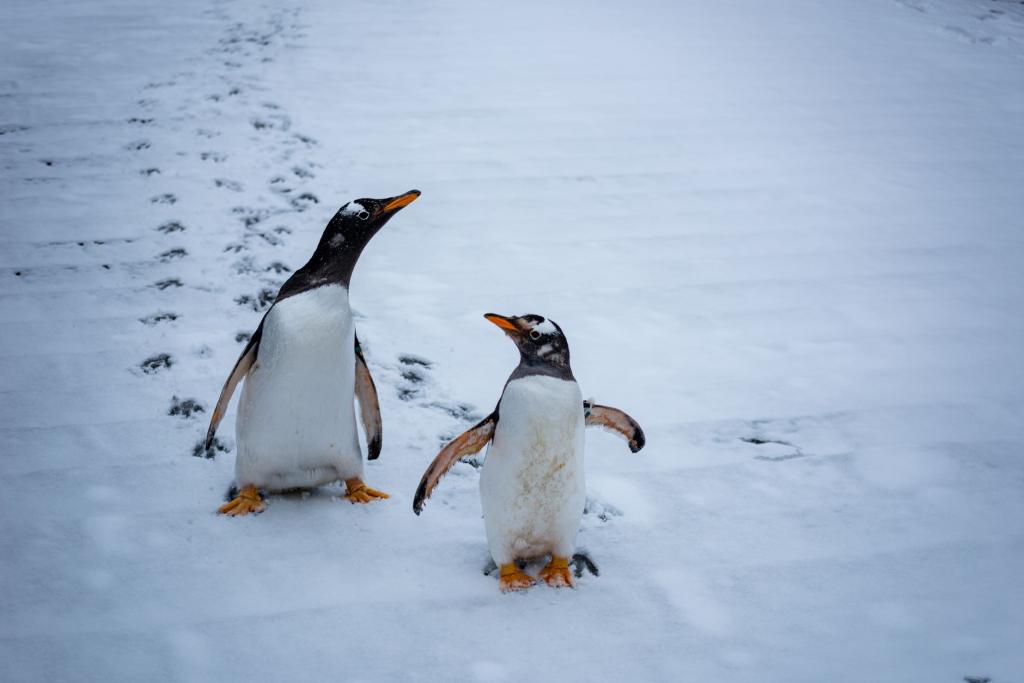
A penguin colony collapse has knocked the world's most famous penguin hotspot off its throne. Chinstrap penguins on remote Zavodovski Island, deep in the South Atlantic near Antarctica, have dropped by nearly two-thirds in fourteen years, according to the New York Post, which reported on new research from the British Antarctic Survey.
What the numbers actually say
Back in January of 2011, scientists counted roughly one point zero nine million breeding chinstraps on the island. By twenty twenty-five, only about four hundred and two thousand remained. That works out to a sharp annual decline of around seven percent, and the lead author, Norman Ratcliffe, called it "very rapid."
Because of the crash, Zavodovski has lost its title as the largest penguin colony on Earth. That crown now belongs to the Adelie penguin colony at Cape Adare, on the opposite side of Antarctica, which was estimated at more than one million birds as of twenty eighteen.
The study was published in the journal Current Biology, and the British Antarctic Survey describes it on its own research page. Interestingly, the authors report that this was the largest shift in community makeup ever recorded at a single Antarctic penguin site.
Why the birds are disappearing
The researchers point at warming oceans. Winter temperatures around the Antarctic Peninsula have climbed about five degrees Celsius above pre-industrial levels, one of the fastest rates of warming on the planet. That heat has shoved Antarctic krill, the tiny shrimp-like animals chinstraps live on, further south into colder water.
This leaves the birds with a nasty choice. They can chase their food into habitat they cannot handle, or they can stay put and risk starving. "We think that climate change operating through food webs is probably the main driver," Ratcliffe said, as quoted by the New York Post.
The team also checked the obvious suspect, the volcano. Mount Curry erupted in twenty sixteen, which sparked early worries. But satellite images and field measurements showed the main ash cloud drifted northeast, away from the core nesting grounds, and the decline had started well before the blast.
A winner and a loser on the same rock
Not every penguin on the island is struggling. Macaroni penguins, which prefer slightly warmer subantarctic conditions, grew from about three hundred and thirty-eight thousand to four hundred and thirty-three thousand over the same stretch. They now outnumber the chinstraps on their own island.
The researchers summed it up in blunt terms: a climate-induced regime shift has hurt maritime Antarctic chinstraps while favouring the macaronis. Put simply, one warming ocean is sorting penguins into winners and losers, and the two species are on opposite sides of the line.
Together the two species still total more than eight hundred and thirty-five thousand birds on the island, so the place is not empty. But the balance that scientists thought they understood has flipped.
Why it matters beyond Antarctica
This penguin colony collapse is also a warning about the food web. Krill feed whales, seals and seabirds across the Southern Ocean, so a shift in where krill live ripples through everything that eats them. According to Phys.org, the survey combined fourteen years of satellite observations with a detailed drone count, which makes the finding hard to wave away.
The researchers also ruled out competition from krill fisheries, humpback whales and macaroni penguins as the main cause, pointing instead to regional warming. That matters because it means local fixes alone will not bring the chinstraps back.
The South Sandwich Islands host about thirty-eight percent of the global chinstrap population, so a crash here is a global problem. The research team says the species may now qualify for a higher threat category, and could even be reclassified as endangered.
Getting the data was no joke. Scientists sailed fifteen days to reach one of the most extreme fieldwork locations on Earth, then flew drones over the colony to count nests that satellites alone could not resolve.
For anyone scrolling past climate headlines, this one is easy to picture: a place once so packed with penguins it showed up in space photos is thinning out in a single generation. Want more on the warming planet? Check our climate emergency coverage for the latest.
Comments 0
No comments yet. Be the first to share your thoughts!
Leave a comment
Share your thoughts. Your email will not be published.