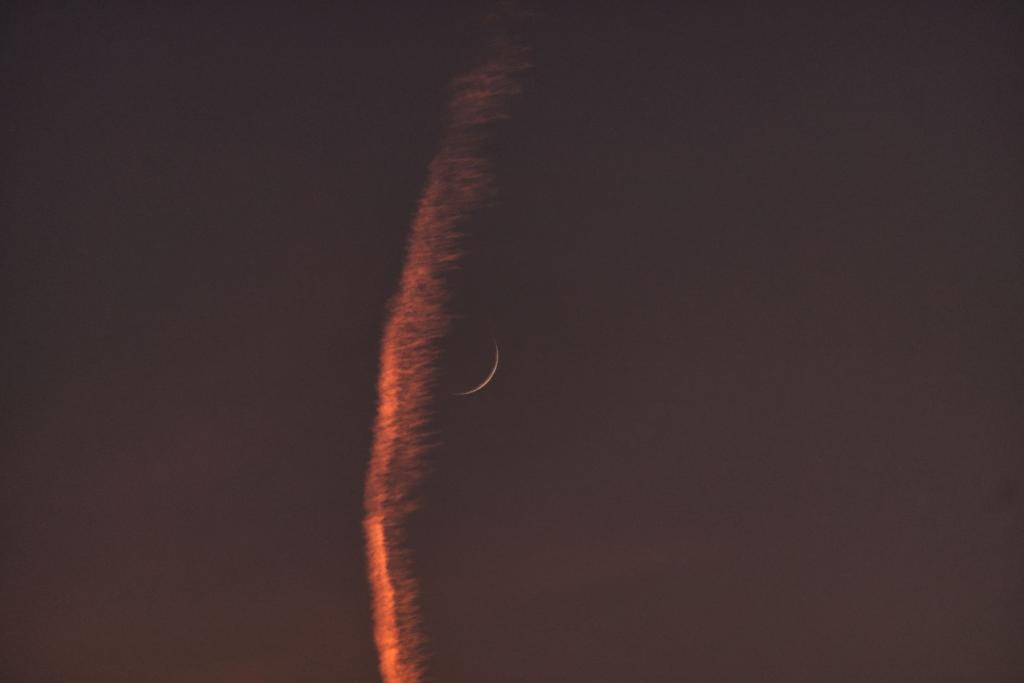
The SpaceX Dragon cargo launch lit up the Florida sky before sunrise on Tuesday, and the glowing show was only the start of what this trip means. A Falcon 9 rocket carried an uncrewed Dragon toward the International Space Station with more than six thousand three hundred pounds of supplies, science and spare parts, according to CBS News.
Liftoff came from Pad forty at Cape Canaveral Space Force Station at six thirty-three a.m. Eastern. The nine first-stage engines pushed the rocket away on one point seven million pounds of thrust, and the booster later landed within a few hundred feet of its launch pad, announced by two ground-shaking sonic booms.
The sky show everyone was posting
Skywatchers from Florida to Virginia spotted a huge glowing shape hanging in the dawn. Rocket fans call it the jellyfish effect. As the second stage climbed, its exhaust plume spread out in the thin upper air and was backlit by the rising sun, growing into a teardrop visible for hundreds of miles, as Weather.com reported.
At almost the same moment, viewers at Kennedy Space Center saw the station itself pass about two hundred sixty miles overhead like a bright moving star. The launch was timed so the rocket climbed into that same orbital plane, which is required for any rendezvous mission.
What is actually inside the capsule
CBS News lists the manifest in detail: eight hundred forty-four pounds of supplies for the crew, one thousand three hundred seven pounds of science gear, four hundred seventeen pounds of spacewalk equipment and eight hundred eighty pounds of vehicle hardware and computer gear. There is also food. Station program manager Bill Spetch named oranges, apples, grapefruit, tomatoes, blueberries, baby carrots and mini sweet peppers, plus a pizza kit, cookies, candy and some special holiday items.
The heavy cargo rides in the unpressurized trunk. Two new roll-out solar array blankets, weighing two thousand six hundred thirty-five pounds on Earth, are the final sets in a long upgrade meant to offset age-related wear on the station's original eight solar wings.
Why the new solar arrays matter
Six of these blankets were installed during spacewalks starting in June twenty twenty-one. The seventh and eighth will go up during spacewalks later this month and in early November. Each one generates twenty kilowatts, and together with the older panels they push power output back to factory-fresh levels.
Dana Weigel, director of low-Earth orbit operations at the Johnson Space Center, explained that the new arrays are installed on top of the existing ones, so the exposed parts of the old wings keep producing power in parallel. Their cells are more efficient and denser in energy, so combined they generate more than an original array did when new.
Tiny organs, big questions about aging
The most Gen Z-coded passenger might be the miniature organs. According to ABC News, researchers from Mount Sinai, NASA and the company Space Tango are sending mini organs to orbit for the very first time. They will face the radiation and microgravity astronauts deal with on long missions.
Mount Sinai's Kevin Costa told ABC News that six months in space is equivalent to about ten to twenty years of aging on Earth. The team is sending up to sixteen miniature hearts to test how they respond to electrical signals, along with peppercorn-sized mini brains modeled on healthy and diseased tissue. The hardware is a roughly shoebox-sized automated lab.
The payoff could land back on Earth. Joel Blanchard, a Mount Sinai stem cell researcher, said the work feeds into research to help people with Parkinson's and Alzheimer's disease. NASA's Lisa Carnell said these studies are a starting point for research beyond low Earth orbit, including the moon.
What happens next
If all goes well, the spacecraft catches the station on Thursday and docks automatically at the Harmony module's space-facing port at eleven a.m. Eastern. Astronauts will unpack the supplies, and the solar arrays wait for their spacewalks.
It is a reminder that a routine resupply run now carries lab-grown hearts, student satellites and the power upgrade that keeps the station alive. For more on discoveries beyond our planet, browse science coverage on GenZ NewZ.
Comments 0
No comments yet. Be the first to share your thoughts!
Leave a comment
Share your thoughts. Your email will not be published.