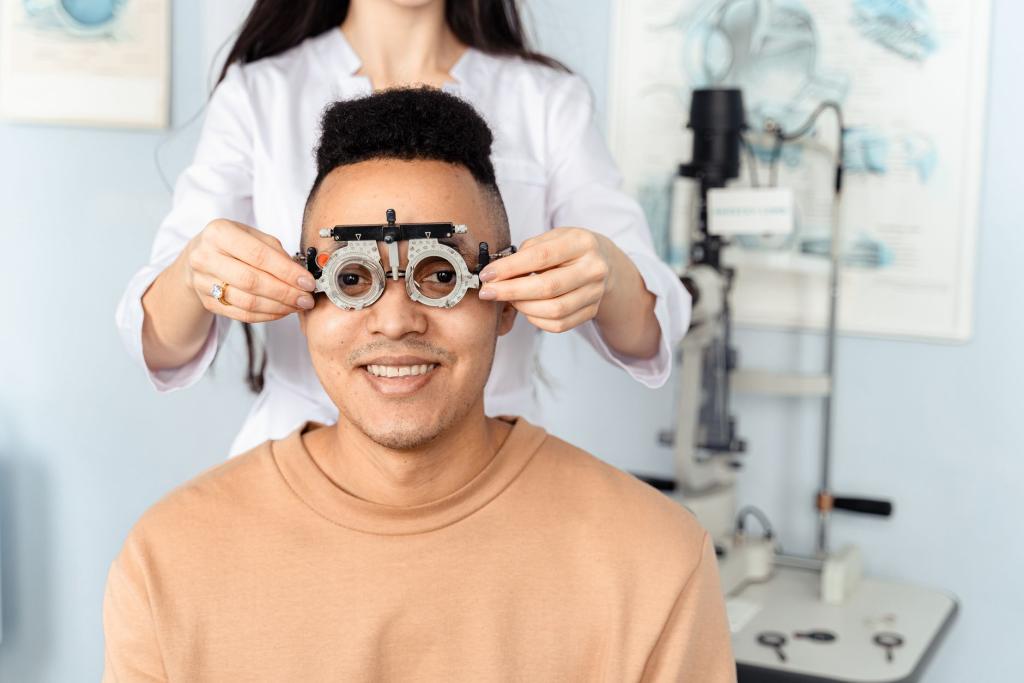
Ozempic's Rare Vision Risk is the side effect hardly anyone talked about when weight-loss jabs went mainstream. A wave of new research this October links GLP-1 drugs like Ozempic and Wegovy to a rare eye condition that can cause sudden, painless vision loss, and regulators on the other side of the world have already started changing drug labels because of it.
The condition is called non-arteritic anterior ischemic optic neuropathy, or NAION. It happens when blood flow to the optic nerve drops suddenly, and it typically strikes one eye with blurring, dimming or a missing chunk of the visual field. Doctors emphasize that it is already rare: it accounts for a tiny fraction of all optic nerve disorders, and most people taking GLP-1 drugs will never encounter it. But for a medication class that a survey by KFF found roughly one in eight American adults have tried, even a tiny signal deserves a close look.
What triggered the latest alarm was scale. Researchers at Rutgers University combed through health records from more than one and a half million people prescribed GLP-1 drugs between 2018 and 2023, comparing them with matched patients not on the medication. They found a small but real bump in the rate of the optic nerve condition, roughly three to four additional cases per ten thousand patients over an eighteen-month period, as multiple outlets reported this week. The signal was strongest among men and among patients in their fifties and sixties. The researchers stress that this is a statistical association, not proof that the drugs caused the damage, and they say underlying health differences between the groups could help explain part of it.
The second eye may go faster
A second line of evidence came from eye surgeons themselves. At the 130th annual meeting of the American Academy of Ophthalmology in New Orleans, researchers presented a study of patients who lost vision to NAION in both eyes. Among those patients, the ones taking GLP-1 drugs were substantially more likely to have the second eye affected within six months of the first.
The project began with a clinical hunch. Ophthalmologist Matthew D. Kay noticed a cluster of patients arriving in a short span with NAION in both eyes, one after the other in quick succession and occasionally at the same time, and every one of them was taking a GLP-1 drug. That pattern prompted co-author Ashley Tin, a medical student at the Carle Illinois College of Medicine, to dig into a large national database, according to the academy. For context, only about fifteen in a hundred patients ever develop NAION in the fellow eye within five years, so rapid back-to-back cases are unusual enough to make doctors take notice.
Regulators are already moving
Across the Pacific, the finding has already left the realm of research and entered drug labels. South Korea's drug regulator added NAION as a rare labeled side effect of semaglutide medicines earlier this month. The move followed the disclosure of the country's first suspected case, a report filed in December 2024 that only became public during a parliamentary audit this October. Lawmakers pressed the regulator on why it took nearly two years of silence before the warning landed, and whether other cases went unreported while GLP-1 use in the country exploded from roughly 160,000 units in late 2024 to more than three million units by mid-2026.
In the United States, the Food and Drug Administration has its own investigation running. The agency's Sentinel Initiative is studying GLP-1 use and NAION among adults with type 2 diabetes using insurance claims and electronic health records, and the project is listed as in progress. Meanwhile the lawsuits have begun: one attorney alone represents at least one hundred and fifty people diagnosed with NAION after taking GLP-1 medications, and courts are only beginning to weigh those claims.
What this means for anyone on the drugs
The counterpoint matters as much as the headline. Every researcher quoted on the topic draws the same line: the absolute risk remains very small, and the proven benefits of the drugs for diabetes and obesity are large. A retina specialist at Northwestern University told reporters that the overall health benefits of these medications would likely far outweigh the very small increased risk of what she called a very, very rare complication. Her advice was practical, not panicky: anyone who notices sudden, painless vision loss should get an eye exam urgently, whether or not they take a GLP-1.
That is the takeaway worth keeping. Ozempic's Rare Vision Risk is real enough that South Korea put it on the label and American eye doctors are presenting data at their national meeting, but rare enough that doctors say it should not drive anyone's decision to start or stop a medication on their own. If you take a GLP-1, know the warning signs: sudden blurring, dimming, or a shadow falling across part of your vision in one eye. Those symptoms always deserve a fast call to an eye doctor. And if you are considering starting one, this is one more question worth asking your own clinician, who can weigh the tradeoffs against your personal risk.
Related reading on the health beat: a recent study found that ultra-processed foods leave visible brain damage on MRI scans, and researchers say more time outside could quietly reshape how your body handles food. For the sourcing behind the vision research, the eye surgeons' findings are summarized by the American Academy of Ophthalmology and the South Korea disclosure was covered in detail by This Newsroom.
Comments 0
No comments yet. Be the first to share your thoughts!
Leave a comment
Share your thoughts. Your email will not be published.