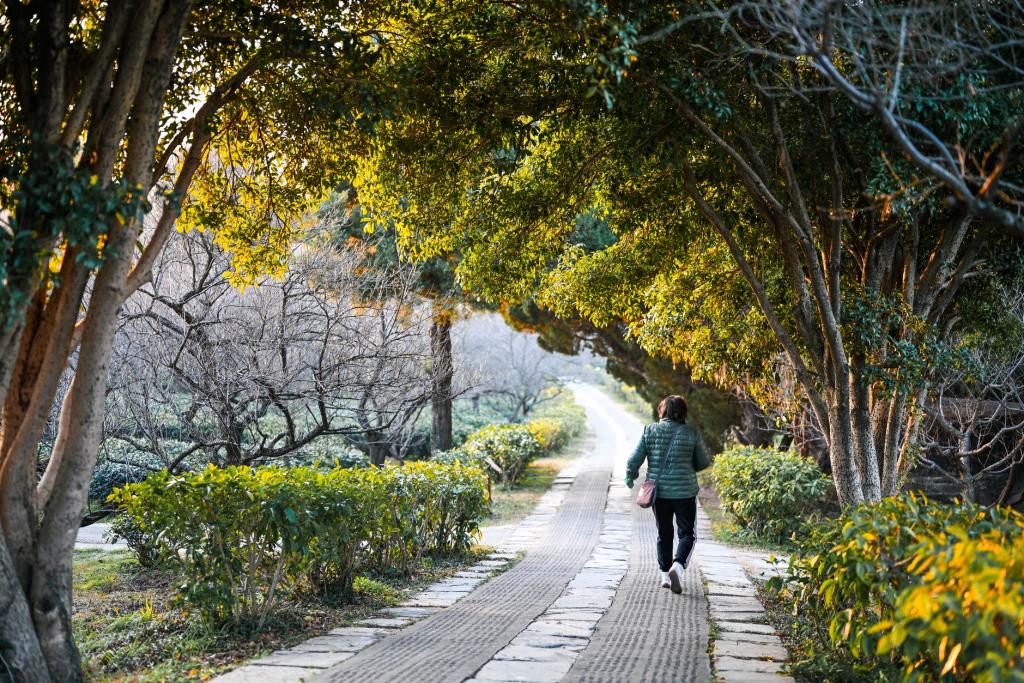
The next wellness habit might not be a supplement or a streak on an app. It could just be Time Outside. A new study of five hundred adults in the United Kingdom found that people with greater contact with the natural world report eating more intuitively — tuning in to hunger and fullness signals instead of following strict diet rules, according to the study write-up published by MedicalXpress.
Time Outside does not just correlate with better eating; the researchers mapped how it might work. Published in the journal Body Image this week, this is the first study to provide evidence that exposure to nature can influence people's relationship with food — and it found that indirect pathways matter even more than the direct link.
How nature reaches the dinner table
The first pathway runs through body appreciation. People who notice nature in daily life and spend longer stretches of time in green or blue spaces tend to feel more comfortable in their bodies and more appreciative of what their bodies can do. That comfort, in turn, makes them more responsive to their bodies' needs — more likely to eat when hungry and to stop when full.
The second pathway runs through self-compassion. Greater nature contact was linked to higher self-compassion, which the researchers believe acts as a buffer against using food to soothe difficult thoughts and emotions. Instead of impulsive eating in response to stress, people higher in self-compassion were more likely to choose foods that meet their physiological needs.
Why it matters, and where the limits are
Lead author Viren Swami, a professor of social psychology at Anglia Ruskin University in Cambridge, England, said the findings offer "the first evidence that contact with nature may shape people's eating habits." He added: "We already know that contact with natural environments can reduce anxiety and depression and improve various measures of well-being, including life satisfaction. Our new study is the first to show how it can influence our eating habits, thanks to helping people develop more positive relationships with their bodies and greater self-compassion."
The public-health promise is obvious: parks are free, always open, and have no side effects. If more access to nature nudges people toward eating with intention, city planners and doctors have one more reason to protect green space. The research team behind the paper suggests the results could have practical benefits for public-health professionals, from neighborhood design to how clinicians talk about lifestyle change.
Context helps here. Earlier work has already tied nature contact to lower anxiety and depression, and separate reporting has suggested doctors may one day prescribe nature walks for loneliness. The new study pushes the idea one step further, into the kitchen: not just how people feel, but how they eat.
The caveats matter too. The study relied on self-reported data — people describing their own habits — and it covered adults in a single country, so the results may not translate everywhere. Correlation is not proof of causation, and the authors themselves say further studies in other countries are needed. Nature is no substitute for medical care or for evidence-based treatment of eating disorders.
How the team measured all this adds useful texture. Volunteers were scored on three dimensions of nature contact: how much they noticed the natural world in everyday life, how often they spent time in natural environments, and how long those visits lasted. They also completed surveys covering body image, self-compassion, connectedness to nature, and intuitive eating — the anti-dieting approach built around listening to internal signals rather than following external rules. In other words, this was not about whether people exercised outdoors or ate salads; it was about attention, kindness toward the self, and trust in the body's own cues.
Still, the message is gentle and low-stakes: a walk outside may do more than clear your head. It might help you hear what your body is asking for at the table. That makes green space a rare health intervention — one that scales without a prescription, a copay, or an app subscription.
More on the beat: Tokyo's sleep competition, where the race to nap best wins cash, and why almost no teens in the Marshall Islands meet exercise guidelines.
Comments 0
No comments yet. Be the first to share your thoughts!
Leave a comment
Share your thoughts. Your email will not be published.