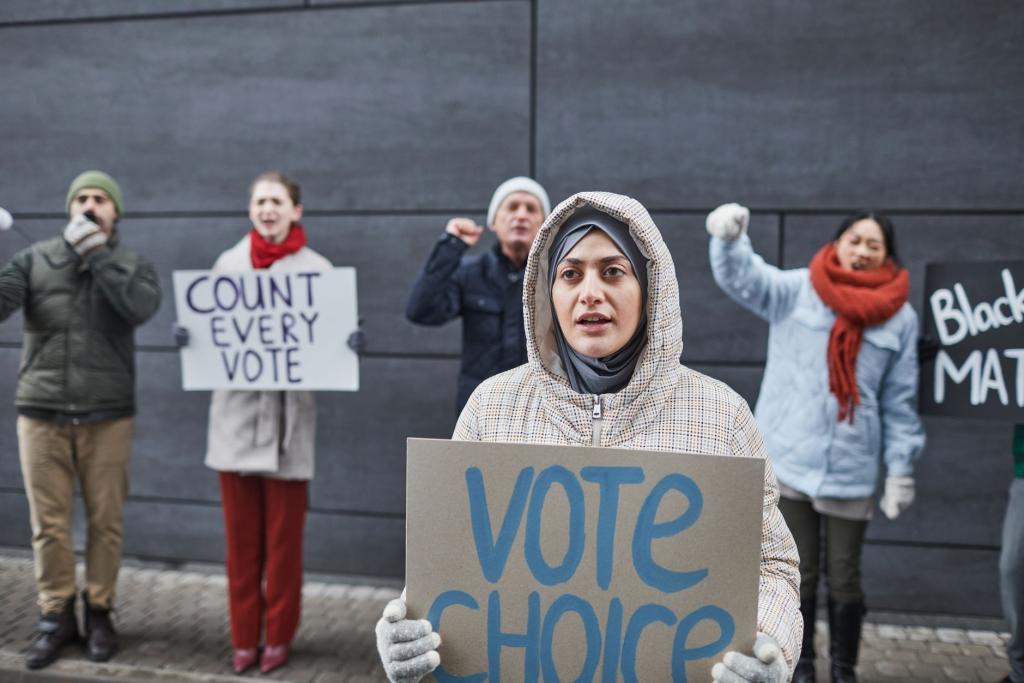
The NAACP lawsuit polling places case just became the newest front in the fight over the 2026 midterms. On Friday, September 18, the organization joined eight other civil rights and labor groups in filing a federal complaint that challenges the Trump administration's threats to send armed federal agents to voting locations this November.
The case, filed in the U.S. District Court for the District of Columbia, argues that even threatening to deploy armed agents amounts to voter intimidation under Section 11(b) of the Voting Rights Act of 1965. That law bars intimidation, threats, and coercion against people for voting or helping others vote, and the Legal Defense Fund says voters do not have to wait until they are actually confronted on Election Day to assert it.
What the NAACP lawsuit actually challenges
The nine groups behind the filing are the NAACP, Mi Familia en Accion, Asian Pacific American Advocates, the National Urban League, Minnesota 8, the Service Employees International Union, the American Federation of Teachers, the International Union of Painters, and the United Food and Commercial Workers International. Their legal teams include the Legal Defense Fund, the Brennan Center for Justice, LatinoJustice PRLDEF, and Protect Democracy.
According to Democracy Docket's reporting, the suit names President Donald Trump, DHS Secretary Markwayne Mullin, FBI Director Kash Patel, and Acting Attorney General Todd Blanche. It accuses the administration of leaning on unsubstantiated claims of widespread noncitizen voting, which the coalition calls a repeatedly disproved myth used to scapegoat immigrants and communities of color.
This is the second lawsuit this month aimed at keeping armed agents away from the polls. Last week, the City of Denver teamed up with Latino civil rights organizations and watchdog groups in a separate suit arguing that allowing immigration agents at voting locations violates a different federal law on free and fair elections, Bloomberg Law reported.
Why young voters should pay attention
Gen Z is heading into its second midterm cycle as a real voting bloc, and this case is about the ballot box itself. The plaintiffs say Black, Latino, and Asian American voters, naturalized citizens, and members of mixed-status families now face the prospect of being questioned, arrested, detained, or put under surveillance just for voting or helping someone else vote.
A generation that came of age during the pandemic and the George Floyd protests has already watched state-level voting restrictions pile up. Youth-led movements have a habit of showing up when democratic norms crack. This case asks whether the federal courts still work as a guardrail for voting rights, and it arrives as the White House has been picking fights on other democratic fronts, including its clash with major news outlets.
The administration's response
The administration pushed back hard. A Department of Homeland Security spokesperson said ICE was not planning operations targeting polling locations, and added: "Those who are here legally and are not breaking other laws have nothing to fear." The spokesperson called claims of racial profiling "disgusting, reckless, and categorically FALSE," saying enforcement is driven by legal status rather than skin color, race, or ethnicity.
Mullin has said agents would only appear at polling places "if there is a threat to that polling place, or we're serving a warrant." The coalition's answer is that the string of public statements from Mullin, Patel, Blanche, and Trump amounts to a credible threat on its own. The hard part for the plaintiffs will be convincing the court the case is ripe for review before any agents actually show up.
NAACP General Counsel Kristen Clarke was blunt: "We reject this administration's attempt to desecrate our polling sites by converting them into militarized zones through the unlawful deployment of ICE or any other federal agent. Turning the fundamental right of exercising our vote into a high-stakes encounter with the militarized strong arm of the current administration isn't protection and it isn't oversight; it's disenfranchisement, period."
What happens next
The case is now before U.S. District Judge Loren L. Alikhan, a Biden appointee. The core legal question is whether a threatened deployment is enough to trigger Section 11(b) — and the answer could decide whether federal agents become a regular sight near American polling places or are barred from them entirely.
The midterms are less than two months out. This fight will not be fully resolved by November, but it will help decide how Election Day actually feels for millions of young and first-time voters: a routine trip to the ballot box, or a walk past armed federal agents to get there.
Comments 0
No comments yet. Be the first to share your thoughts!
Leave a comment
Share your thoughts. Your email will not be published.